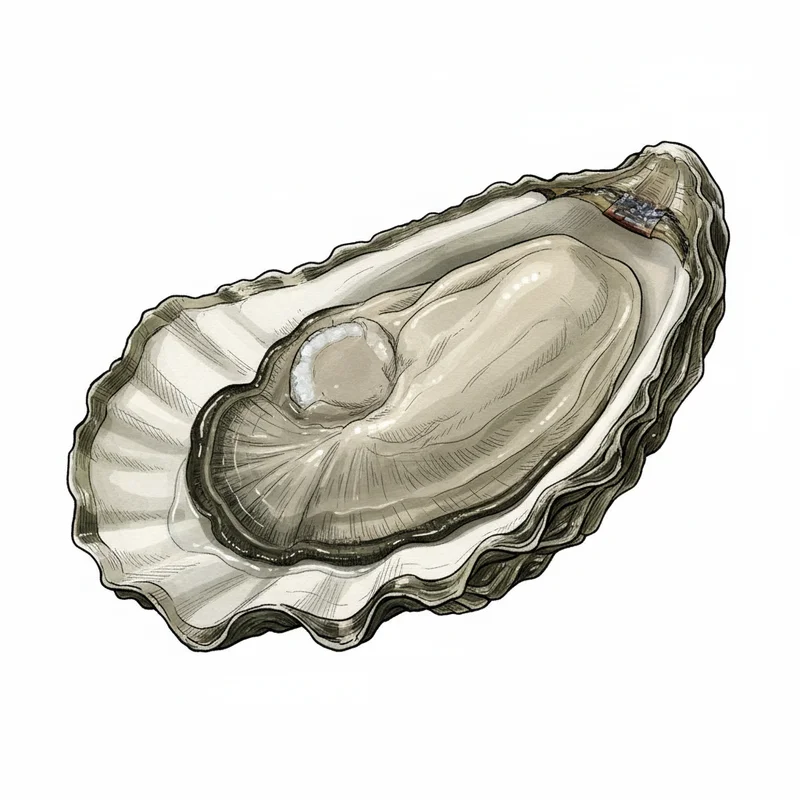
Kachemak Bay
Crassostrea gigas
Slow-growing Pacific oyster from Alaska's glacial Kachemak Bay waters. More briny and umami-forward than typical Pacifics, with crisp texture, cucumber-melon notes, and a clean vegetal finish with hints of nori and green tea.
At a Glance
Kachemak Bay is a Pacific oyster (Crassostrea gigas) from the US West Coast. It is notably briny (4/5 brininess) and moderately sweet (3/5 sweetness), with briny, cucumber, sweet flavors and a finish that is crisp nori snap, salted honeydew, green tea, apple candy notes.
Flavor Profile
Finish
Crisp nori snap, salted honeydew, green tea, apple candy notes
Expert Notes
Kachemak Bay oysters are cultivated in the pristine, frigid glacial waters of Alaska's Kenai Peninsula, resulting in an exceptionally clean-flavored oyster with more brininess and umami than typical Pacific oysters. The extreme cold waters prevent spawning and create slow-growing oysters (3-4 years to market) with crisp, firm texture and dynamic flavor. Unlike Washington State Pacifics, these showcase less cucumber sweetness and more of a savory, mineral-forward profile with hints of kelp and a distinctive honeydew-green tea finish. Origin & Characteristics
- Species
- Crassostrea gigas
- Native to
- Japan
- Grown in
- Halibut Cove, Kachemak Bay, Kenai Peninsula, Alaska
- Size
- Medium (2.75-4 inches)
- Shell Color
- Khaki to gray-white with less pronounced dark rim
- Meat Color
- Cream to light gray
What Experts Say
Across 10 sources, tasters describe this oyster as:
Unique notes: nori, green tea, salted honeydew, apple candy, glacial mineral
"These Pacific oysters are more briny than your typical Pacifics, and incredibly clean-flavored, with lots of cucumber and a crisp nori kind of snap to them. Salted honeydew, green tea, and apple candy notes linger on the finish."
brinycleancucumbernorihoneydew
"Oyster connoisseur Rowan Jacobsen actually described Kachemak Bay oysters as 'incredibly clean-flavored, with lots of cucumber and a crisp nori kind of snap to them. Salted honeydew, green tea, and apple candy notes linger on the finish.'"
cleancucumbernorihoneydewgreen tea
"The flavor marries the strong brine of the Gulf of Alaska to the mineral meltwater from the Kachemak Bay State Park glaciers."
brinymineral
"This oyster is perfect, medium cupping, salinity mild but the sweetness of the meat is just out of this world. It hits with just a touch of salt, then you get the crisp clean spring water flavor from the liquor, then the oyster comes in with a sweet almost umami flavor then finishes with a melon note that really just tickles your soul."
mild saltsweetcleanumamimelon
"These things were so crisp, clean, plump and juicy! With an awesome melon like finish."
crispcleanmelon
"A crisp bite with a refreshing cucumber finish."
crispcucumber
"Dynamic brine with a gentle crunch and a clean vegetal finish."
brinycleanvegetal
"These oysters have a flavor that sets them apart from other Pacific oysters. They are known for their sweet and almost umami taste, which comes from the unique marine environment surrounding them."
sweetumami
About the Farm
Alaska Shellfish Farms (Glacier Point)
Est. 2007Founded by Greg and Weatherly Bates who moved from Maine (where they produced Georges River Oysters) to Alaska for adventure and challenge. Located in remote Halibut Cove (population 30), they farm oysters surrounded by glaciers, forests, mountains, and abundant wildlife including sea otters and orcas.
- Cultivation Method
- suspended culture
History & Background
Kachemak Bay oysters represent some of the most challenging oyster farming in North America. The waters are too cold for oysters to reproduce naturally, requiring imported seed stock that takes 3-4 years to mature. Despite harsh conditions including 30-foot tides and year-round maintenance needs, the extreme environment produces exceptionally flavorful oysters.
Alaska oyster farming represents pioneering spirit in one of the most remote and challenging environments. Greg and Weatherly Bates are among the most successful Alaska oyster farmers of all time, producing about 300,000 oysters annually in a state where most oyster farmers burn out quickly.
Did You Know?
- The growing area is surrounded by Kachemak Bay State Park where bears outnumber people by about 100 to 1
- Farmers must work year-round in extreme conditions, even in December during midday moon darkness
- Sea otters play around the oyster cages all day, with one nicknamed 'Fat Rat' by the farmers
- The oysters are literally glacial-fed, with the massive Grewingk Glacier pouring silt-laden meltwater into the bay
- The sweetness in these oysters is a biological response to frigid water temperatures
- Halibut Cove has a floating post office and year-round population of only about 15 people
Sources & References
This information was compiled from 10 sources.
- Alaska's Kachemak Bay Oysters — The Oyster Guide
- Glacier Points in Halibut Cove, Alaska — The Oyster Guide
- He is a bold man who tries to grow oysters in Alaska — Anchorage Daily News
- Glacier Point Oyster — Oysterater
- Glacier Point Oysters — Oyster Encyclopedia
- Glacier Point — Penn Cove Shellfish
- Glacier Point Oyster — Oysterology Online — Pangea Shellfish
- Kachemak Shellfish Growers: sowing the seeds of success — The Fish Site
- Tide to Table Profile: Alaska Shellfish Farms — NOAA Fisheries
- Kachemak Shellfish Growers Co-op — Alaska Oyster
Similar Oysters
Willapa Bay
US West CoastBeach-grown Pacific oyster from Washington's pristine Willapa Bay. Tumbled in tidal bags for smooth, dark shells and crisp texture. Light brininess with sweet, herbaceous notes and a signature cucumber finish.
Carlsbad Blonde
US West CoastSouthern California's signature oyster from Carlsbad's Agua Hedionda Lagoon. Grown in suspended culture with distinctive glassy, striped shells. Strongly briny with refreshing melon and cucumber notes, balanced between briny and sweet.
Elkhorn
US West CoastBeach-grown Pacific oyster from Washington's Willapa Bay. Firm and meaty with intense, robust flavor featuring high brininess, natural sweetness, and a distinctive mineral-melon finish.
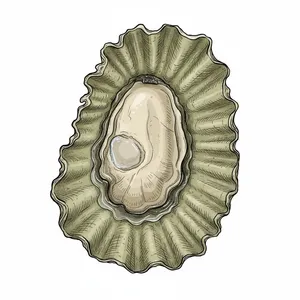
Glacier Point
US West CoastAlaskan oyster from Kachemak Bay's glacier-fed waters. Intensely briny and umami-rich with distinctive salinity and thick shell. Less cucumbery than typical Pacifics, with a unique 'touch of king salmon' flavor.
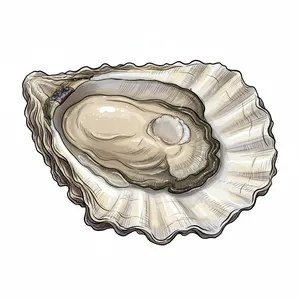
Grassy Bar
US West CoastHand-cultivated Pacific oyster from Morro Bay's high-energy estuary. Deeply briny with crisp sweetness and distinctive cucumber and wet-stone minerality. Entirely grown in Southern-Central California from seed to harvest.
Learn More
The Big Five: A Complete Guide to Commercial Oyster Species
Comprehensive guide to C. virginica (Atlantic), C. gigas (Pacific), C. sikamea (Kumamoto), O. lurida (Olympia), and O. edulis (European Flat)
Read article → Biology & SpeciesThe Pacific Oyster (C. gigas): Cream, Cucumber, and the Japanese Legacy
Understanding the world's most cultivated oyster - from Japanese origins to West Coast dominance
Read article → Merroir & EnvironmentWhat Is Merroir? How Water Shapes Oyster Flavor
Merroir is the marine version of terroir: how salinity, temperature, tides, and plankton in the growing water shape an oyster's flavor. The science, plus how to taste it.
Read article →