Wildcat Cove
Crassostrea gigas
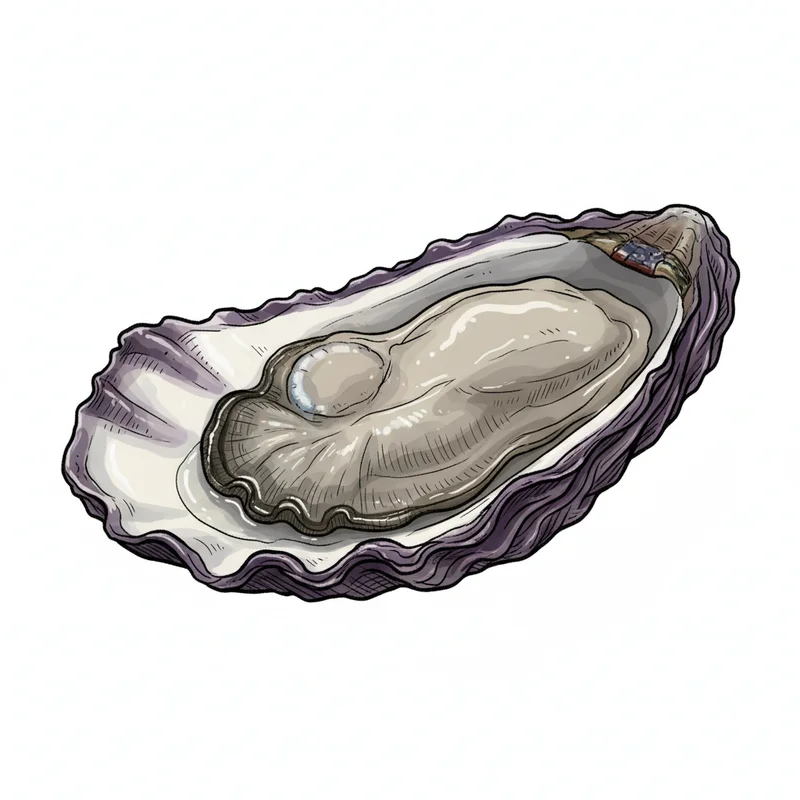
Bag-to-beach Pacific oyster from Little Skookum Inlet's nutrient-rich waters. Deep-cupped with plump, buttery meat, mild brininess, and distinctive sweet collard greens flavor finishing with melon notes. Beautiful ruffled purple shells.
At a Glance
Wildcat Cove is a Pacific oyster (Crassostrea gigas) from the US West Coast. It is mildly briny (2/5 brininess) and very sweet (5/5 sweetness), with sweet, vegetal, melon flavors and a finish that is melon-rind with lingering sweetness. It is considered a beginner-friendly oyster.
Flavor Profile
Finish
Melon-rind with lingering sweetness
Expert Notes
Wildcat Cove oysters are cultivated in the nutrient-rich waters of Little Skookum Inlet, an algae-rich oyster factory with strong tidal currents. These bag-to-beach Pacific oysters are exceptionally plump and firm with a distinctively sweet collard greens flavor that transitions to a melon-rind finish. The rich environment produces buttery, full-bodied oysters with beautiful frilly shells—less salty and more earthy than their Totten Inlet neighbors, reflecting the intense brown and green mudflat algae at the head of Little Skookum. Origin & Characteristics
- Species
- Crassostrea gigas
- Native to
- Japan
- Grown in
- Little Skookum Inlet, South Puget Sound, Washington, Wildcat Cove, Kamilche Point, near Shelton, WA
- Size
- Medium (2.5-3 inches)
- Shell Color
- Purple and ruffled with fluted horns
- Meat Color
- Cream to light gray
What Experts Say
Across 8 sources, tasters describe this oyster as:
Unique notes: melon-rind, grassy, strong vegetal, soft meats
"The oyster is fat and meaty, strong flavored, tough shelled, as you'd expect from a bag-to-beach South Sound oyster. The rich environment imparts a very sweet collard greens flavor with a melon-rind finish. The shells tend to be fluted and horned."
fatmeatystrong flavoredsweetcollard greens
"A sweet grassy profile with hints of melon in the finish that will linger on your taste buds."
sweetgrassymelon
"Firm meat, moderate brininess, a sweet, strong vegetal flavor, and a melon rind finish. These oysters start with a mild saltiness, transition to sweetness, and finish with a fruity aftertaste."
firmmoderate brininesssweetvegetalmelon rind
"Deep-cupped with plump, buttery meat, mild brininess, and distinctive sweet collard greens flavor finishing with melon notes."
plumpbutterymild brininesssweetcollard greens
"Wildcat Cove is located in southern Puget Sound just inside the mouth of the Little Skookum Inlet. It is a nutrient rich area that produces oysters that grow fast and fat."
fast-growingfat
"Gentle Brine With Soft Meats, & A Clean finish"
gentle brinesoft meatsclean
About the Farm
Penn Cove Shellfish
Est. 1975Penn Cove Shellfish, the oldest and largest mussel farm in the United States, was established by the Jefferds family in Coupeville, Washington. The company has been growing Wildcat Cove oysters for over a century using traditional bag-to-beach cultivation methods.
- Cultivation Method
- bag to beach
History & Background
Wildcat Cove Oysters have been cultivated in South Puget Sound's Wildcat Cove on Kamilche Point, southeast of Shelton, WA for over a century. The location is a tiny alcove of water just where Little Skookum Inlet feeds into Totten Inlet.
The name 'Wildcat Cove' comes from the specific growing location, a nutrient-rich alcove considered an ideal oyster farming spot. If someone was the first oyster farmer on earth with their pick of spots, they would likely choose this rich plankton area with great water exchange and no boat traffic.
Did You Know?
- The shells tend to be beautifully ruffled and horned with purple coloration
- Wildcat Cove is one of the farthest reaches of Puget Sound's capillary system
- The inlet empties completely into Totten Inlet at low tide
Sources & References
This information was compiled from 8 sources.
- Wildcat Cove - The Oyster Guide — oysterguide.com
- wildcat cove - Penn Cove Shellfish — penncoveshellfish.com
- Wildcat Cove Oysters - The Oyster Encyclopedia — oysterencyclopedia.com
- Wildcat Cove Oysters - Chefs Resources — chefs-resources.com
- OYSTER VARIETIES - The Seafood Merchants — theseafoodmerchants.com
- OS Oyster Menu - The Oyster Society — theoystersociety.com
- Wildcat Cove Oysters - Whidbey Shellfish — whidbey.com
- Hood Canal and Southern Puget Sound - The Oyster Guide — oysterguide.com
Similar Oysters
Judd Cove
US West CoastA mild, sweet Pacific oyster from Orcas Island in Washington's San Juan Islands. Features beautiful purple and green swirled shells, creamy white meat with a distinctive black mantle, and a clean vegetal flavor with minimal salinity. Highly sought after by discerning Seattle chefs.
Skookum
US West CoastA sweet, mild Pacific Northwest oyster from South Puget Sound's Little Skookum Inlet. Melon-scented with low brininess and a creamy, herbaceous finish. Farmed since 1883 using rack & bag to beach cultivation.
Little Skookum
US West CoastA sweet, musky Pacific oyster from Little Skookum Inlet in South Puget Sound. Deep-cupped with plump, buttery meat, mild brininess, and distinctive melon-scented sweetness with a clean vegetable finish.
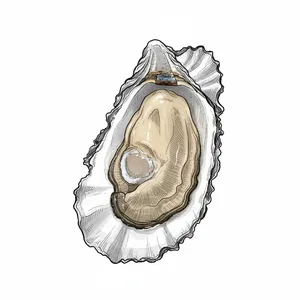
Pickering Passage
US West CoastA Pacific Northwest oyster from southern Puget Sound's nutrient-rich waters. Medium to large with tender, plump meats. Mild brine balanced with sweet richness and a crisp finish of melon and cucumber.
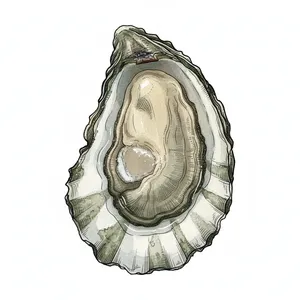
Steamboat
US West CoastBeach-grown Pacific oyster from Totten Inlet, Puget Sound. Small and deep-cupped with sweet, melon-scented flesh and refreshing cucumber crispness. Exceptionally wine-friendly with mild, earthy character.
Learn More
The Big Five: A Complete Guide to Commercial Oyster Species
Comprehensive guide to C. virginica (Atlantic), C. gigas (Pacific), C. sikamea (Kumamoto), O. lurida (Olympia), and O. edulis (European Flat)
Read article → Biology & SpeciesThe Pacific Oyster (C. gigas): Cream, Cucumber, and the Japanese Legacy
Understanding the world's most cultivated oyster - from Japanese origins to West Coast dominance
Read article → Merroir & EnvironmentWhat Is Merroir? How Water Shapes Oyster Flavor
Merroir is the marine version of terroir: how salinity, temperature, tides, and plankton in the growing water shape an oyster's flavor. The science, plus how to taste it.
Read article →