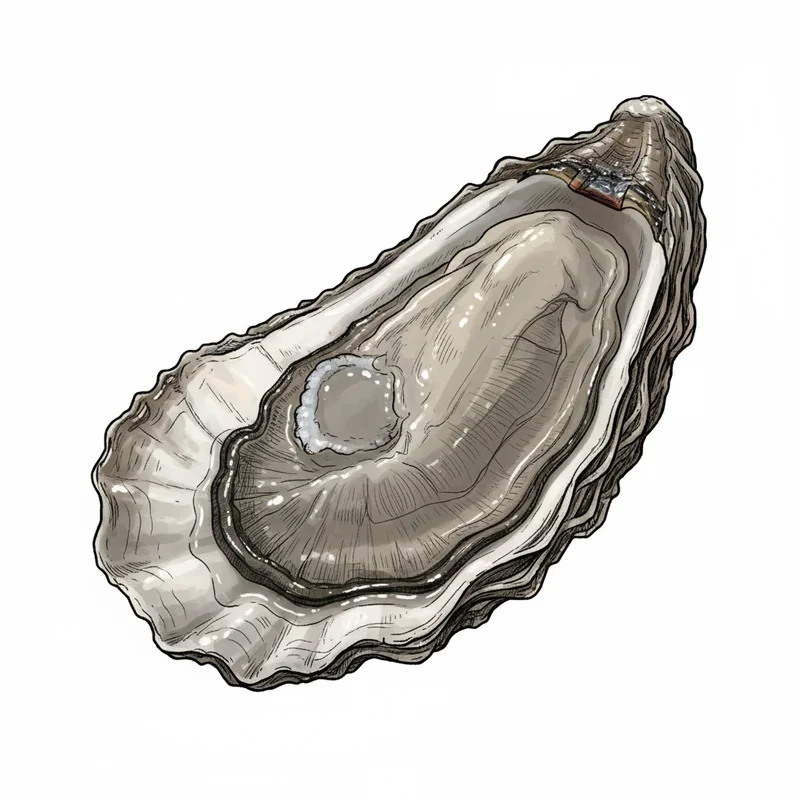
Blue Point
Crassostrea virginica
The classic Atlantic oyster. Crisp, briny, with mineral notes and a sharp, clean finish.
At a Glance
Blue Point is an Eastern oyster (Crassostrea virginica) from the US East Coast. It is notably briny (4/5 brininess) and subtly sweet (2/5 sweetness), with briny, mineral flavors and a finish that is sharp, clean, refreshing.
Flavor Profile
Finish
Sharp, clean, refreshing
Expert Notes
The Blue Point represents the quintessential Atlantic oyster experience. High salinity from Long Island Sound delivers a bracing brine punch, followed by mineral notes and a crisp, clean finish. Origin & Characteristics
- Species
- Crassostrea virginica
- Native to
- USA
- Grown in
- Long Island Sound, NY, Connecticut
- Size
- Medium (2.5-3.5 inches)
- Shell Color
- Gray-brown
- Meat Color
- Light gray
What Experts Say
Across 11 sources, tasters describe this oyster as:
Unique notes: pine, anise, satiny, ocean-forward
"Generally, Blue Point oysters have satiny, almost liquid meats with a high brininess and very mild flavor."
brinymildsatiny
"Our Blue Point oysters have a fresh, briny, ocean flavor with a firm texture and mild, sweet aftertaste."
brinyfreshoceanfirmmild
"Expect a distinguished flavor profile: a clean, refreshing start followed by the signature crisp saltiness—the unmistakable taste of a genuine Connecticut Blue Point Oyster."
cleanrefreshingcrispsalty
"Bold, crisp, and refreshingly briny, Blue Point Oysters deliver a clean, ocean-forward flavor with a firm, meaty texture and a slightly sweet, mineral finish."
boldcrispbrinycleanocean-forward
"They deliver the full-salt assault that made Blue Points famous in the 1820s, along with fascinating pine and anise notes most apparent in spring."
saltyfull-saltpineanise
"The oysters themselves are seeded on the bottom of Long Island Sound, both the Oyster Bay area of Long Island and the Norwalk area of Connecticut, dredged up a few years later, and have an extremely mild taste."
mild
About the Farm
Blue Island Shellfish Farms
Est. 1995Blue Island Shellfish Farms opened in 1995 and is now recognized as the only authentic producer growing oysters in the original Blue Point location in Great South Bay, Long Island.
- Cultivation Method
- bottom culture
History & Background
Blue Point oysters originated in 1815 when Humphret Avery first cultivated them near the town of Blue Point, Long Island in Great South Bay. They became famous in the early 1800s in New York City for their robust, wild flavor and became the favored delicacy of Queen Victoria. By 1824, the original wild stock was depleted, but the name persisted. A twenty-three-mile-long bed of oysters was found in Great South Bay, and any oyster from that area was sold as a Blue Point, eventually making the name generic for Long Island oysters.
Made popular in the early 1800s in New York City with their mild flavor profile. The Blue Point name has been called 'the most abused of oyster appellations' due to its widespread generic use for oysters from Connecticut, New Jersey, Virginia, and other regions far from the original Great South Bay location.
Did You Know?
- Queen Victoria favored Blue Point oysters as a delicacy
- The Gazetteer of the State of New York was referring to original Blue Points in the past tense as early as 1824
- After a century of exile, real Blue Points returned to their ancestral home in Great South Bay in the mid-2000s
- Blue Point has become so generic that you'll find 'Bluepoints' on nearly every oyster menu in Manhattan, though most are not from the original location
Sources & References
This information was compiled from 11 sources.
- Blue Point Oyster Taste — Chefs Resources
- Blue Point East Coast Oysters — Fulton Fish Market
- Blue Point Oysters - Fresh from Westport — Sherwood Island Oysters
- Fresh Blue Point Oysters — Seafoods of the World
- Blue Points - The Oyster Guide — The Oyster Guide
- Bluepoint - New York and Connecticut — The Oyster Guide
- Blue Points: The Most Bastardized Name in Seafood — Pangea Shellfish
- Blue Point Oysters — H&H Fresh Fish
- Blue Point Oysters - The Oyster Encyclopedia — Oyster Encyclopedia
- Bluepoint Oysters: Then and Now — In A Half Shell
- Everything You Need to Know About Blue Point Oysters — Farm 2 Market
Blue Point: A Closer Look
- Origin
- Great South Bay, Blue Point, Long Island, New York
- Species
- Eastern oyster (Crassostrea virginica)
- First cultivated
- 1815, attributed to Humphrey/Humphret Avery
- Flavor
- Briny, mild, crisp and clean with a mineral aftertaste
- Reputation
- A favorite of Queen Victoria; once 'the most abused name in seafood'
- Cultivation
- Bottom culture, historically wild-grown and hand-harvested
Few oyster names are as famous, or as fought-over, as the Blue Point. The variety traces to the town of Blue Point on Great South Bay, Long Island, where it is generally credited to Humphrey Avery (sometimes spelled Humphret), who is said to have planted oysters off the shore there in 1815. Because the oysters took the name of the town, purists insist the proper spelling is two words, 'Blue Point,' not 'Bluepoint.' By the early 1800s the oyster had become a New York City sensation, prized for its robust, briny flavor, and it famously became a favored delicacy of Britain's Queen Victoria.
The name's fame quickly outran its supply. The Gazetteer of the State of New York was already speaking of the original Blue Points in the past tense as early as 1824, after the founding wild stock was largely depleted. A vast oyster bed, some twenty-three miles long, was worked across Great South Bay, and over time almost any oyster from the area, and then almost any oyster from Long Island Sound, Connecticut, New Jersey, and beyond, was marketed as a 'Blue Point.' New York eventually passed a law in 1908 attempting to restrict the name, but by then it had become generic. The result is what one shellfish purveyor calls 'the most bastardized name in seafood': today most of the 'Bluepoints' on Manhattan menus have no connection to the original Great South Bay grounds.
For oyster purists, 'True Blue Points' refers specifically to oysters grown in the waters around Long Island. After roughly a century of exile, real Blue Points returned to their ancestral home in Great South Bay in the mid-2000s, with growers re-establishing cultivation on the historic grounds. The merroir there is distinctive: a sandy, shallow, swiftly flowing bay where the geologic and oceanic conditions produce a clean, robust, mineral-driven oyster with a well-developed body.
In the glass shell, the classic Blue Point is an everyman's oyster: moderately high salinity with a clean, briny punch, a crisp bite, and a mild, slightly sweet finish underpinned by minerality. Tasters describe satiny, almost liquid meats and an ocean-forward character, with occasional notes of pine and anise. That balance of bracing brine and approachable mildness is exactly what made it the default oyster of the New York raw bar for two centuries, and what still makes the genuine Great South Bay article worth seeking out among the imitators that borrowed its name.
Sources for this deep dive
This deep dive was drafted from the cited sources below and is under editorial review.
- Blue Points: The Most Bastardized Name in Seafood — Pangea Shellfish
- Long Island Blue Point Oyster — Pangea Shellfish
- Blue Point Oyster Taste — Chefs Resources
- Blue Points — The Oyster Guide
- Bluepoint Oysters: Then and Now — In A Half Shell
- Blue Point Oysters — Oyster Encyclopedia
- Maris Stella Oysters (Great South Bay) — Maris Stella Oysters
Similar Oysters
East End
US East CoastClassic East Coast oyster with high salinity and pronounced minerality. Medium-sized with a chewy texture, delivering briny, vegetal flavors and a clean, crisp finish.
Row 34
US East CoastAn innovative rack-and-bag oyster from Duxbury Bay, Massachusetts. Clean and crisp with strong briny minerality, nutty umami notes, and less vegetal character than bottom-planted varieties. Named after the experimental 34th row of oyster trays.
Speciale
US East CoastA wild Long Island oyster with bold, briny character. Heavy shells, meaty texture, complex mineral and metallic notes with cucumber undertones.
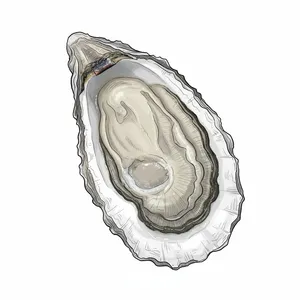
Ebenecook
US East CoastExpertly farmed Maine oyster known for pristine flavor and deep cups. Briny and fresh with clean salinity, grown slowly by dedicated aquaculturalists in cold Maine waters.
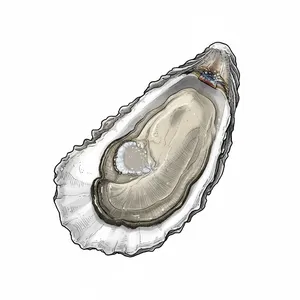
Sunken Meadow Gem
US East CoastCage-cultured Cape Cod oyster from Eastham with strong briny Wellfleet character. Medium-sized with delicate shape, clean ocean flavors, and pleasant seaweed notes in the finish.
Learn More
The Big Five: A Complete Guide to Commercial Oyster Species
Comprehensive guide to C. virginica (Atlantic), C. gigas (Pacific), C. sikamea (Kumamoto), O. lurida (Olympia), and O. edulis (European Flat)
Read article → Biology & SpeciesThe Atlantic Oyster (C. virginica): From Maritime Brine to Gulf Sweetness
Deep dive into America's indigenous East Coast oyster - flavor profiles, regional variations, and famous varieties
Read article → Merroir & EnvironmentWhat Is Merroir? How Water Shapes Oyster Flavor
Merroir is the marine version of terroir: how salinity, temperature, tides, and plankton in the growing water shape an oyster's flavor. The science, plus how to taste it.
Read article →