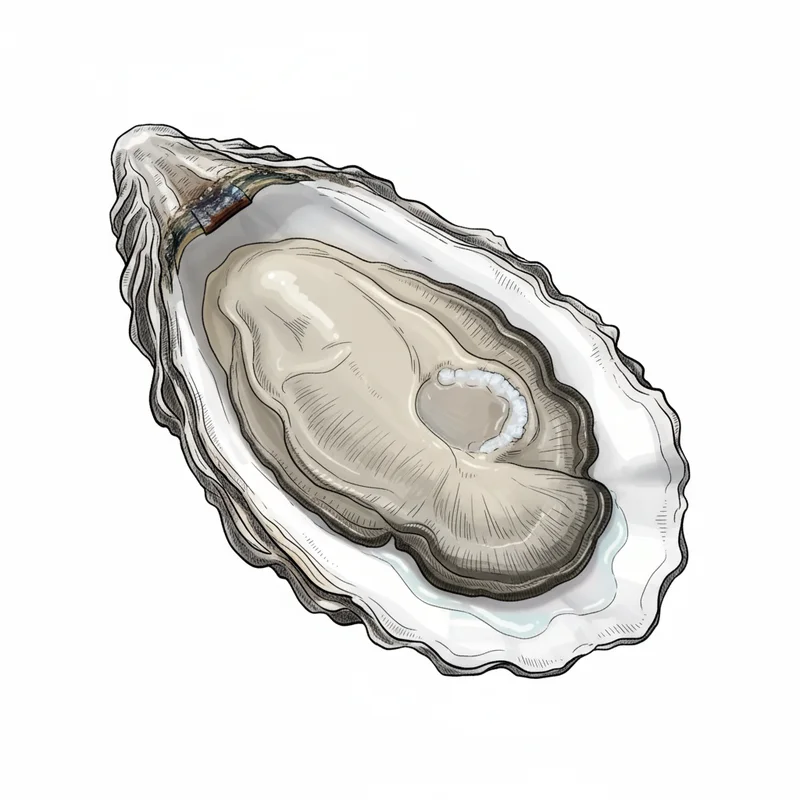
Fishers Island
Crassostrea virginica
A distinctively bold, deep-cupped Atlantic oyster from Block Island Sound. Grown in suspended lantern nets by a family farm for over 40 years. Briny with focused savory notes, strikingly clean finish, and firm texture.
At a Glance
Fishers Island is an Eastern oyster (Crassostrea virginica) from the US East Coast. It is notably briny (4/5 brininess) and moderately sweet (3/5 sweetness), with briny, sweet, savory flavors and a finish that is strikingly clean, sweet, no aftertaste.
Flavor Profile
Finish
Strikingly clean, sweet, no aftertaste
Expert Notes
Fishers Island oysters are brilliantly bold Atlantic oysters with a distinctive character shaped by their unique growing environment. Raised in hanging lantern nets in the oceanic waters of Block Island Sound, these oysters never touch mud, resulting in an exceptionally clean taste. After a strong hit of salt comes a medium, tightly focused body, followed by a sweet note that kicks in around chew #5. The family farm uses twelfth-generation native broodstock, creating oysters uniquely adapted to local conditions with firm texture from substantial adductor muscles. Origin & Characteristics
- Species
- Crassostrea virginica
- Native to
- USA
- Grown in
- West Harbor, Fishers Island, Block Island Sound, New York
- Size
- Medium to Large (2-4 inches)
- Shell Color
- White to gray
- Meat Color
- Light gray to cream
What Experts Say
Across 8 sources, tasters describe this oyster as:
Unique notes: berry notes, mossy notes, earthy undertones, silky mouthfeel, sparkling taste
"A brilliantly bold, Atlantic oyster that is punctuated by focused savoriness and a strikingly clean finish. Throughout the year, Fishers Island Oysters will oscillate between having slightly rocky and earthy undertones to more poignant berry and mossy notes. The texture is pleasantly firm and springy. Bold, briny nose with bright brininess. The zesty savoriness is locked within its smooth, delicate meat with focused flavor progression and silky mouthfeel. Look for hints of earthiness and minerality, as well as mossy and berry notes. Crisp, clean finish with a crisp, even sparkling taste."
boldbrinysavorycleanearthy
"Stunned by the fresh, firm, sweet meats. Briny (31 ppt), but not chokingly so. Strikingly clean finish. After the strong hit of salt comes a medium, tightly focused body and then no aftertaste other than sweetness, which reliably kicks in around chew #5. It's not a strong flavor, but it's a zesty one that makes you immediately want another. The clean taste is due to the growing method: hanging lantern nets. These oysters never touch mud, and thus don't acquire any muddy or mineral flavors."
freshfirmsweetbrinyclean
"This is as oceanic an environment as any oyster in the Northeast, and it comes through in the pure marine brine. Grown in five-tiered lantern nets suspended from the surface of West Harbor."
oceanicbrinymarine
"My favorite oyster by far. Pristine. Atlantic salty. Perfect size. Excellent, supple meats. You can always tell a Fishers Island Oyster by the salty freshness of it. Oceanic, natural goodness, an eternal connection. There's a purity to it. You just trust in its purity. It tastes like what an oyster should taste like."
saltyfreshoceanicpuresupple
"Firm and briny with a fleeting saltiness; clean finish. Medium, approximately 3-3.5 inches. Moderate cup depth. Solid shell strength, easy handling. Moderate meat-to-shell ratio, slightly plump meats."
firmbrinysaltyclean
"Bright and briny with hints of minerality; crisp, clean finish. Medium (3-3.5 inches long); teardrop-shaped."
brightbrinymineralcrispclean
"Perfect teardrop shape, a nice cup to hold the oyster in its liquor, and exceptionally clean tasting. It looked and tasted completely different from all other oysters that were available."
clean
About the Farm
Fishers Island Oyster Farm
Est. 1987Family-owned and managed by Sarah and Steve Malinowski for over 40 years. Started when oyster seed was accidentally mixed with scallop seed, leading to their first oyster harvest. They spawn their own broodstock each year from the previous year's stars, creating a unique genetic line adapted to island conditions after multiple generations.
- Cultivation Method
- suspended culture
History & Background
One of the original artisanal oysters of New York and one of the first boutique East Coast oyster farms. Started in 1987 when the Malinowskis were growing seed scallops but oyster seed was miraculously mixed in. Their Fishers Island Petites debuted in late 1980s NYC when only a handful of oyster appellations were available. Unlike the big Blue Point oysters popular at the time, Fishers Island Petites were modest in size with a perfect teardrop shape.
First purchased by renowned chef Jean-Georges Vongerichten who was one of the first to understand what they were trying to do. About 75 percent of production goes to 50 of the best restaurants in New York. The farm has been one of the most important oyster hatcheries for decades, with many of the best East Coast oysters grown from Fishers Island seed.
Did You Know?
- The Malinowskis select about 100 rock stars from their one million full-grown oysters each year to serve as brood stock, meaning current oysters are twelfth-generation Fishers Island natives
- Oysters are grown in five-tiered lantern nets suspended from the surface—they never touch mud
- The farm maintains 17,000 hanging nets in the pond, pulling them by hand every three weeks
- Fishers Island is technically in New York but just off the Connecticut coast in Block Island Sound
- The only oyster producer on Fishers Island
- Steve Malinowski brought black and white photographs to NYC restaurants to show chefs what oyster farming was about when first selling in the late 1980s
Sources & References
This information was compiled from 8 sources.
- Fishers Island Oysters - Oyster Tasting Profile — fishersislandoysters.com
- Fishers Island Oysters — oysterguide.com
- Fishers Island Oyster - Oysterater — oysterater.com
- Fishers Island Oyster Farm — LIOGA — liogany.org
- A Little Oyster in the Big City: The Story of Fishers Island — inahalfshell.com
- East Coast Vs West Coast Oysters | Tasting Guide from Crave Fishbar — cravefishbar.com
- History of Fishers Island Oysters — shuttersandsails.com
- Fisher's Island Oysters — citarella.com
Similar Oysters
Blue Point (Great South Bay)
US East CoastThe legendary Blue Point oyster, restored to its original Great South Bay home. Full-salt brininess with sweet honeydew finish and distinctive pine and anise notes. A historic American favorite since the 1820s.
Broadwater
US East CoastA Virginia oyster grown in Chesapeake waters and finished on the Atlantic side for enhanced salinity. Plump, smooth meat with lively brininess and complex flavor that sets it apart from typical Chesapeake oysters.
Bulls Bay
US East CoastHistoric South Carolina oyster from Bulls Bay. Large and meaty with a firm texture, pronounced briny flavor, and distinctive sweet finish. Shaped by high salinity coastal waters with peak flavor in colder months.
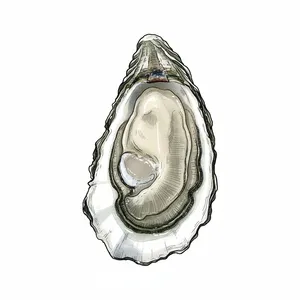
Glidden Point
US East CoastThe definitive Maine oyster from the Damariscotta River. Bottom-cultured in frigid waters, producing thick, heavy shells with deep cups and firm meats. Crisp and complex with pronounced brininess balanced by sweetness.
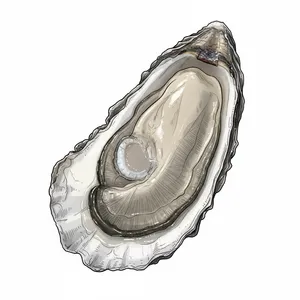
Mystic
US East CoastBottom-planted Connecticut oyster from the Mystic River. Firm, meaty texture with intense brininess from high salinity waters, finishing with a distinctive sweet note. Thick, irregular shells house a robust flavor.
Learn More
The Big Five: A Complete Guide to Commercial Oyster Species
Comprehensive guide to C. virginica (Atlantic), C. gigas (Pacific), C. sikamea (Kumamoto), O. lurida (Olympia), and O. edulis (European Flat)
Read article → Biology & SpeciesThe Atlantic Oyster (C. virginica): From Maritime Brine to Gulf Sweetness
Deep dive into America's indigenous East Coast oyster - flavor profiles, regional variations, and famous varieties
Read article → Merroir & EnvironmentWhat Is Merroir? How Water Shapes Oyster Flavor
Merroir is the marine version of terroir: how salinity, temperature, tides, and plankton in the growing water shape an oyster's flavor. The science, plus how to taste it.
Read article →