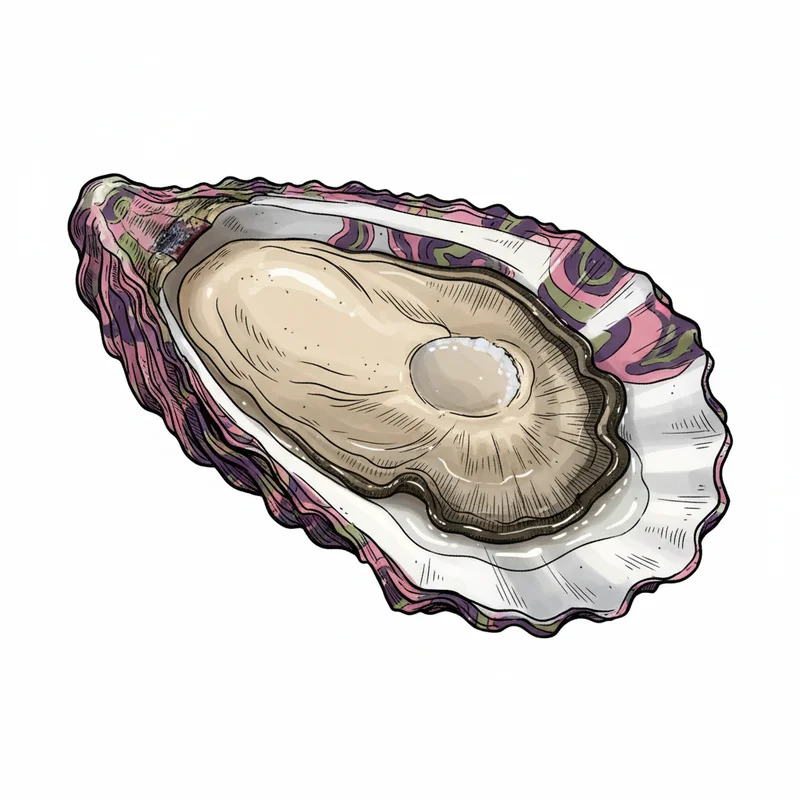
Imperial Eagle Channel
Crassostrea gigas
Beach-cultured Pacific oyster from Barkley Sound on Vancouver Island's wild west coast. Deep-cupped and plump with high brininess balanced by natural sweetness, finishing with distinctive cucumber and watermelon-rind notes.
At a Glance
Imperial Eagle Channel is a Pacific oyster (Crassostrea gigas) from the Canada West Coast. It is notably briny (4/5 brininess) and distinctly sweet (4/5 sweetness), with briny, sweet, cucumber flavors and a finish that is light cucumber with watermelon-rind aftertaste.
Flavor Profile
Finish
Light cucumber with watermelon-rind aftertaste
Expert Notes
Imperial Eagle Channel oysters are beach-cultured on the Pacific-exposed west side of Vancouver Island, where cold North Pacific waters rich in nutrients from strong coastal upwelling create ideal growing conditions. These plump, deep-cupped oysters are quite salty with high brininess, yet remarkably balanced by natural sweetness. The distinctive finish features refreshing cucumber notes and a signature watermelon-rind aftertaste that sets them apart from other Pacific oysters. Origin & Characteristics
- Species
- Crassostrea gigas
- Native to
- Japan
- Grown in
- Barkley Sound, Western Vancouver Island, Pacific Rim National Park
- Size
- Medium (up to 3 inches)
- Shell Color
- Art-deco swirls of pink, purple, and green
- Meat Color
- Cream
What Experts Say
Across 7 sources, tasters describe this oyster as:
Unique notes: watermelon-rind, fresh cucumber, otherworldly shell colors
"The taste is strong on salt (pure ocean water comes right through the channel) but light on follow-through. The bag-to-beach oysters have unusual shells, thin and narrow but extremely deep-cupped, like the bucket of an excavator (with the frills serving as the teeth), with otherworldly pink, purple, and orange swirls."
saltystrong ocean
"It has a harder shell that is colorful and the meat is saltier than most west coast oysters, however, it has a delightful watermelon-rind, fresh cucumber finish."
saltierwatermelon-rindfresh cucumber
"The oysters are quite salty, thanks to the direct ocean water exchange, and they tend to be very plump, thanks to the abundance of nutrients. Their flavor is sweet and they finish with a watermelon rind-like aftertaste."
saltysweetwatermelon rindplump
"Imperial Eagles are beach-cultured oysters from the West Side of Vancouver Island. The channel is open to the cold North Pacific waters."
brinycold water
"Oysters from Imperial Eagle Channel which is located in Barkley Sound, which is on the open Pacific side of Vancouver Island. They are grown in a very pristine environment."
cleanpristine
About the Farm
Beach-cultured oysters grown on the isolated beaches of Imperial Eagle Channel in Barkley Sound, British Columbia, part of Pacific Rim National Park on the wild west coast of Vancouver Island.
- Cultivation Method
- bags-to-beach
History & Background
Imperial Eagle Channel is located in Barkley Sound, part of Pacific Rim National Park on the Pacific-exposed west side of Vancouver Island, approximately eighty miles northwest of the southern tip of the island.
Sometimes listed as a Washington oyster at East Coast oyster bars, possibly due to confusion with Eagle Rock from Puget Sound, but it is a pure British Columbia oyster from the wild west coast.
Did You Know?
- Named after the historic British merchant ship Imperial Eagle, launched in 1774
- The channel entrance is often surrounded by 60-foot high waves
- Shells have otherworldly pink, purple, and orange swirls
- Located in one of the most pristine and remote oyster-growing regions
Sources & References
This information was compiled from 7 sources.
- Imperial Eagle Channel - British Columbia — The Oyster Guide
- Imperial Eagle - Fortune Fish & Gourmet — Fortune Fish & Gourmet
- Imperial Eagle Oyster — Marinelli Shellfish
- Imperial Eagle Channel Oyster - Oysterater — Oysterater
- OYSTER VARIETIES - The Seafood Merchants — The Seafood Merchants
- Imperial Eagle Oyster — Chef's Resources
- Oysters - Fortune Fish & Gourmet — Fortune Fish & Gourmet
Similar Oysters
Beach Angel
Canada West CoastBeach-grown Pacific oyster from Cortes Island, BC. Firm and sweet with robust briny flavor, featuring distinctive notes of cucumber, grass, and melon rind. Crisp and ocean-fresh.
Fanny Bay
Canada West CoastThe archetypal BC oyster. Smooth and balanced with sweet, buttery notes and a signature crisp cucumber finish.
Komo Gway
Canada West CoastBeach-grown Pacific oyster from Baynes Sound on Vancouver Island. Clean, briny flavor with firm texture, subtle cucumber notes, and a slightly sweet finish. Harvested from the traditional territory of the K'ómoks First Nation.
Denman Island
Canada West CoastClean, delicate Pacific oyster from Baynes Sound, BC. Sweet and balanced with moderate brine, firm texture, and a distinctive cucumber finish with hints of watermelon.
Effingham Inlet
Canada West CoastPremium Pacific oyster from a pristine deep-water fjord in Barkley Sound, BC. Tray-suspended and tumbled for uniform deep cups. Plump, cream-colored meat with vibrant brine, natural sweetness, and a smooth watermelon-lettuce finish.
Learn More
The Big Five: A Complete Guide to Commercial Oyster Species
Comprehensive guide to C. virginica (Atlantic), C. gigas (Pacific), C. sikamea (Kumamoto), O. lurida (Olympia), and O. edulis (European Flat)
Read article → Biology & SpeciesThe Pacific Oyster (C. gigas): Cream, Cucumber, and the Japanese Legacy
Understanding the world's most cultivated oyster - from Japanese origins to West Coast dominance
Read article → Merroir & EnvironmentWhat Is Merroir? How Water Shapes Oyster Flavor
Merroir is the marine version of terroir: how salinity, temperature, tides, and plankton in the growing water shape an oyster's flavor. The science, plus how to taste it.
Read article →