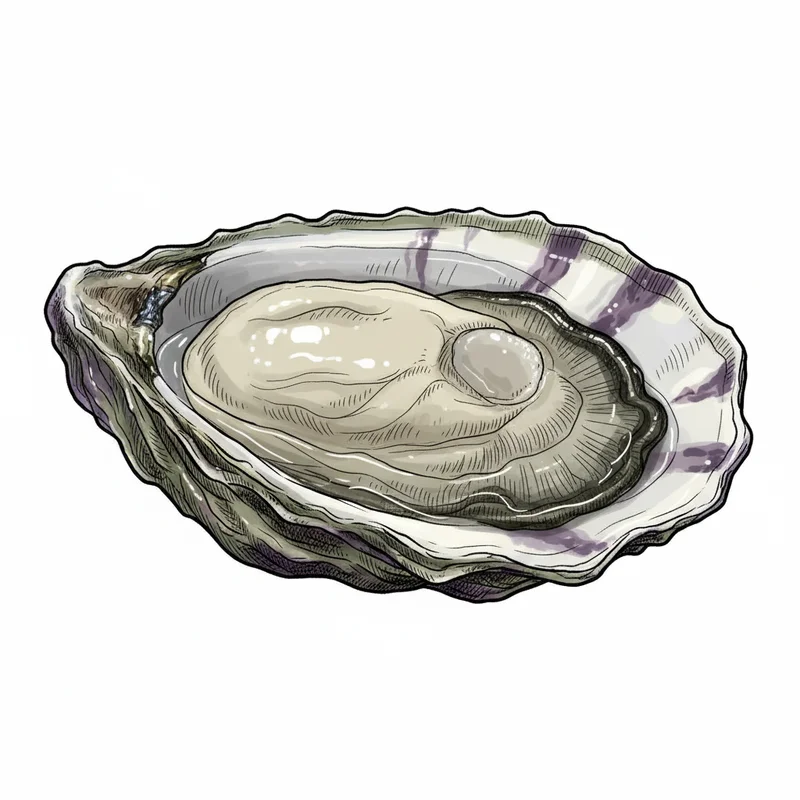
Kumamoto
Crassostrea sikamea
The gateway oyster. Known for its sweet, melon-forward flavor and petite, deeply cupped shell, the Kumamoto is beloved by beginners and experts alike.
At a Glance
Kumamoto is a Kumamoto oyster (Crassostrea sikamea) from the US West Coast. It is mildly briny (2/5 brininess) and distinctly sweet (4/5 sweetness), with sweet, melon flavors and a finish that is clean and lingering with gentle sweetness. It is considered a beginner-friendly oyster.
Flavor Profile
Finish
Clean and lingering with gentle sweetness
Expert Notes
The Kumamoto's appeal lies in its approachability. Its remarkably low brininess paired with fruit-forward sweetness makes it the perfect introduction to raw oysters. Yet the subtle complexity in its creamy texture and clean finish keeps connoisseurs coming back. Origin & Characteristics
- Species
- Crassostrea sikamea
- Native to
- Japan
- Grown in
- Willapa Bay, WA, Hood Canal, WA, Tomales Bay, CA
- Size
- Small (1.5-2.5 inches)
- Shell Color
- Gray-green with purple streaks
- Meat Color
- Cream to light gray
What Experts Say
Across 8 sources, tasters describe this oyster as:
Unique notes: honeydew, clean liquor, Chardonnay-like
"Prized for their sweet honeydew like meat brimming with sweet liquor, Kumos are loved for their clean and fruity aromas. Bright, sweet flavors with a cucumber finish."
sweethoneydewcleanfruitycucumber
"Their flavor profile is a revelation—subtly sweet, mildly fruity, and delicately briny. Each bite offers a journey through the ocean's depths, and their unique 'merroir' infuses their taste with the essence of their local habitat."
sweetfruitybrinydelicate
"Kumamoto Oysters are deep-cupped with petite meats, have a mild brininess, sweet flavor and a honeydew finish."
mild brininesssweethoneydew
"I call the Kumamoto 'the Chardonnay of oysters' because it's sweet, fruity, nonintimidating, and everybody likes it. Many consider it the perfect oyster."
sweetfruitymild
"Deep-cupped, sweet, and melony, this is a Pacific masquerading as a Kumamoto. The thin shell and mild flavor clearly mark this oyster as a product of suspension culture."
sweetmelonmilddeep-cupped
"Kumamotos are famously melon-scented, sweet, and firm, with none of the bitter or muddy aftertaste that makes some oysters challenging. Closely related to the Pacific oyster, which also was imported from Japan, Kumos stay small and deep-cupped, and are revered by beginners and pros alike."
melonsweetfirmclean
About the Farm
Taylor Shellfish Farms
Grown from rare, mid-century heirloom seeds dating back to the original Japanese imports of the 1940s. Slow-grown and a labor of love, these Japanese natives grow significantly slower than most oysters (approximately 3-5 years).
- Cultivation Method
- suspended culture
History & Background
Kumamoto oysters originated in Yatsushiro Bay, Kumamoto Prefecture, Kyushu Japan and were shipped to the U.S. in 1945-1946 after World War II when there was an increase in demand for oysters. The first test shipment of 30 boxes of Kumamoto oyster seeds arrived in Seattle, Washington, in 1946. The species is mostly overlooked in Japan where it stems from, due to its small size, but became extremely popular in the United States.
Strangely, even though they are extremely popular in the US, they are unknown in Japan where they originated. The Kumamoto is often called 'the gateway oyster' and 'the Chardonnay of oysters' because it's sweet, fruity, non-intimidating, and everybody likes it.
Did You Know?
- The Kumamoto was accidentally introduced to the U.S. due to a post-WWII export mix-up in 1946
- Kumamotos went extinct in their native Japanese waters but have been recently reintroduced by Kumamoto Prefectural Fisheries Research Center
- They grow significantly slower than most oysters, taking approximately 3-5 years to reach market size
- Many consider it 'the perfect oyster' and it is revered by beginners and experts alike
- Oregon Oyster Farms in Newport, Oregon is one very large producer and their Kumamotos are rated number 2 in the nation
Sources & References
This information was compiled from 8 sources.
- Kumamoto Oysters (30 PCS) - Taylor Shellfish Farms — Taylor Shellfish Farms
- Kumamoto Oysters (Crassostrea sikamea): A Comprehensive Guide — Oyster Encyclopedia
- Kumamoto Oysters - Chefs Resources — Chefs Resources
- Kumos in Japan? - The Oyster Guide — The Oyster Guide
- CHOW Oyster Guide - The Oyster Guide — The Oyster Guide
- Kumamoto oyster - Wikipedia — Wikipedia
- History on the Half-Shell - Pacific Rim Magazine — Langara Sites
- Kumiai vs Kumamoto Oysters - Baja Shellfish Farms — Baja Shellfish Farms
Kumamoto: A Closer Look
- Origin
- Yatsushiro Bay, Kumamoto Prefecture, Kyushu, Japan
- Species
- Crassostrea (Magallana) sikamea
- Introduced to US
- Seattle, Washington, 1945-1947 (post-WWII)
- Flavor
- Sweet, fruity, buttery; mild brine with melon and cucumber notes
- Size & shape
- Small (rarely over 2 in / 6 cm) with a deep, bowl-like cup
- Cultivation
- Slow-grown, roughly 2-4 years to market size
- Nicknames
- Kumo, Kumi; 'the Chardonnay of oysters,' 'the gateway oyster'
The Kumamoto is the small oyster that conquered America. Native to Yatsushiro Bay in Japan's Kumamoto Prefecture on the island of Kyushu, it is a distinct species, Crassostrea sikamea (now often placed in the genus Magallana), long confused with and closely related to the Pacific oyster but genetically its own. The Smithsonian's marine-invasions researchers note that although Kumamotos can hybridize with Pacific oysters, the two are now considered separate species, and there is no evidence the Kumamoto has established wild populations on the West Coast.
Its journey to North America was almost an accident of history. After World War II, demand for oysters surged, and Japanese seed was shipped to the Pacific Northwest; the first test shipment of Kumamoto seed reached Seattle in the mid-1940s, with sources placing its arrival in 1945-1947. The oyster was largely overlooked in Japan because of its small size, but it thrived on the American West Coast and is now farmed from British Columbia down through Washington, Oregon, and California into Baja Mexico. Strangely, the variety nearly vanished from its homeland: by the 1980s pollution had driven purebred Kumamotos to local extinction in Japan, and in the Pacific Northwest interbreeding with Pacific oysters made genetically pure stock hard to find. Growers such as Taylor Shellfish Farms preserved heirloom pure lines that today's commercial stock descends from, and the species has since been reintroduced to Japanese waters by the Kumamoto Prefectural Fisheries Research Center.
What makes a Kumamoto a Kumamoto is its shape as much as its flavor. The shell is rounder than it is long and deeply cupped, almost bowl-like, with at least three radial ridges on its deeper left valve and a triangular profile from the side. Maxing out around 2.4 inches, it is one of the smaller cultivated oysters, and it grows slowly, often taking two to four years to reach market size. That deep cup cradles a plump, firm meat that is the whole point of the eating experience.
On the palate, the Kumamoto is famously approachable. Tasters describe it as sweet, fruity, and buttery, with low brininess and signature notes of honeydew melon and cucumber, finishing clean. Its consistency is part of its appeal: unlike Pacific oysters, whose flavor swings widely with growing conditions, the Kumamoto delivers a reliably sweet, mild, fruity bite. That predictability has earned it the nicknames 'the gateway oyster' and 'the Chardonnay of oysters,' and it is the variety most often handed to first-timers and beginners. Yet its sweetness and elegant cup keep seasoned aficionados coming back too, and many simply call it the perfect oyster.
Sources for this deep dive
This deep dive was drafted from the cited sources below and is under editorial review.
- Magallana sikamea - Marine Invasions Research — Smithsonian Environmental Research Center
- Kumamoto oyster — Wikipedia
- Oyster Species - a Primer! — Hama Hama Oysters
- All About Oysters — Oysterville Sea Farms
- The 5 Oyster Species — Chefs Resources
- Your Essential Guide to Oysters — Fulton Fish Market
- Kumamoto Oysters (Crassostrea sikamea): A Comprehensive Guide — Oyster Encyclopedia
- History on the Half-Shell: The Kumamoto Oyster — Pacific Rim Magazine
Similar Oysters
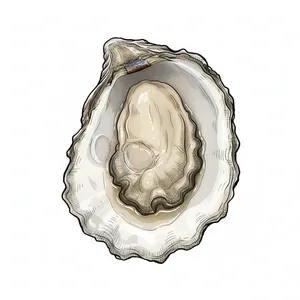
Bodega Bay Kumamoto
US West CoastA petite, deep-cupped Kumamoto oyster from California's Bodega Bay. Delicately sweet with fruity, honeydew melon notes and mild brininess. Perfect for beginners and connoisseurs alike.
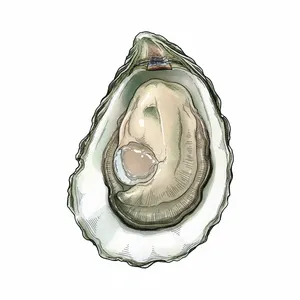
Hog Island Kumamoto
US West CoastExceptionally sweet Kumamoto from Humboldt and Tomales Bay. Tiny, deep-cupped oysters with creamy texture and honeydew-watermelon flavors. Virtually no brininess makes them perfect for beginners.
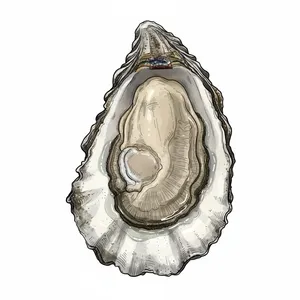
Skookum
US West CoastA sweet, mild Pacific Northwest oyster from South Puget Sound's Little Skookum Inlet. Melon-scented with low brininess and a creamy, herbaceous finish. Farmed since 1883 using rack & bag to beach cultivation.
Little Skookum
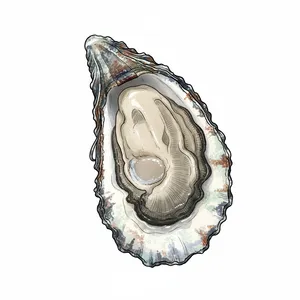
US West CoastA sweet, musky Pacific oyster from Little Skookum Inlet in South Puget Sound. Deep-cupped with plump, buttery meat, mild brininess, and distinctive melon-scented sweetness with a clean vegetable finish.
Pickering Passage
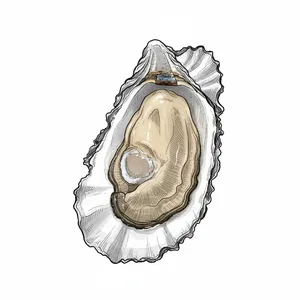
US West CoastA Pacific Northwest oyster from southern Puget Sound's nutrient-rich waters. Medium to large with tender, plump meats. Mild brine balanced with sweet richness and a crisp finish of melon and cucumber.
Learn More
What Is Merroir? How Water Shapes Oyster Flavor
Merroir is the marine version of terroir: how salinity, temperature, tides, and plankton in the growing water shape an oyster's flavor. The science, plus how to taste it.
Read article → Practical GuidesVibrio and Raw Oysters: A Clear-Headed Guide to Oyster Safety
Understanding Vibrio vulnificus without fear-mongering - risk factors, prevention, and when to cook
Read article → Culinary & PairingsBeyond Cocktail Sauce: The Art of the Oyster Mignonette
Classic and creative mignonette recipes engineered to complement specific oyster flavor profiles
Read article →