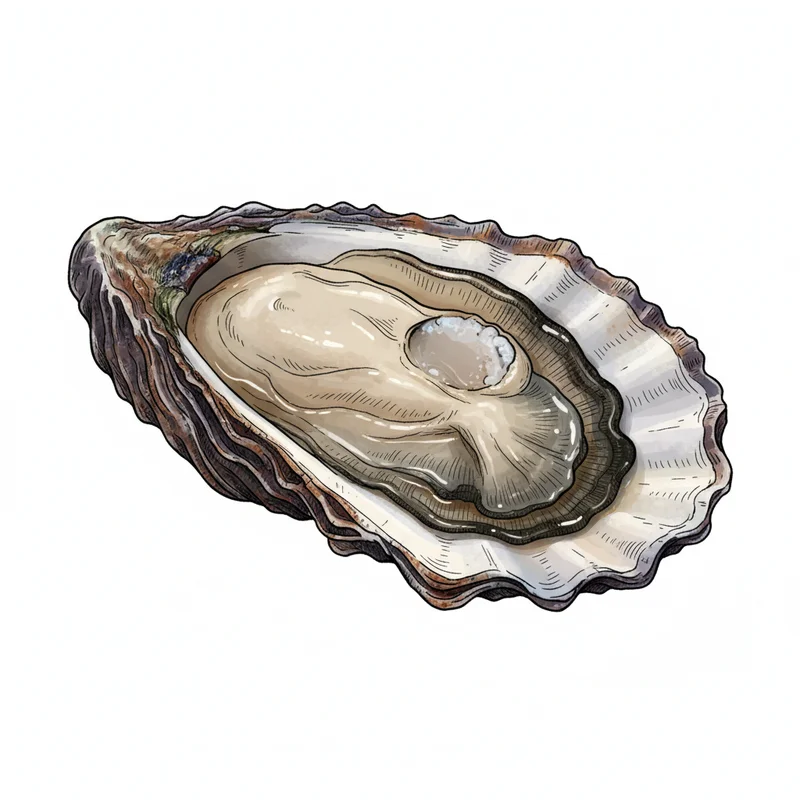
Little Skookum
Crassostrea gigas
A sweet, musky Pacific oyster from Little Skookum Inlet in South Puget Sound. Deep-cupped with plump, buttery meat, mild brininess, and distinctive melon-scented sweetness with a clean vegetable finish.
At a Glance
Little Skookum is a Pacific oyster (Crassostrea gigas) from the US West Coast. It is mildly briny (2/5 brininess) and distinctly sweet (4/5 sweetness), with sweet, melon, musky flavors and a finish that is clean vegetable and fruity finish. It is considered a beginner-friendly oyster.
Flavor Profile
Finish
Clean vegetable and fruity finish
Expert Notes
Little Skookum oysters are prized for their sweet, melon-scented flesh and distinctive musky character that reflects the unique terroir of their inland Puget Sound location. Grown using the rack & bag to beach method, these oysters spend their final months beach-cultured, developing firmer meats and stronger shells. The inlet's position as the farthest inland capillary of Puget Sound means these oysters are influenced more by freshwater than saltwater, resulting in remarkably low brininess and enhanced sweetness with a plump, buttery texture. Origin & Characteristics
- Species
- Crassostrea gigas
- Native to
- Japan
- Grown in
- Little Skookum Inlet, South Puget Sound, Washington
- Size
- Small to Medium (2-4 inches)
- Shell Color
- Ridged with high mineral content coloring
- Meat Color
- Plump, creamy
What Experts Say
Across 8 sources, tasters describe this oyster as:
Unique notes: funky soup, wet earth, cooked greens, fruity finish, mild fruity
"Little Skookum Inlet marks the farthest capillary of Puget Sound. Its exposed upstream mudflats, warmed and moist, are a finer algae incubator than any hatchery. When the tide returns, a carpet of green and brown is lifted off the mudflats and pureed in the currents, creating a thick, funky soup that grows fat, buttery clams and oysters. As you might expect from an inlet so shallow and far from the sea, Little Skookum oysters are not salty."
fatbutteryfunkynot salty
"Sweet and mildly creamy. Love."
sweetmildly creamy
"Responsibly farmed. Flavor Profile: sweet and musky with a mild salinity and vegetable finish. Size: Small – Medium. Fun Fact: Little Skookum Inlet is the farthest inland capillary of the Puget Sound."
sweetmuskymild salinityvegetable finish
"Deep-cupped and plump, Skookums have an attractive appearance due to the high mineral content of the water in which they are grown. Their flavor is very sweet with a mild fruity finish."
very sweetmild fruity finishdeep-cuppedplump
"South Sound oysters smell like wet earth at low tide. Each inlet has its distinctions, but they all contribute that characteristic South Sound flavor—full, rich, intense, more sweet than salty, a hint of cooked greens or seaweed, bordering on musky."
fullrichintensemore sweet than saltycooked greens
"A typical Little Skookum oyster, begun in bags and then spread on beaches to mature, soft-textured, sweet, not salty, and musky flavored."
soft-texturedsweetnot saltymusky
About the Farm
Little Skookum Shellfish Growers
Est. 1849Founded by Irish immigrant Jeremiah Lynch who arrived during the California Gold Rush. After finding no gold, he headed north and discovered Little Skookum Bay, where he homesteaded and discovered oyster beds. The business has been passed down through six generations and is currently owned by Lisa and Brett Bishop.
- Cultivation Method
- bag to beach
History & Background
Little Skookum Shellfish Growers was established in 1849, making it one of the oldest oyster operations in Washington State. The company was founded by Jeremiah Lynch, an Irish immigrant who came west for the California Gold Rush but instead found oyster beds in Little Skookum Inlet. The business has remained in the family for six generations, representing over 170 years of continuous shellfish farming.
Little Skookum Inlet marks the farthest inland capillary of Puget Sound, creating a unique growing environment. The inlet is fed by Lynch Creek (named after the founder), which is filled with salmon each fall. The shallow, U-shaped basin empties completely at low tide, exposing mudflats that act as natural algae incubators.
Did You Know?
- Little Skookum Inlet is the farthest inland capillary of Puget Sound
- The inlet empties completely at low tide and becomes one continuous shellfish bed from shore to shore
- Lynch Creek, which feeds the inlet, is named after founder Jeremiah Lynch and is stuffed with salmon each fall
- The business has been family-operated for six generations since 1849
Sources & References
This information was compiled from 8 sources.
- Skookum - Hood Canal and Southern Puget Sound — The Oyster Guide
- Little Skookum Oyster — Oysterater
- Little Skookum Shellfish Growers, Inc. — FishChoice
- East Coast Vs West Coast Oysters: The Crave Fishbar Tasting Guide — Crave Fishbar
- Skookum Inlet Oyster — Marinelli Shellfish
- Skookum Oysters — Chefs Resources
- Little Skookum Shellfish Growers: Six Generations of Shellfish Farming — Thurston Talk
- Hood Canal and Southern Puget Sound — The Oyster Guide
Similar Oysters
Hama Hama
US West CoastClassic Pacific Northwest oyster with delicately sweet flesh and herbaceous notes. Lichen-green shells with a distinctive watermelon-rind flavor profile.
Skookum
US West CoastA sweet, mild Pacific Northwest oyster from South Puget Sound's Little Skookum Inlet. Melon-scented with low brininess and a creamy, herbaceous finish. Farmed since 1883 using rack & bag to beach cultivation.
Chelsea Gem
US West CoastThe original tide-tumbled oyster from Eld Inlet's pristine waters. Deep-cupped with plump meats, mild brininess, silky creamy texture, and a signature sweet cucumber finish. A true Pacific Northwest gem.
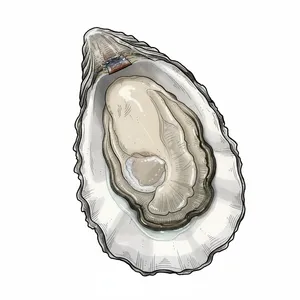
Royal Miyagi
US West CoastA rare Pacific Northwest oyster with distinctive sweet creaminess and unique kiwi-like finish. Cultivated on suspended lines then beach-finished for exceptional smoothness and plump texture.
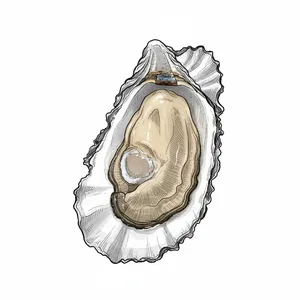
Pickering Passage
US West CoastA Pacific Northwest oyster from southern Puget Sound's nutrient-rich waters. Medium to large with tender, plump meats. Mild brine balanced with sweet richness and a crisp finish of melon and cucumber.
Learn More
The Big Five: A Complete Guide to Commercial Oyster Species
Comprehensive guide to C. virginica (Atlantic), C. gigas (Pacific), C. sikamea (Kumamoto), O. lurida (Olympia), and O. edulis (European Flat)
Read article → Biology & SpeciesThe Pacific Oyster (C. gigas): Cream, Cucumber, and the Japanese Legacy
Understanding the world's most cultivated oyster - from Japanese origins to West Coast dominance
Read article → Merroir & EnvironmentWhat Is Merroir? How Water Shapes Oyster Flavor
Merroir is the marine version of terroir: how salinity, temperature, tides, and plankton in the growing water shape an oyster's flavor. The science, plus how to taste it.
Read article →