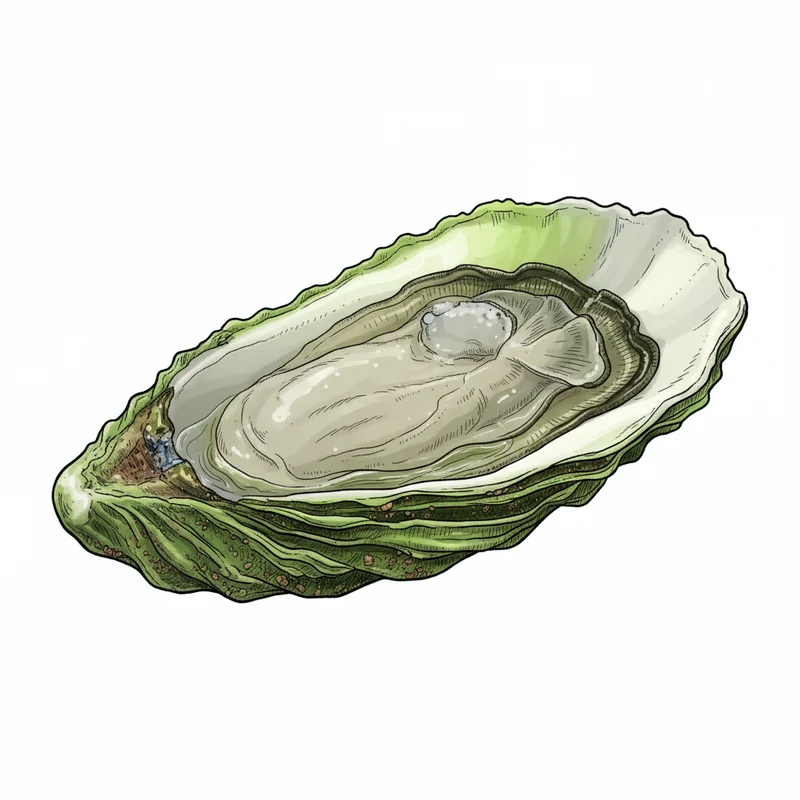
Lucky Lime
Crassostrea virginica
Distinctive PEI oyster with moss-green shells and briny, seaweed-like flavor with refreshing citrus and lime finish.
At a Glance
Lucky Lime is an Eastern oyster (Crassostrea virginica) from the Canada East Coast. It is notably briny (4/5 brininess) and subtly sweet (2/5 sweetness), with briny, citrus flavors and a finish that is citrus, clean, refreshing lime notes.
Flavor Profile
Finish
Citrus, clean, refreshing lime notes
Expert Notes
Lucky Limes develop their distinctive character from the algae-rich waters of New London Bay, which not only turns their shells bright moss-green but contributes significant depth of flavor. The oysters offer a unique salty, seaweed-like taste with a subtle citrus finish that occasionally presents as a distinct lime note. The algae-abundant environment creates a flavor profile that's briny yet refined, making these oysters stand out among PEI varieties. Origin & Characteristics
- Species
- Crassostrea virginica
- Native to
- North America
- Grown in
- New London Bay, Prince Edward Island, Hope River, PEI
- Size
- Medium (3-3.5 inches)
- Shell Color
- Moss-green to bright green
- Meat Color
- Light gray-cream
What Experts Say
Across 8 sources, tasters describe this oyster as:
Unique notes: chicken stock lite, lime finish, moss-green shells, algae-influenced
"Very pretty, with moss-green shells and that perfect paisley shape. Simple briny flavor, like chicken stock lite."
brinysimplemoss-green shells
"Nice citrus flavor, good body, briny finish. One of my favorites at the moment"
citrusbrinygood body
"My #2 favourite P.E.I. oyster!!"
"Lucky Lime oysters have a simple briny flavor, similar to chicken stock. They have a silky citrus-tone finish and are not as salty as other oyster varieties."
brinycitrussilkynot overly salty
"The Lucky Lime oyster is bursting with flavor; its uniform shell and greenish hues, give it a distinctive appearance, while the firm, abundant and generous flesh opens on a balanced flavor of seaweed, with a silky citrus-tone finish."
seaweedcitrussilkybalancedfirm flesh
"Lucky Limes develop a unique salty flavor and a superior shaped shell. Influenced by the algae abundant waters, these distinguished oysters offer a subtle taste variation in their half shell. Sometimes they even have a lime finish though I haven't tasted this in the last year of sourcing them."
saltylimesubtlealgae-influenced
"Inside its bold green shell, the Lucky Lime is plump and buttery with medium saltiness."
butteryplumpmedium saltinessgreen shell
About the Farm
Raspberry Point Oyster Company
Est. early 1990sWith over 25 years in the oyster business, Raspberry Point Oyster Co produces some of North America's most sought-after oysters. They raise oysters in the picturesque cool, clear waters off Prince Edward Island, Canada, with leases among the most northern stocks of oysters in North America.
- Cultivation Method
- rack and bag
History & Background
Lucky Lime oysters are cultivated in the northern most reach of New London Bay, Prince Edward Island, where a naturally existing string of sand dunes protects the delicate ecosystem of the bay.
These oysters are grown at a site with strong algae growth that turns the shells bright green and contributes depth of flavor. Because of the northern location, each oyster takes between 4-6 years to reach market size.
Did You Know?
- The moss-green shells are caused by strong algae growth in New London Bay
- Despite the name suggesting lime flavor, some sources note this citrus finish is not always present
- The oysters are influenced by the salty influx of the Gulf of St. Lawrence
Sources & References
This information was compiled from 8 sources.
- Lucky Lime - OysteRater — oysterater.com
- Lucky Lime Oysters - The Oyster Encyclopedia — oysterencyclopedia.com
- October Oyster of the Month - Aphrodite Oysters — aphroditeoysters.com
- Lucky Limes - Fortune Fish Co. — fortunefishco.net
- Lucky Lime Oysters - Seafood Oceano — seafoodoceano.com
- A bit of education will enhance your appreciation of oysters - Baltimore Sun — baltimoresun.com
- Aw, Shucks! The Merroir of PEI Malpeque Oysters — myislandbistrokitchen.com
- Lucky Lime Oysters - EURO USA — eurousa.com
Similar Oysters
Bras D'or
Canada East CoastWild-harvested Maritime oyster from Cape Breton's Bras D'Or Lakes. Light-bodied with assertive brine, hints of seaweed, and a clean, steely finish. A quintessential Atlantic oyster from pristine Nova Scotia waters.
Bedeque Bay
Canada East CoastBottom-cultured Atlantic oyster from Salutation Cove in Prince Edward Island. Round, deep-cupped with tender meats, high salinity, and a strong distinctive flavor that stands out among typically mild Maritime oysters.
Cape Breton
Canada East CoastWild-caught oyster from Cape Breton Island's pristine waters in Nova Scotia. Very briny with bright ocean character, firm springy meat, and a lingering mineral finish that reflects the clean Atlantic surroundings.
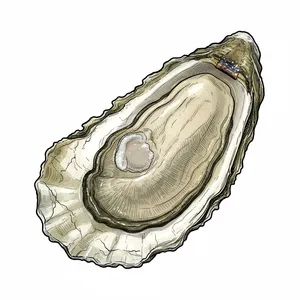
Hurricane Island
Canada East CoastHand-harvested from the cold, clean waters of Nova Scotia's Northumberland Strait. Small to medium oysters with intense brininess, firm crisp texture, and a notably sweet finish.
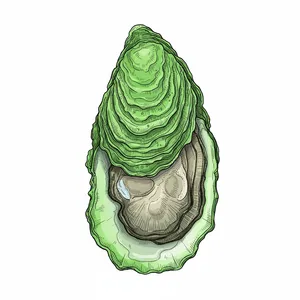
Irish Point
Canada East CoastA cocktail-sized PEI oyster with striking bright green shells. High salinity with a powerful brine that transitions to a sweet, earthy, citrus finish. Excellent meat quality from cold northern waters.
Learn More
The Big Five: A Complete Guide to Commercial Oyster Species
Comprehensive guide to C. virginica (Atlantic), C. gigas (Pacific), C. sikamea (Kumamoto), O. lurida (Olympia), and O. edulis (European Flat)
Read article → Biology & SpeciesThe Atlantic Oyster (C. virginica): From Maritime Brine to Gulf Sweetness
Deep dive into America's indigenous East Coast oyster - flavor profiles, regional variations, and famous varieties
Read article → Merroir & EnvironmentWhat Is Merroir? How Water Shapes Oyster Flavor
Merroir is the marine version of terroir: how salinity, temperature, tides, and plankton in the growing water shape an oyster's flavor. The science, plus how to taste it.
Read article →