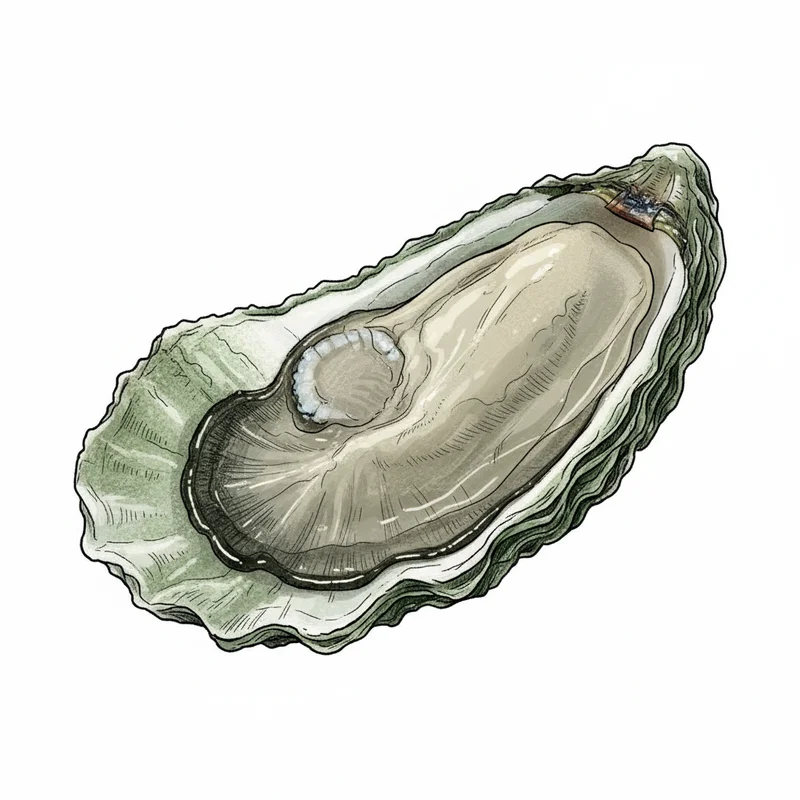
Malagash Thrumcap
Crassostrea virginica
Wild, bottom-grown oyster from Nova Scotia's Malagash Basin. Mildly salty with a distinctive smoky, mineral finish and firm texture from the pristine northern Atlantic waters.
At a Glance
Malagash Thrumcap is an Eastern oyster (Crassostrea virginica) from the Canada East Coast. It is notably briny (4/5 brininess) and subtly sweet (2/5 sweetness), with briny, mineral flavors and a finish that is mildly salty with a smoky, mineral finish.
Flavor Profile
Finish
Mildly salty with a smoky, mineral finish
Expert Notes
Malagash Thrumcap is a wild, bottom-grown Nova Scotia oyster with a long, hard greenish-white shell. The meat is firm with a mildly salty flavor that leads into a distinctive slightly smoky, mineral finish. These oysters reflect the clean, pristine waters of the Malagash Basin on Nova Scotia's northern coast, delivering a straightforward brininess with subtle mineral nuances that showcase their wild Atlantic character. Origin & Characteristics
- Species
- Crassostrea virginica
- Native to
- North America
- Grown in
- Malagash Basin, North Shore of Nova Scotia
- Size
- Medium (3-3.5 inches)
- Shell Color
- Greenish-white
- Meat Color
- Cream to light gray
What Experts Say
Across 5 sources, tasters describe this oyster as:
Unique notes: wild mushrooms, Northumberlandy, light texture
"It's another of those wild, mild, bottom-grown Northumberlandy oysters, big and long with a greenish-white shell and an irregular cup. It's firm, as all the slow-growing Canadian oysters are, with a mild vegetal flavor."
mildvegetalfirm
"The fresh oyster meat is firm with a mild brininess. It has complex flavors similar to wild mushrooms, and lingering sweet, vegetal, early notes."
firmbrinymildmushroomsweet
"The sandy soils give the oyster a sweet and briny taste with a light texture... have a flavour profile that is second to none, slightly briny and with a slightly sweet finish."
sweetbrinylight
"Wild, firm oyster with mild vegetal flavor and briny finish. Long, hard, greenish-white shells."
wildfirmmildvegetalbriny
"Nova Scotia oysters are a little more robust in both flavour and salinity, but not as sweet... almost a perfect halfway point between the world famous Malpeque and a mid-Atlantic oyster from Cape Cod or Long Island."
robustsaltymineral
About the Farm
Purdy Family / Bay Enterprises Limited
Est. 1867The Purdy family has been producing oysters in the Malagash area since 1867, making them one of the oldest oyster operations in Canada with over 150 years of expertise.
- Cultivation Method
- wild harvest
History & Background
The first lease for oyster grounds in Canada was made to Senator MacFarlane from Wallace in 1867, with oyster farming beginning the following year in the Malagash area. Oyster beds have been continuously found for thousands of years, first noted by the indigenous Mi'kmaq people, and later by European settlers.
Malagash is a village on the Northumberland Shore between Pugwash and Tatamagouche. The name 'Malagash Thrumcap' is considered one of the most memorable and fun oyster names to say in North America.
Did You Know?
- The oyster's name sounds like it could be a bird species spotted at an Audubon Society outing
- In 2013, an average of 30,000 oysters were harvested per week during the production season
- The name is often considered more famous than the oyster itself
Sources & References
This information was compiled from 5 sources.
- Malagash Thrumcap - Nova Scotia — The Oyster Guide
- Malagash Oyster - Ark of Taste — Slow Food Foundation
- Malagash Oysters: A Taste of the Northumberland Shore — Fox Harb'r Resort
- Oyster Varieties — The Seafood Merchants
- Inland committed to bringing only the freshest product to customers — Urner Barry's Reporter
Similar Oysters
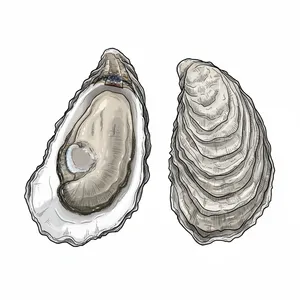
Wallace Bay
Canada East CoastSub-tidally cultivated Nova Scotia oyster from the cold waters of Northumberland Strait. Distinctly mineral-forward with high salinity and a fresh, clean finish. Deep-cupped shells from nutrient-rich northern waters.
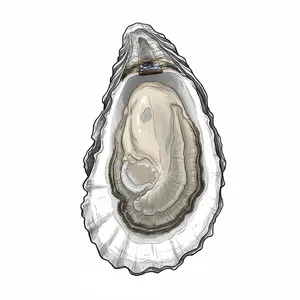
Lameque
Canada East CoastSmall cold-water oyster from Chaleur Bay, New Brunswick. Heavy, gnarly shells with intensely briny, metallic flavor. Robust and wild—not for beginners.
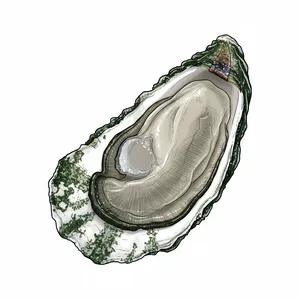
Bras D'or
Canada East CoastWild-harvested Maritime oyster from Cape Breton's Bras D'Or Lakes. Light-bodied with assertive brine, hints of seaweed, and a clean, steely finish. A quintessential Atlantic oyster from pristine Nova Scotia waters.
Lucky Lime
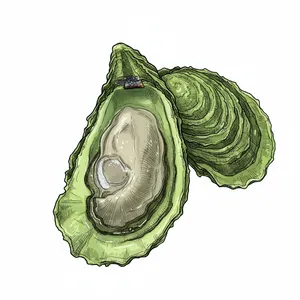
Canada East CoastDistinctive PEI oyster with moss-green shells and briny, seaweed-like flavor with refreshing citrus and lime finish.
East End
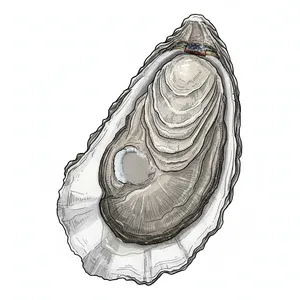
US East CoastClassic East Coast oyster with high salinity and pronounced minerality. Medium-sized with a chewy texture, delivering briny, vegetal flavors and a clean, crisp finish.
Learn More
The Big Five: A Complete Guide to Commercial Oyster Species
Comprehensive guide to C. virginica (Atlantic), C. gigas (Pacific), C. sikamea (Kumamoto), O. lurida (Olympia), and O. edulis (European Flat)
Read article → Biology & SpeciesThe Atlantic Oyster (C. virginica): From Maritime Brine to Gulf Sweetness
Deep dive into America's indigenous East Coast oyster - flavor profiles, regional variations, and famous varieties
Read article → Merroir & EnvironmentWhat Is Merroir? How Water Shapes Oyster Flavor
Merroir is the marine version of terroir: how salinity, temperature, tides, and plankton in the growing water shape an oyster's flavor. The science, plus how to taste it.
Read article →