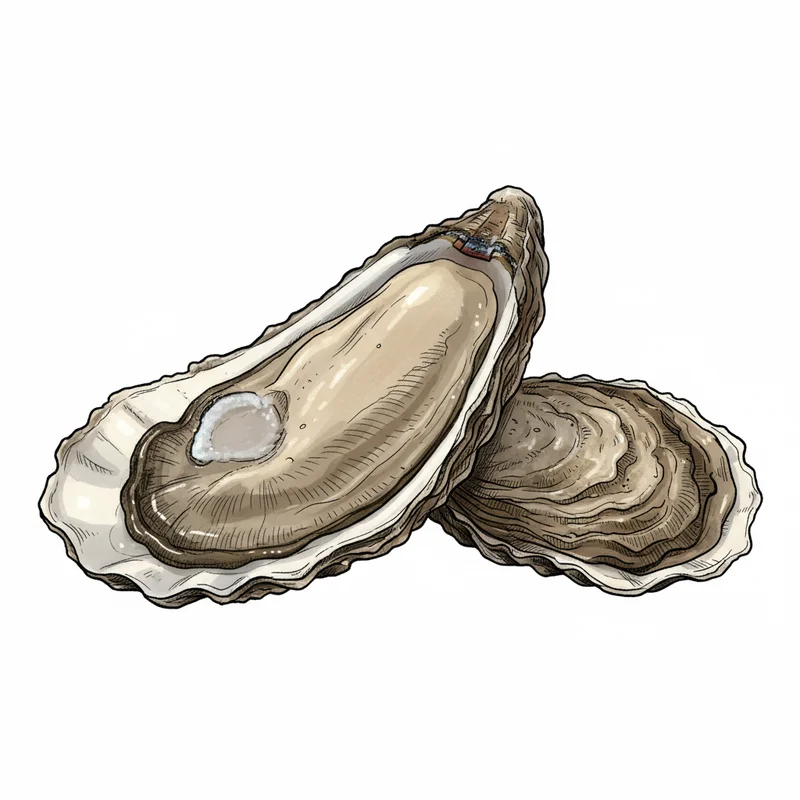
Malpeque
Crassostrea virginica
Canadian icon. Bright salinity, plump meat, crisp and clean.
At a Glance
Malpeque is an Eastern oyster (Crassostrea virginica) from the Canada East Coast. It is intensely briny (5/5 brininess) and barely sweet (1/5 sweetness), with briny, crisp flavors and a finish that is sharp, lingering brine.
Flavor Profile
Finish
Sharp, lingering brine
Expert Notes
From the cold, pristine waters of Prince Edward Island, Malpeques are among the briniest oysters in North America. The intense salinity is balanced by firm, plump meat and a clean finish. Origin & Characteristics
- Species
- Crassostrea virginica
- Native to
- Canada
- Grown in
- Malpeque Bay, PEI
- Size
- Medium (2.5-3.5 inches)
- Shell Color
- Brown-gray
- Meat Color
- Cream
What Experts Say
Across 6 sources, tasters describe this oyster as:
Unique notes: cucumber, lettuce-like, pickle-like, nutty, mushroom
"The flavor profile of Malpeque oysters can be described as a harmonious balance of saltiness and sweetness, with a mild mineral undertone that reflects the pristine waters of Malpeque Bay. The oysters exhibit a crisp, clean finish, leaving a lingering umami richness that is both satisfying and memorable. The meat is succulent and tender, offering a refreshing oceanic essence with a hint of cucumber."
brinysweetmineralcrispclean
"They offer a crisp lettuce-like flavor with a noticeable brininess, which adds a salty taste from the ocean. Despite their brininess, Malpeque oysters have a clean and sweet finish that balances the saltiness."
crisplettucebrinysaltyclean
"They are good transitional oysters, bigger and bolder than Beausoleils or Kusshis, but still light-bodied and clean on the finish. Easy to eat, with the perfect balance of sweetness, brine, and pickle-like liveliness, they make great accompaniments to a pint of lager."
sweetbrinycleanpickle-likelight-bodied
"Moderate brine with a meaty bite and a quick, clean finish."
brinymeatyclean
"Malpeque oysters have a little more robust flavor profile than the typically light-bodied flavor of other Maritime Province oysters, but not so powerful a flavor as to scare new oyster eaters away. They are easy to eat with tender meats and a nice balance between ocean brininess and sweetness."
robustbrinysweettender
"An interesting name for an equally interesting oyster! It had a rich, mouth-filling nutty flavor. The initially bright and salty meat finished with an earthy, mushroom-ish taste."
nuttybrightsaltyearthymushroom
About the Farm
Multiple producers including Malpeque Bay Oyster Farms, Prince Edward Aqua Farms, Atlantic Aqua Farms, Five Star Shellfish
Malpeques are wild-harvested in the traditional manner by hand-tonging from small dories in Malpeque Bay, a method that has been used for generations. Some are also farmed using bottom culture and rack and bag methods.
- Cultivation Method
- wild harvest, bottom culture, rack and bag
History & Background
Malpeque oysters have a long history, with Aboriginal peoples on Prince Edward Island using them as a food source many years ago. They gained international recognition at the 1900 Paris Exhibition where they were judged as the world's tastiest oyster, bringing the region into the limelight. In the past twenty years, Malpeques have taken the world by storm and now rival Bluepoints as the most common restaurant oyster.
Malpeques have become great ambassadors for oysters, convincing many diners that oysters were more exciting than they'd realized. They are affordable and widely available, making them a popular transitional oyster for new oyster eaters.
Did You Know?
- Judged as the world's tastiest oyster at the 1900 Paris Exhibition
- Still harvested using traditional hand-tonging from small dories
- Now rival Bluepoints as most common restaurant oyster
- PEI government issued leases for oyster fishing back as far as the mid-1800s
Sources & References
This information was compiled from 6 sources.
- What are Malpeque Oysters? — Malpeque Bay Oyster Farms
- Malpeque Oysters - The Oyster Encyclopedia — Oyster Encyclopedia
- Malpeque - The Oyster Guide — The Oyster Guide
- Malpeque Oyster - Oysterology Online — Pangea Shellfish Company
- Malpeque Oyster - Chefs Resources — Chefs Resources
- Aw, Shucks! The Merroir of PEI Malpeque Oysters — My Island Bistro Kitchen
Malpeque: A Closer Look
- Origin
- Malpeque Bay, Prince Edward Island, Canada
- Species
- Eastern oyster (Crassostrea virginica)
- Flavor
- Clean, briny and sweet with a crisp, balanced finish
- Claim to fame
- Judged 'world's tastiest oyster' at the 1900 Paris Exhibition
- Cultivation
- Wild-harvested by traditional hand-tonging from dories; also bottom and rack-and-bag culture
- Merroir
- Cold, nutrient-rich glacial waters of PEI
The Malpeque is Canada's most famous oyster and, for many North Americans, the gateway to the whole half-shell world. It takes its name from Malpeque Bay on the north shore of Prince Edward Island, and the name itself carries indigenous roots; the Mi'kmaq people of the island harvested these oysters as a food source long before European settlement. By the late 1800s, oysters from Malpeque Bay had become renowned for their abundance and fine quality, and the PEI government was already issuing leases for oyster grounds.
The variety's global reputation was sealed at a single event: the 1900 Paris Exhibition, where Malpeque oysters were judged the world's tastiest. That award put the cold waters of Prince Edward Island on the international culinary map, and in the decades since, Malpeques have taken the world by storm, today rivaling the Blue Point as the most common oyster on restaurant menus. Their affordability and wide availability have made them a classic transitional oyster, the variety that convinces skeptical first-timers that oysters are more exciting than they expected.
Much of the Malpeque's charm lies in how it is grown and gathered. Many are still wild-harvested in the traditional manner, hand-tonged from small dories by fishermen working the bay much as their predecessors did generations ago, while others are cultivated with bottom culture and rack-and-bag methods. The oysters mature slowly in the cold, nutrient-rich, glacially fed waters of the bay, which is widely credited as the source of their distinctive taste, and they emerge meaty, plump, and firm.
On the palate, the Malpeque is prized for balance. It pairs a clean ocean brininess with a gentle sweetness, finishing crisp and bright rather than heavy, with a notably clean aftertaste. Tasters often pick up vegetal and earthy grace notes, cucumber, lettuce or pickle-like freshness, even nutty or mushroom hints, layered over the firm, meaty bite. That combination of saltiness, sweetness, and a refreshing finish is exactly what makes the Malpeque such a reliable ambassador for oysters, and why it remains a fixture of raw bars across the continent.
Sources for this deep dive
This deep dive was drafted from the cited sources below and is under editorial review.
- What are Malpeque Oysters? — Malpeque Bay Oyster Farms
- The History of Malpeque Oysters — Malpeque Bay Oyster Farms
- Malpeque Oysters — Oyster Encyclopedia
- Malpeque Oyster — Pangea Shellfish
- Malpeque — The Oyster Guide
- PEI Oysters - Malpeque Oysters — Prince Edward Aqua Farms
- Aw, Shucks! The Merroir of PEI Malpeque Oysters — My Island Bistro Kitchen
Similar Oysters
Cape Breton
Canada East CoastWild-caught oyster from Cape Breton Island's pristine waters in Nova Scotia. Very briny with bright ocean character, firm springy meat, and a lingering mineral finish that reflects the clean Atlantic surroundings.
Hurricane Island
Canada East CoastHand-harvested from the cold, clean waters of Nova Scotia's Northumberland Strait. Small to medium oysters with intense brininess, firm crisp texture, and a notably sweet finish.
Irish Point
Canada East CoastA cocktail-sized PEI oyster with striking bright green shells. High salinity with a powerful brine that transitions to a sweet, earthy, citrus finish. Excellent meat quality from cold northern waters.
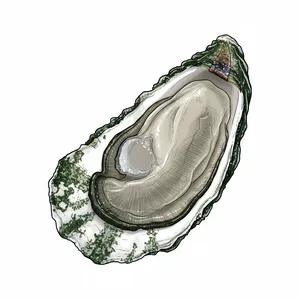
Bras D'or
Canada East CoastWild-harvested Maritime oyster from Cape Breton's Bras D'Or Lakes. Light-bodied with assertive brine, hints of seaweed, and a clean, steely finish. A quintessential Atlantic oyster from pristine Nova Scotia waters.
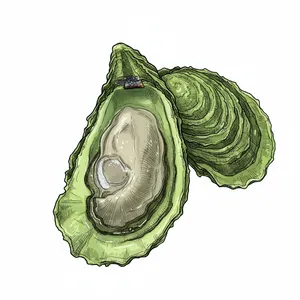
Lucky Lime
Canada East CoastDistinctive PEI oyster with moss-green shells and briny, seaweed-like flavor with refreshing citrus and lime finish.
Learn More
The Big Five: A Complete Guide to Commercial Oyster Species
Comprehensive guide to C. virginica (Atlantic), C. gigas (Pacific), C. sikamea (Kumamoto), O. lurida (Olympia), and O. edulis (European Flat)
Read article → Biology & SpeciesThe Atlantic Oyster (C. virginica): From Maritime Brine to Gulf Sweetness
Deep dive into America's indigenous East Coast oyster - flavor profiles, regional variations, and famous varieties
Read article → Merroir & EnvironmentWhat Is Merroir? How Water Shapes Oyster Flavor
Merroir is the marine version of terroir: how salinity, temperature, tides, and plankton in the growing water shape an oyster's flavor. The science, plus how to taste it.
Read article →