
Northumberland
Crassostrea virginica
Clean, mild oyster from the Northumberland Strait between PEI and New Brunswick. Mildly sweet with balanced brine and a cool finish. Known for their larger size and light, firm texture shaped by nutrient-rich Atlantic waters.
At a Glance
Northumberland is an Eastern oyster (Crassostrea virginica) from the Canada East Coast. It is mildly briny (2/5 brininess) and distinctly sweet (4/5 sweetness), with sweet, mild brine flavors and a finish that is cool, briny, sweet finish with subtle citrus notes. It is considered a beginner-friendly oyster.
Flavor Profile
Finish
Cool, briny, sweet finish with subtle citrus notes
Expert Notes
Northumberland oysters benefit from the high nutrient levels of the North Atlantic waters flowing through the Northumberland Strait. Named after the rugged Scottish coast it resembles, these 'Northies' showcase the clean, mild characteristics of the strait's waters. They deliver a mildly sweet flavor profile with balanced brininess and a cool finish, often with subtle citrus and umami undertones. The sandy soils of the region contribute to their light texture and distinctive sweet-briny balance. Origin & Characteristics
- Species
- Crassostrea virginica
- Native to
- Canada
- Grown in
- Northumberland Strait, between Prince Edward Island and New Brunswick, Nova Scotia coast
- Size
- Medium to Large (3-4 inches)
- Shell Color
- Gray-white with occasional green tones
- Meat Color
- Cream to light gray
What Experts Say
Across 7 sources, tasters describe this oyster as:
Unique notes: nutty, watery, bright, light texture
"Not a great oyster. Harvested wild from the straits, it's very mild in flavor, long and skinny and much bigger than other New Brunswicks, usually hitting at least four inches. According to Canadian fishery regulations, it's graded standard, which is one grade below choice and one above don't be a fool."
mild
"This variety benefits from the high nutrient level in the North Atlantic waters off the coast of Nova Scotia in Canada. Mildly sweet flavor with a briny finish and a firm, crisp texture."
sweetbrinyfirmcrisp
"Tatamagouche from Northumberland Straits can be extremely choice, ivory-colored and nutty, with a lot of body and medium brine. However, they are often long, skinny shoehorns, and the meat can be watery and tasteless."
nuttybrinywatery
"Village Bay oysters from Bedec Bay, New Brunswick, grown in nutrient-rich waters fed from the Northumberland Strait, have a medium salinity profile with a bright, clean finish. They have deep cups with plump meats and a moderately firm bite."
cleanbrightfirm
"Malagash oysters from the Northumberland Shore where the sandy soils give the oyster a sweet and briny taste with a light texture. They have a flavour profile that is second to none, slightly briny and with a slightly sweet finish."
sweetbrinylight
About the Farm
Wild harvested from the Northumberland Straits between Prince Edward Island and mainland New Brunswick, in nutrient-rich Atlantic waters.
- Cultivation Method
- wild harvest
History & Background
The Northumberland Straits oyster fishery dates back to the early 17th century. In 1915, a devastating epidemic oyster disease struck the region, causing significant decline. Restoration efforts began in the 1920s to rebuild the fishery.
The Northumberland appellation could fall under either New Brunswick or PEI jurisdiction, as the straits separate Prince Edward Island from the mainland of New Brunswick.
Did You Know?
- Northumberland oysters are typically much larger than other New Brunswick oysters, usually hitting at least four inches in length
- According to Canadian fishery regulations, wild Northumberland oysters are graded 'standard', which is one grade below 'choice'
- The region is named after the rugged Northumberland coast
Sources & References
This information was compiled from 7 sources.
- Northumberland - New Brunswick — The Oyster Guide
- Oyster Varieties — The Seafood Merchants
- Tatamagouche - Nova Scotia — The Oyster Guide
- Village Bay Oysters — The Oyster Encyclopedia
- Malagash Oysters: A Taste of the Northumberland Shore — Fox Harb'r Resort
- The very short (and not particularly happy) story of P.E.I.'s oyster dredges — Sail Strait
- Boss Gibson Oyster Company — Boss Gibson
Similar Oysters
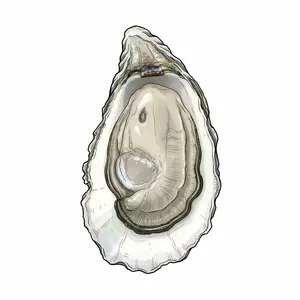
Conway Cup
Canada East CoastA deeply cupped Prince Edward Island oyster from Cascumpec Bay. Sweet and delicate with mild brininess and a clean finish. Bottom-grown on sandy substrate for firm, full meats.
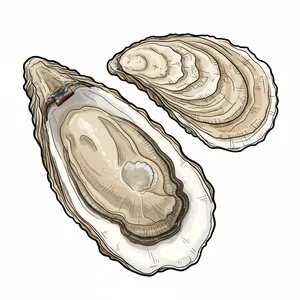
Ruisseau
Canada East CoastTray-grown Eastern oyster from Eel Lake, Nova Scotia. Sweet and rich with mild salinity, ivory flesh, and a clean finish. Highly prized in Canada's Maritimes and Quebec, rarely found outside the region.
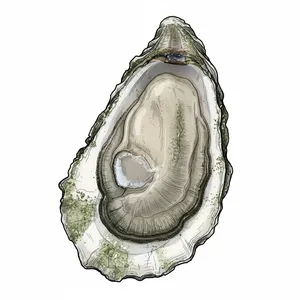
Mecox Bay
US East CoastWild-harvested Long Island oyster from the deep, cold waters of Mecox Bay. Delicate and balanced with mild brininess, pronounced sweetness, and a clean mineral finish reminiscent of classic Bluepoints.
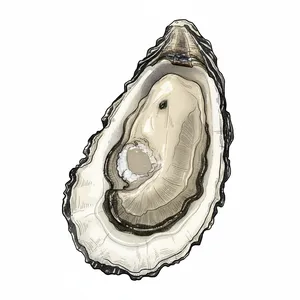
Beausoleil
Canada East CoastThe perfect starter oyster from New Brunswick's Miramichi Bay. Small, refined, and elegantly mild with yeasty notes, subtle hazelnut sweetness, and a creamy texture. Farmed in floating trays that ensure pristine, uniform shells.
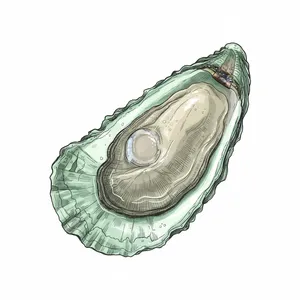
Colville Bay
Canada East CoastCanada's most sought-after oyster. Stunning jade shells, crunchy texture, and bright nutty-sweet flavors with a floral lemon zest finish.
Learn More
The Big Five: A Complete Guide to Commercial Oyster Species
Comprehensive guide to C. virginica (Atlantic), C. gigas (Pacific), C. sikamea (Kumamoto), O. lurida (Olympia), and O. edulis (European Flat)
Read article → Biology & SpeciesThe Atlantic Oyster (C. virginica): From Maritime Brine to Gulf Sweetness
Deep dive into America's indigenous East Coast oyster - flavor profiles, regional variations, and famous varieties
Read article → Merroir & EnvironmentWhat Is Merroir? How Water Shapes Oyster Flavor
Merroir is the marine version of terroir: how salinity, temperature, tides, and plankton in the growing water shape an oyster's flavor. The science, plus how to taste it.
Read article →