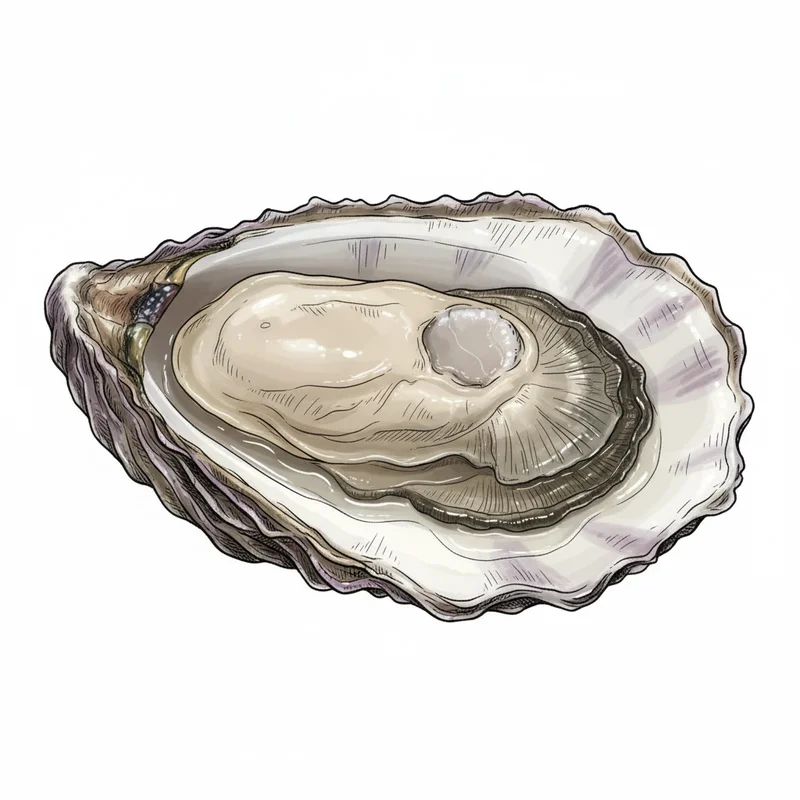
Olympia
Ostrea lurida
The rare native Pacific treasure. Tiny but mighty, with intense copper, sweet cream, and celery salt flavors in a firm, creamy bite.
At a Glance
Olympia is an Olympia oyster (Ostrea lurida) from the US West Coast. It is notably briny (4/5 brininess) and moderately sweet (3/5 sweetness), with metallic, copper, mineral flavors and a finish that is long, intense, coppery-metallic. It is considered a beginner-friendly oyster.
Flavor Profile
Finish
Long, intense, coppery-metallic
Expert Notes
The Olympia is the only oyster native to the Pacific coast and packs an overwhelming punch despite its quarter-sized stature. This rare gem delivers sweet cream and celery salt up front, followed by pronounced copper and metallic notes that linger for minutes. A smaller cousin to the European flat, it offers full, complex flavor with a firm, creamy texture—a perfect reduction of intense Pacific terroir. Origin & Characteristics
- Species
- Ostrea lurida
- Native to
- Pacific Northwest
- Grown in
- Totten Inlet, WA, South Puget Sound, WA, Hood Canal, WA, San Francisco Bay, CA
- Size
- Small (1-1.5 inches)
- Shell Color
- Gray-brown with purple streaks
- Meat Color
- Ivory white
What Experts Say
Across 9 sources, tasters describe this oyster as:
Unique notes: mushroom, fresh cut grass, sweet cream, deep, coppery
"rich copper and mushrooms notes, with a celery salt brine and very lengthy finish on the palate"
coppermushroomcelery saltbriny
"Connoisseurs consider Olympias gods among oysters; the flavor is coppery and deep, conjuring up an ephemeral connection to the land and the culture that dates back thousands of years. To slurp an Olympia is to take in the water of Puget Sound and experience the same sensations as a native tribesman five hundred years ago"
copperydeep
"Olympia oysters have a sweet, metallic, celery salt flavor with a copper finish."
sweetmetalliccelery saltcopper
"Taste profile - ocean sea salt, light sweet cream, fresh cut grass"
saltysweetcreamgrassy
"European Flat AKA Belon (Ostrea Edulis) Medium, Metallic with a trace of caviar and hazelnut. This has the loudest flavor of the bunch. The wine equivalent would be a super Tannic Barolo. Complex and intense."
metalliccaviarhazelnutcomplexintense
About the Farm
Taylor Shellfish Farms
Est. 1890sTaylor Shellfish Farms is the largest grower of shellfish in North America and continues to be one of the world's largest suppliers of Olympia oysters, requiring careful cultivation over at least three years.
- Cultivation Method
- bottom culture
History & Background
Originally called the 'Native Western' oyster, they were renamed in 1889 shortly after Washington received statehood. In a competition over the location of the state capital, those in favor of Olympia held a series of public meetings to persuade voters. At the culmination of these meetings, an oyster dinner was served. The oysters were so appealing that Olympia won the bid and from then on, they were known as Olympia oysters. By 1900, the native oyster was wiped out in Willapa Bay, which is why it got officially named for Olympia, where it still existed.
The Olympia oyster (Ostrea lurida) is the only oyster native to the Pacific Coast of North America, ranging from southeast Alaska to Baja California. It was a staple of Native Americans of many tribes and credited with playing an important role in their diet. The local indigenous peoples of Budd and Henderson Inlet known as the Squaxin tribe called it 'Kloch Kloch.'
Did You Know?
- Takes at least three years to grow to the size of a 'four-bit' piece (about 1-1.5 inches)
- Lewis and Clark feasted on these incredibly small oysters when they reached Puget Sound
- Requires around 2,000 oysters to make a gallon of meat
- No longer cultivated anywhere but the Olympia area, primarily Totten Inlet
- The beginner half-shell eater often chooses the little 'Oly' as an introduction before progressing to larger varieties, but after developing a more sophisticated palate, they always humbly return to the mighty Olympia oyster
Sources & References
This information was compiled from 9 sources.
- Olympia Oysters (30 pcs) - Taylor Shellfish Farms — taylorshellfishfarms.com
- Olympia Oysters as Food — olympiaoysternet.ucdavis.edu
- Olympia Oyster - Skagit's Own Fish Market — skagitfish.com
- Olympia Oyster Pacific Oyster - Seacore Seafood — seacoreseafood.com
- Olympia - Hood Canal and Southern Puget Sound — oysterguide.com
- Olympia Oyster Restoration — nwstraits.org
- Cultural History of the Olympia Oyster, by Ed Echtle — olympiahistory.org
- Willapa Bay and Oregon - The Oyster Guide — oysterguide.com
- The Olympia Oyster - Protect Henderson Inlet — protecthendersoninlet.org
Olympia: A Closer Look
- Origin
- Puget Sound, Washington (notably Totten Inlet); native from SE Alaska to Baja
- Species
- Olympia oyster (Ostrea lurida)
- Distinction
- The only oyster native to the Pacific Coast of North America
- Size
- Tiny, about 1-1.5 inches, the size of a coin
- Flavor
- Intense copper and metallic notes with celery salt, sweet cream and a long finish
- Cultivation
- Slow-grown at least three years; primarily bottom culture
The Olympia is the small, mighty native of the West Coast, the only oyster species indigenous to the Pacific Coast of North America. Ostrea lurida once ranged in vast beds from southeast Alaska down to Baja California, thriving in the estuaries of small rivers and streams, and it was a dietary staple for many coastal Native American tribes who built settlements near oyster-rich tidelands. The Squaxin people of Budd and Henderson Inlets in southern Puget Sound called it 'Kloch Kloch.'
The oyster owes its modern name to a piece of Washington political history. Originally called the 'Native' or 'Western' oyster, it was renamed around 1889, the year Washington achieved statehood, during a contest over where to locate the state capital. Backers of the city of Olympia held a series of public meetings to win votes, capping them with an oyster dinner so memorable that, as the story goes, it helped Olympia win the bid, and the oyster took the town's name. By around 1900 the native oyster had been wiped out in Willapa Bay through overharvesting and pollution, which is part of why the name attached to Olympia, where the species still survived. Today it is cultivated almost nowhere but the Olympia area, especially Totten Inlet, and it has become the focus of major restoration efforts around Puget Sound, where it is celebrated as the region's only native oyster.
The Olympia's defining trait is its diminutive size. It grows astonishingly slowly, taking at least three years to reach the size of a 'four-bit piece,' roughly an inch to an inch and a half across, and it takes around 2,000 of them to yield a single gallon of meat. Lewis and Clark are said to have feasted on these tiny oysters when they reached the Pacific.
What the Olympia lacks in size it more than repays in intensity. For such a small morsel it delivers a huge, concentrated flavor: a pronounced copper and metallic character, like the taste of a penny in a stream, layered with celery salt, sweet cream, an earthy estuarine note, and even a hint of mushroom, all finishing long and lingering. Many tasters return to it again and again; it is often the little oyster a beginner tries first and the one a seasoned palate humbly comes back to, a true Pacific Northwest treasure.
Sources for this deep dive
This deep dive was drafted from the cited sources below and is under editorial review.
- Olympia Oyster Restoration: Oyster History — NW Straits
- Cultural History of the Olympia Oyster, by Ed Echtle — Olympia Historical Society
- Olympia oyster (Ostrea lurida) — Washington Department of Fish & Wildlife
- Olympia Oysters as Food — UC Davis Olympia Oyster Net
- Why the Olympia Oyster Is Primed for a Comeback — Eater
- Olympia - Hood Canal and Southern Puget Sound — The Oyster Guide
- The Olympia Oyster — Protect Henderson Inlet
Similar Oysters
Bodega Bay Atlantic
US West CoastAtlantic oysters grown in Bodega Bay, California. Known for robust, gnarly shells and intensely briny, metallic flavor with a creamy texture and sweet finish. A bold West Coast take on the Eastern species.
Grassy Bar
US West CoastHand-cultivated Pacific oyster from Morro Bay's high-energy estuary. Deeply briny with crisp sweetness and distinctive cucumber and wet-stone minerality. Entirely grown in Southern-Central California from seed to harvest.
Netarts Bay
US West CoastBeach-cultured Pacific oyster from pristine Netarts Bay in Northern Oregon. Strong, tongue-coating flavor with metallic notes, sweet cucumber finish, and distinctive black mantle line. Colorful shells and soft texture.
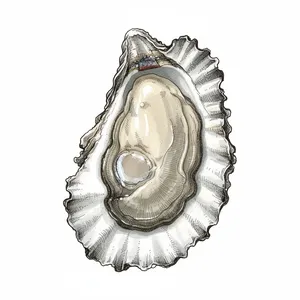
Salish Sea
US West CoastCold-water Pacific oyster from the inland waters of Washington and British Columbia. Tray-raised with distinctively briny, metallic flavor balanced by subtle sweetness and clean mineral finish.
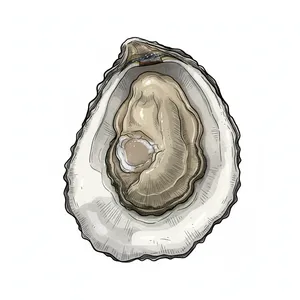
Shoal Bay Flat
US West CoastThe only European Flat oyster grown on the West Coast, cultivated by the Jones family on Lopez Island. Rare and coveted, with a pleasant metallic twang, sharp mineral notes, and the crisp-clean salinity of San Juan Island waters. Exceedingly limited supply.
Learn More
What Is Merroir? How Water Shapes Oyster Flavor
Merroir is the marine version of terroir: how salinity, temperature, tides, and plankton in the growing water shape an oyster's flavor. The science, plus how to taste it.
Read article → Practical GuidesVibrio and Raw Oysters: A Clear-Headed Guide to Oyster Safety
Understanding Vibrio vulnificus without fear-mongering - risk factors, prevention, and when to cook
Read article → Culinary & PairingsBeyond Cocktail Sauce: The Art of the Oyster Mignonette
Classic and creative mignonette recipes engineered to complement specific oyster flavor profiles
Read article →