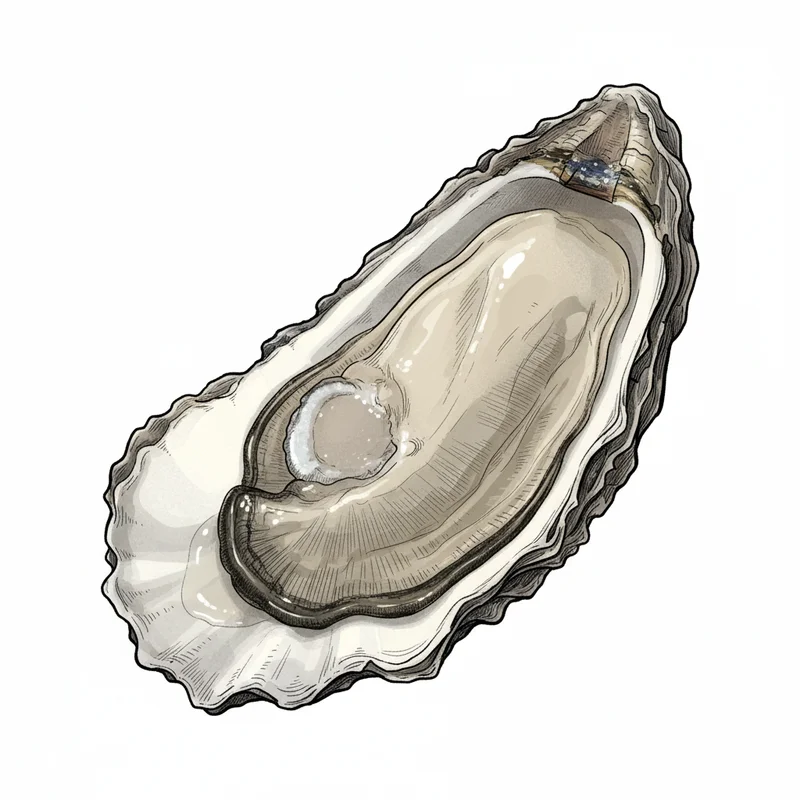
Paramour
Crassostrea virginica
A mild, refined East Coast oyster cultivated in Narragansett Bay, Rhode Island, with origins from Virginia's Atlantic-facing Parramore Island. Despite full ocean exposure, it delivers a surprisingly gentle brine with firm meat and a clean, fruity finish.
At a Glance
Paramour is an Eastern oyster (Crassostrea virginica) from the US East Coast. It is mildly briny (2/5 brininess) and moderately sweet (3/5 sweetness), with mild brine, sweet flavors and a finish that is clean, fruity, refreshing. It is considered a beginner-friendly oyster.
Flavor Profile
Finish
Clean, fruity, refreshing
Expert Notes
Paramour oysters present an intriguing paradox—despite exposure to full Atlantic salinity off Virginia's Parramore Island and cultivation in Rhode Island's cold waters, they remain surprisingly mild and refined. The slow growth rate in Narragansett Bay's crisp waters produces firm meat with a clean, fruity finish that's more reminiscent of true Chesapeake oysters than the searingly salty profile one might expect. Their balanced, approachable character makes them a favorite at raw bars seeking accessibility without sacrificing complexity. Origin & Characteristics
- Species
- Crassostrea virginica
- Native to
- USA
- Grown in
- West Passage, Narragansett Bay, Rhode Island, Parramore Island, Virginia Coast
- Size
- Medium (2-3.5 inches)
- Shell Color
- Gray-white
- Meat Color
- Cream to light gray
Perfect Pairings
What Experts Say
Across 4 sources, tasters describe this oyster as:
Unique notes: mushroom, crunchy
"Parramore Island is off the Virginia coast, not far south of Chincoteague. There, exposed to the full Atlantic, not a drop of fresh water in sight, it should make a searingly salty oyster. But the oyster that occasionally turns up on a raw bar as 'Paramour'—a sexier spelling—is quite mild in my experience, more like a true Chesapeake."
mildclean
"Described as having 'intoxicating bursts of brininess'"
briny
"At our tasting, the Paramours shucked easily with a pop and a twist. The initial brine was pleasant, like the perfect first date, as gentle as you want and as aggressive as you need. The bite was crunchy with great mouth feel. Our taste buds were enchanted with an earthy sweetness, offering different accents of a good fresh button mushroom. Truly, sophistication in every slurp."
brinysweetearthymushroomcrunchy
About the Farm
Paramour oysters have conflicting origin stories in the research: originally from Parramore Island, Virginia (exposed to the full Atlantic), later relocated to Caribou Bay, Nova Scotia, and more recently referenced as cultivated in Narragansett Bay, Rhode Island.
- Cultivation Method
- bottom culture
History & Background
Named after Parramore Island off the Virginia coast, these oysters were originally harvested from Atlantic-facing waters but have been cultivated in multiple locations over time.
The name 'Paramour' is described as a 'sexier spelling' of the island name Parramore, reflecting marketing appeal for raw bars.
Did You Know?
- Despite full Atlantic exposure at the original Virginia location, Paramour oysters are surprisingly mild rather than searingly salty
- The oyster has been cultivated in at least three different locations: Virginia, Nova Scotia, and Rhode Island
Sources & References
This information was compiled from 4 sources.
- Paramour - The Oyster Guide — oysterguide.com
- Paramour Oysters - Chefs Resources — chefs-resources.com
- CA Curtze Co - Oyster of the Week: PARAMOUR — facebook.com
- Paramour Oysters - The Oyster Encyclopedia — oysterencyclopedia.com
Similar Oysters
38 Degrees North
US East CoastA balanced Chesapeake Bay oyster. Mild, slightly sweet with refined brine and a clean finish. Firm and meaty from floating cage cultivation.
Mecox Bay
US East CoastWild-harvested Long Island oyster from the deep, cold waters of Mecox Bay. Delicate and balanced with mild brininess, pronounced sweetness, and a clean mineral finish reminiscent of classic Bluepoints.
Potomac Whitecap
US East CoastA sweetwater Chesapeake oyster from the Potomac River region. Delicate and sweet with smooth creaminess, medium brine, and a clean finish. Plump meats reflect the freshwater influence of Virginia's Upper Bay Western Shore.
Stingray
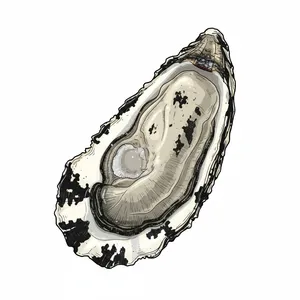
US East CoastThe quintessential Chesapeake Bay oyster from Mobjack Bay, Virginia. Perfectly balanced between sweet and salty with a clean, crisp finish. Distinctive white shell with black markings.
Bodie Island
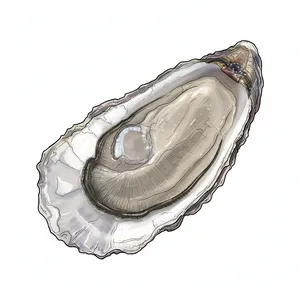
US East CoastThe Outer Banks' first farmed oyster from North Carolina. Medium-sized with balanced salinity, offering a harmonious blend of sweet and salt with firm texture from off-bottom tray cultivation.
Learn More
The Big Five: A Complete Guide to Commercial Oyster Species
Comprehensive guide to C. virginica (Atlantic), C. gigas (Pacific), C. sikamea (Kumamoto), O. lurida (Olympia), and O. edulis (European Flat)
Read article → Biology & SpeciesThe Atlantic Oyster (C. virginica): From Maritime Brine to Gulf Sweetness
Deep dive into America's indigenous East Coast oyster - flavor profiles, regional variations, and famous varieties
Read article → Merroir & EnvironmentWhat Is Merroir? How Water Shapes Oyster Flavor
Merroir is the marine version of terroir: how salinity, temperature, tides, and plankton in the growing water shape an oyster's flavor. The science, plus how to taste it.
Read article →