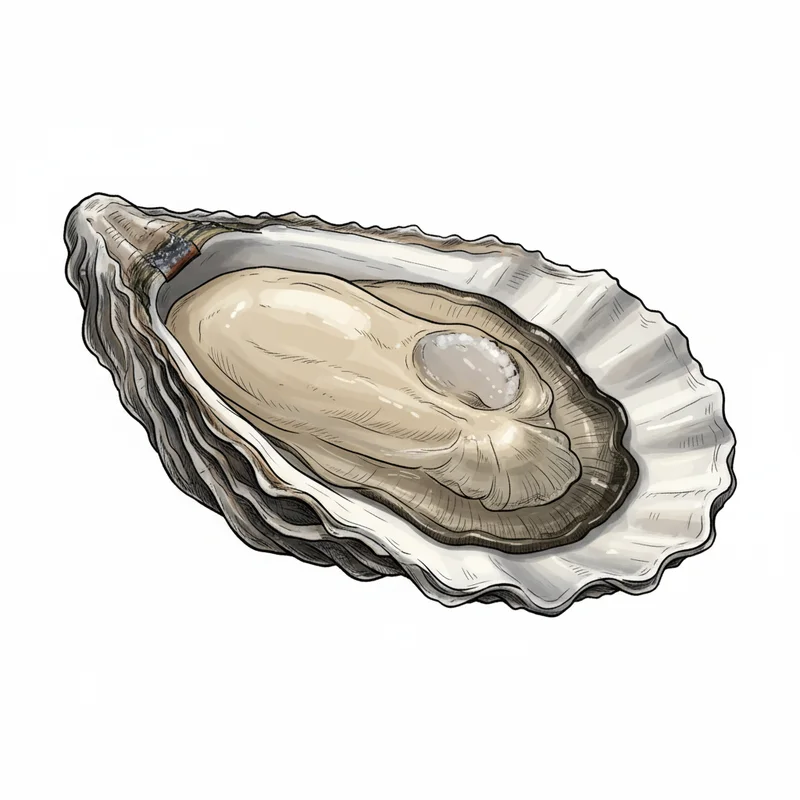
Pickering Passage
Crassostrea gigas
A Pacific Northwest oyster from southern Puget Sound's nutrient-rich waters. Medium to large with tender, plump meats. Mild brine balanced with sweet richness and a crisp finish of melon and cucumber.
At a Glance
Pickering Passage is a Pacific oyster (Crassostrea gigas) from the US West Coast. It is mildly briny (2/5 brininess) and distinctly sweet (4/5 sweetness), with sweet, mild brine, melon flavors and a finish that is crisp, lettuce-like with melon and cucumber notes. It is considered a beginner-friendly oyster.
Flavor Profile
Finish
Crisp, lettuce-like with melon and cucumber notes
Expert Notes
Pickering Passage oysters thrive in the nutrient-rich waters of southern Puget Sound, where fast currents and significant tidal range bring plankton-rich waters that promote rapid growth. These oysters reach market size in about one year and develop plump, tender meats with a mild salinity balanced by a rich sweetness. The finish is distinctively crisp with refreshing notes of melon and cucumber, characteristic of South Puget Sound's kelpy, buttery flavor profile. Origin & Characteristics
- Species
- Crassostrea gigas
- Native to
- Japan
- Grown in
- Pickering Passage, Southern Puget Sound, Washington, Mason County, Washington
- Size
- Medium to Large (3-5 inches)
- Shell Color
- White to gray with well-formed hinges
- Meat Color
- Cream to light tan
Perfect Pairings
What Experts Say
Across 9 sources, tasters describe this oyster as:
Unique notes: honeydew melon, green apples, watermelon rind
"crisp with light brine; clean with slight honeydew melon finish"
crisplight brinecleanhoneydew melon
"sweet, west coast quality to it"
sweet
"Full, sweet, and complex. The narrow channel makes for extremely swift currents, which whisk an extraordinary amount of plankton-rich South Sound waters over and into the oysters. It's like gavage for shellfish, resulting in what Hama Hama calls the 'well-fed' South Sound profile."
fullsweetcomplex
"Their flavor begins with a mild saltiness, followed by what's generally a full sweetness, and finishing with the fruity aftertaste common to pacific oysters."
saltysweetfruity
"Medium brine with a bright cucumber finish."
medium brinebrightcucumber
"Their flavor begins with a mild saltiness, followed by what's generally a full sweetness, and finishing with the fruity aftertaste reminiscent of green apples."
mild saltinessfull sweetnessfruitygreen apples
About the Farm
Multiple small-scale farmers in Pickering Passage
Pickering Passage is a narrow body of water near Shelton, WA, where exceptionally strong tidal currents create ideal conditions for oyster farming. Multiple small-scale farmers cultivate oysters in this nutrient-rich area.
- Cultivation Method
- bag-to-beach
History & Background
Pickering Passage was named by Charles Wilkes during the Wilkes Expedition of 1838–1842 to honor Charles Pickering, one of the expedition's naturalists. The passage is a strait in the southern end of Puget Sound, Washington, entirely within Mason County, separating Hartstene Island from the mainland. It flows past the mouths of Hammersley, Totten, and Eld Inlets.
The area has a rich marine ecosystem supporting robust oyster cultivation. The narrow channel creates exceptionally swift currents that deliver an extraordinary amount of plankton-rich South Sound waters to the oysters.
Did You Know?
- Oysters grown here reach market size in about one year due to the nutrient-rich waters
- The strong tidal currents create what Hama Hama oyster company calls the 'well-fed' South Sound profile
- The farming method involves bags staked to the beach where oysters are naturally tumbled by wave action and tidal cycles
Sources & References
This information was compiled from 9 sources.
- Shellfish - Curated Shellfish Offerings — Buena Vista Seafood
- Pickering Passage Oyster — Oysterater
- Oysters - West Coast - Crassostrea gigas | Pickering Passage — Fortune Fish & Gourmet
- Pickering Pass Oyster — Oysterology Online — Pangea Shellfish
- Eld Inlet & Pickering Passage Oysters — Global Chefs
- Pickering Passage Oyster — Marinelli Shellfish
- Pickering Passage — Wikipedia
- Pickering Pass Oysters — The Oyster Encyclopedia
- Pickerings Oyster Flavor Profile — Hama Hama Oysters
Similar Oysters
Skookum
US West CoastA sweet, mild Pacific Northwest oyster from South Puget Sound's Little Skookum Inlet. Melon-scented with low brininess and a creamy, herbaceous finish. Farmed since 1883 using rack & bag to beach cultivation.
Sunset Beach
US West CoastBeach-raised Pacific oyster from Hood Canal, Washington. Full, plump meats with mild brininess, sweet flavor, and a distinctive melon-like aftertaste. Thick shells and crunchy texture from intertidal cultivation.
Bald Point
US West CoastSmall, beach-cultured Pacific oyster from Hood Canal, Washington. Low brininess with a sweet, delicate flavor and distinctive musky finish. Hardy shells from intertidal cultivation.
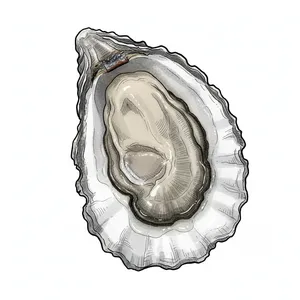
Hammersley Inlet
US West CoastBeach-grown Pacific oyster from South Puget Sound's Hammersley Inlet. Plump and sweet with mild saltiness, rich body, and a distinctive cucumber-melon finish. Grown in nutrient-dense waters for excellent meat-to-shell ratio.
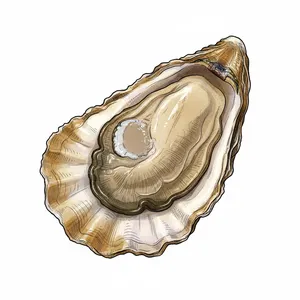
Pacific Gold
US West CoastSuspension-raised Pacific oyster from Discovery Bay, Washington and Morro Bay, California. Large, sweet, and mild with firm meats, lovely fluted shells, and a fresh, crisp finish.
Learn More
The Big Five: A Complete Guide to Commercial Oyster Species
Comprehensive guide to C. virginica (Atlantic), C. gigas (Pacific), C. sikamea (Kumamoto), O. lurida (Olympia), and O. edulis (European Flat)
Read article → Biology & SpeciesThe Pacific Oyster (C. gigas): Cream, Cucumber, and the Japanese Legacy
Understanding the world's most cultivated oyster - from Japanese origins to West Coast dominance
Read article → Merroir & EnvironmentWhat Is Merroir? How Water Shapes Oyster Flavor
Merroir is the marine version of terroir: how salinity, temperature, tides, and plankton in the growing water shape an oyster's flavor. The science, plus how to taste it.
Read article →