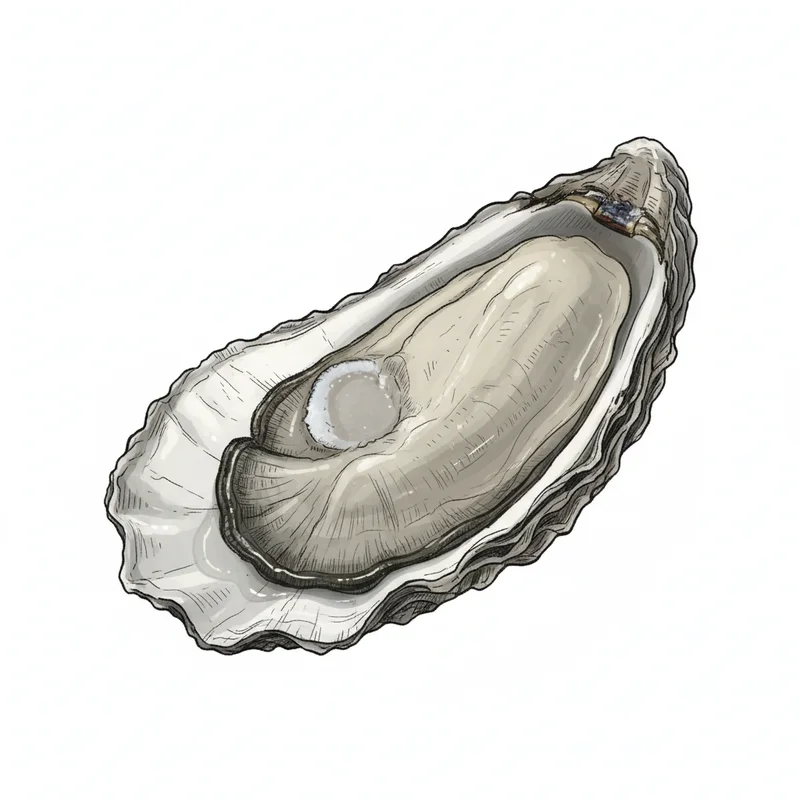
Quonset Point
Crassostrea virginica
A distinctive Rhode Island oyster with a round 'bear paw' shape and deep cup. Briny and salty with mild sweetness, cultivated in the nutrient-rich tides of Narragansett Bay's East Passage.
At a Glance
Quonset Point is an Eastern oyster (Crassostrea virginica) from the US East Coast. It is notably briny (4/5 brininess) and subtly sweet (2/5 sweetness), with briny, salty, mild flavors and a finish that is crisp, clean, refreshing with lingering salinity.
Flavor Profile
Finish
Crisp, clean, refreshing with lingering salinity
Expert Notes
Quonset Point oysters are distinguished by their pronounced briny character and firm texture, a result of their cultivation in the strong tides of Narragansett Bay's East Passage. Grown on long-line suspended trays that expose them to billions of microscopic plankton, these oysters develop a salty, mineral-forward profile balanced by subtle sweetness. Their unique round 'bear paw' shape and deep cups make them instantly recognizable, while their clean, fresh finish showcases the pristine waters of Rhode Island. Origin & Characteristics
- Species
- Crassostrea virginica
- Native to
- USA
- Grown in
- East Passage, Narragansett Bay, Rhode Island
- Size
- Medium (2-4 inches)
- Shell Color
- Gray-white
- Meat Color
- Cream to light gray
Perfect Pairings
What Experts Say
Across 6 sources, tasters describe this oyster as:
Unique notes: oceanic, bear paw shape, orangeish shell, scallop-like roundness, firm
"Starts with a blast of salt, followed by slightly sweet and firm meat, with a clean oceanic finish."
saltysweetfirmcleanoceanic
"Clean, sweet, and light flavor with tender meats. They have deep cups and a brine that varies from mild to pronounced."
cleansweetlighttenderbriny
"The brine can be intense or mild, depending on the season and the amount of fresh water flowing into Narragansett Bay, and the shells often have an extraordinary orangeish color. Highly recommended for anyone who prizes that clean oyster flavor."
brinyclean
"Quonset Points have a consistently deep cup and a scallop-like roundness. The brine can be intense or mild, depending on season and rainfall."
briny
"The taste is quickly salty yet finishes mild. With 3 to 3 ½ inch distinctly managed shapes and deep oyster cups, Quonset Point Oysters are Rhode Island's 'Number One' oyster."
saltymild
"The oyster flavor profile of suspended oysters tends to be clean with beautiful shells with deep cups."
clean
About the Farm
Salt Water Farms, LLC
A carefully sited shellfish farm producing a sustainable crop in the East Passage of Narragansett Bay, Rhode Island, where strong tides wash billions of microscopic plankton over long-line suspended oyster trays.
- Cultivation Method
- suspended culture
History & Background
Quonset Point oysters derive their name from Quonset Point, a small peninsula in Narragansett Bay, Rhode Island. The Quonset hut was first manufactured in this location.
Regarded as Rhode Island's 'Number One' oyster and considered one of the top oysters in the state. These oysters are 'oysters of legend' in the region.
Did You Know?
- Named after Quonset Point, the location where the famous Quonset hut was first manufactured
- Have a distinctive 'bear paw' shape with scallop-like roundness
- Shells often have an extraordinary orangeish color due to unique phytoplankton in Narragansett Bay
- Available year-round from the nutrient-rich East Passage waters
Sources & References
This information was compiled from 6 sources.
- Quonset Point Oysters — The Oyster Encyclopedia
- Quonset Point - The Oyster Guide — The Oyster Guide
- Quonset Point Oysters dozen - Salt Water Farms, LLC — 1000 Ecofarms
- Oyster Varieties — The Seafood Merchants
- Quonset Point Oysters — Chefs Resources
- Atlantic Oysters — American Mussel Harvesters
Similar Oysters
Montauk Pearl
US East CoastFarm-raised in Montauk's pristine waters since 2009. Medium-sized with distinctive black-striped shells and intensely briny, savory flavor. Dense, plump meat with a crisp, clean finish.
Pleasure House
US East CoastLarge, hand-cultivated oysters from Virginia Beach's legendary Lynnhaven River. Fat and firm with bold briny saltiness, buttery notes, and a smooth, creamy finish. A quintessential Virginia Bay oyster from a boutique family operation.
Saddle Rock
US East CoastA revived New York classic from Long Island Sound's Connecticut side. Medium-sized with medium brine and notable saltiness—think of them as a larger, saltier Bluepoint with a robust, full-flavored character.
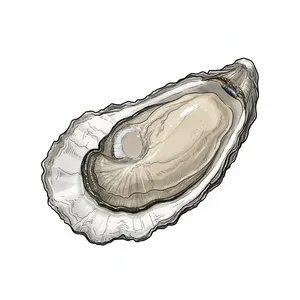
Stump Sound Single
US East CoastHighly prized North Carolina oyster from Stump Sound, one of the saltiest estuaries on the East Coast. Intensely briny and ocean-forward with buttery richness and mineral notes from the unique lagoon system where fresh and salt waters meet.
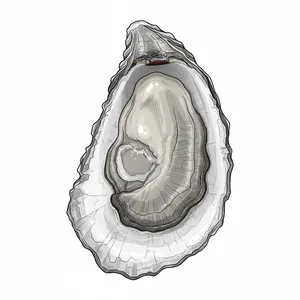
First Light
US East CoastFarmed by the Mashpee Wampanoag Tribe in Wellfleet Harbor, Massachusetts. Bold and briny with bright umami seaweed notes and a buttery finish. Named for 'People of the First Light.'
Learn More
The Big Five: A Complete Guide to Commercial Oyster Species
Comprehensive guide to C. virginica (Atlantic), C. gigas (Pacific), C. sikamea (Kumamoto), O. lurida (Olympia), and O. edulis (European Flat)
Read article → Biology & SpeciesThe Atlantic Oyster (C. virginica): From Maritime Brine to Gulf Sweetness
Deep dive into America's indigenous East Coast oyster - flavor profiles, regional variations, and famous varieties
Read article → Merroir & EnvironmentWhat Is Merroir? How Water Shapes Oyster Flavor
Merroir is the marine version of terroir: how salinity, temperature, tides, and plankton in the growing water shape an oyster's flavor. The science, plus how to taste it.
Read article →