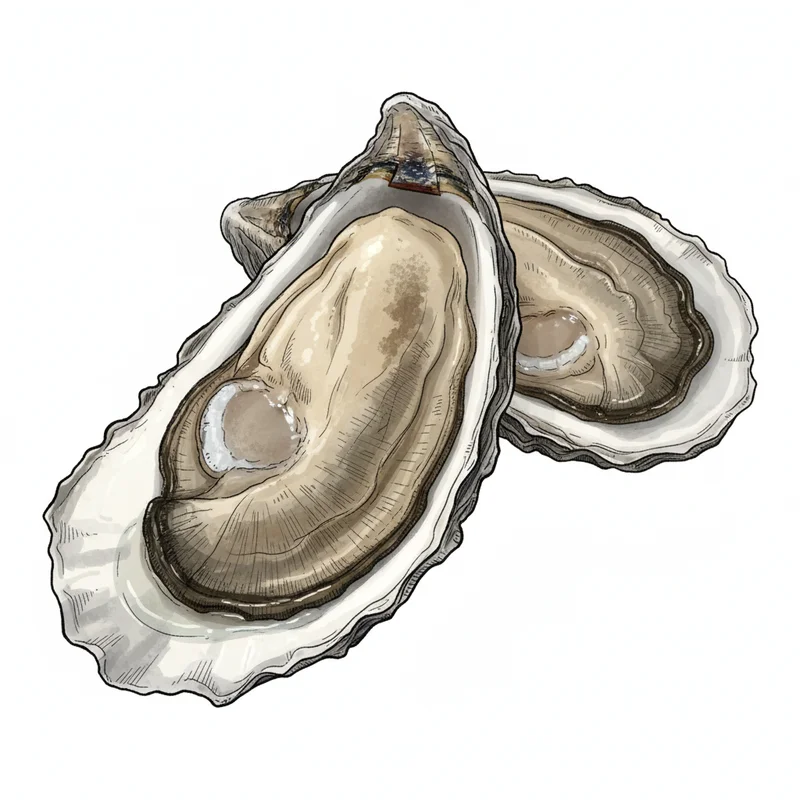
Riptide
Crassostrea virginica
Grown in the tidal Westport River estuary near Buzzards Bay, Massachusetts. Bold and briny with sweet undertones and a strong earthy mineral finish. Hearty, robust meats shaped by dynamic currents.
At a Glance
Riptide is an Eastern oyster (Crassostrea virginica) from the US East Coast. It is notably briny (4/5 brininess) and moderately sweet (3/5 sweetness), with briny, sweet, earthy flavors and a finish that is strong mineral and earthy finish.
Flavor Profile
Finish
Strong mineral and earthy finish
Expert Notes
Riptide oysters are grown in the dynamic Westport River estuary where Buzzards Bay meets the Atlantic, influenced by nearby salt ponds and freshwater creeks. True to their name, these oysters develop in heavy tidal flows that bring abundant nutrients, resulting in hearty, plump meats that completely fill the shell. The flavor is bold and piquant with strong brininess balanced by a notable sweetness, finishing with earthy mineral notes that reflect their unique brackish growing environment. Origin & Characteristics
- Species
- Crassostrea virginica
- Native to
- USA
- Grown in
- Westport River, Westport, Massachusetts
- Size
- Medium to Large (3-3.5 inches)
- Shell Color
- Gray-white
- Meat Color
- Cream with robust coloring
Perfect Pairings
What Experts Say
Across 8 sources, tasters describe this oyster as:
Unique notes: black olive, brussel sprouts, floral, marsh grass influence
"In terms of flavor, these are not for people that prefer the mild, sweet flavor. They are quite salty with a strong mineral finish. Very bold oyster right now!"
saltymineralbold
"A 'dirty'-tasting type of oyster (like panfish in the fish kingdom). With salty black olive flavor up front and aftertaste almost resembling brussel sprouts later. More salty than briny. Might have tried these at a bad time of year (August) or bad distributor/handling. Fairly-strong shells, flavor is all over the map. But still falls back on salty black olive it seems. Not a sweet one generally, but you might get few sweet ones out of every dozen, but expect salty and bitter — and slightly rotten even."
saltyblack olivebrussel sproutsbitterdirty
"Moderate brine with soft meat and sweet, earthy finish"
moderate brinesoftsweetearthy
"This 3 inch oyster boasts a robust meat that is sweet and briny."
robustsweetbriny
"Riptide - Westport, MA - Unique flavor from nearby salt pond and freshwater creeks; moderate brine and earthy finish; perfect with crisp, dry white wines."
uniquemoderate brineearthy
"RIPTIDE, MA, 3.5"+ Moderate Brine, Soft Meat, Earthy Finish"
moderate brinesoftearthy
"Medium, lots of mineral and brine"
mineralbrinymedium
"Wow. I love this oyster. Did a little bit of research and came across this farm as a potential 'I want to try' option. Had a 100ct come in yesterday, and they were just what I like. Brine but not kill you salty."
brinybalanced salt
"The Riptide Oyster is grown on the calm saltwater estuaries of the East and West Branches of the Westport River in Massachusetts. These oysters are primarily influenced by a near-by saltwater pond and fresh water creeks at the head of the river. Like all oysters their flavor directly correlates to their surroundings. Riptides are influenced by the marsh grass and wild flowers that bloom along the river banks. Riptides are nurtured in racks hovering above the sandy estuary bottom. This allows the strong tides to rotate the oysters and create a perfect cocktail oyster with a deep cup, lovely ivory meat and petite proportions. All this combined gives the Riptides a unique balance of salt and sweet with an earthy and floral finish. You will not find another oyster in the world with the unique Riptide taste or finish."
saltsweetearthyfloral
About the Farm
Riptide Oyster Farm / Westport Sea Farms
Est. 2009Founded by Kerian Fennelly and his wife Kristin, who were the first in Westport to receive an aquaculture grant. Kerian transitioned from lobstering to oyster farming after being inspired by the farm-to-table food trend and a local oyster farmer.
- Cultivation Method
- floating bags
History & Background
Riptide Oysters started as a test project in 2009 to prove to the town of Westport that oyster farming was viable in the Westport River. Kerian Fennelly, with a background in aquaculture and lobstering, was inspired by the local farm-to-table movement to establish the first oyster farm in the area.
The oysters are grown in the pristine conservation area of the Westport River estuary, which is influenced by nearby salt ponds and freshwater creeks. The farm location near Horseneck Channel in the East Branch of the Westport River provides unique environmental conditions.
Did You Know?
- These are the flagship oysters of Westport Sea Farms, representing their first successful aquaculture project
- The farm uses Australian-inspired 'Flip Farm' floating bag technology
- The oysters are influenced by marsh grass and wild flowers that bloom along the river banks
Sources & References
This information was compiled from 8 sources.
- Shuck of the Week: Riptide and Hood Canal Oysters — Pangea Shellfish
- Riptide — Oysterater
- Riptide Oysters — Westport Sea Farms
- Riptide Oysters — The Oyster Encyclopedia
- Oyster Primer — Metropolitan Meat, Seafood & Poultry
- Riptide - East Coast Crassostrea virginica — Fortune Fish & Gourmet
- Oysters - The New England Guide — Marinalife
- Riptide Oysters from Westport, MA — Island Creek Oysters
Similar Oysters
Copps Island
US East CoastA bold Long Island Sound oyster from Connecticut's historic Copps Island Oysters farm. Large and strong with heavy shells, delivering an intensely briny and metallic flavor with sweet undertones. Cultivated using traditional methods for over 150 years.
Cotuit
US East CoastAmerica's oldest oyster brand since 1857. Rich, complex, with strong mineral brine balanced by sweet notes and a lingering slate finish.
Plymouth Rock
US East CoastIntertidally cultured Eastern oyster from historic Duxbury and Plymouth Bay, Massachusetts. Briny and mineral-rich with balanced sweetness and a crisp, clean finish. Firm yet delicate texture.
Whale Rock
US East CoastA rare, premium oyster from the Mystic River cultivated by Connecticut's cooperative. Four-inch deep-cupped shells with mineral-rich, sweet-briny flavor and perfect shell shapes make these a sought-after variety.
Winter Point
US East CoastFarm-raised Maine oyster from Mill Cove. Medium salinity with sweet-briny balance and a sharp mineral finish. Deep-cupped with meaty texture, available year-round including winter ice harvests.
Learn More
The Big Five: A Complete Guide to Commercial Oyster Species
Comprehensive guide to C. virginica (Atlantic), C. gigas (Pacific), C. sikamea (Kumamoto), O. lurida (Olympia), and O. edulis (European Flat)
Read article → Biology & SpeciesThe Atlantic Oyster (C. virginica): From Maritime Brine to Gulf Sweetness
Deep dive into America's indigenous East Coast oyster - flavor profiles, regional variations, and famous varieties
Read article → Merroir & EnvironmentWhat Is Merroir? How Water Shapes Oyster Flavor
Merroir is the marine version of terroir: how salinity, temperature, tides, and plankton in the growing water shape an oyster's flavor. The science, plus how to taste it.
Read article →