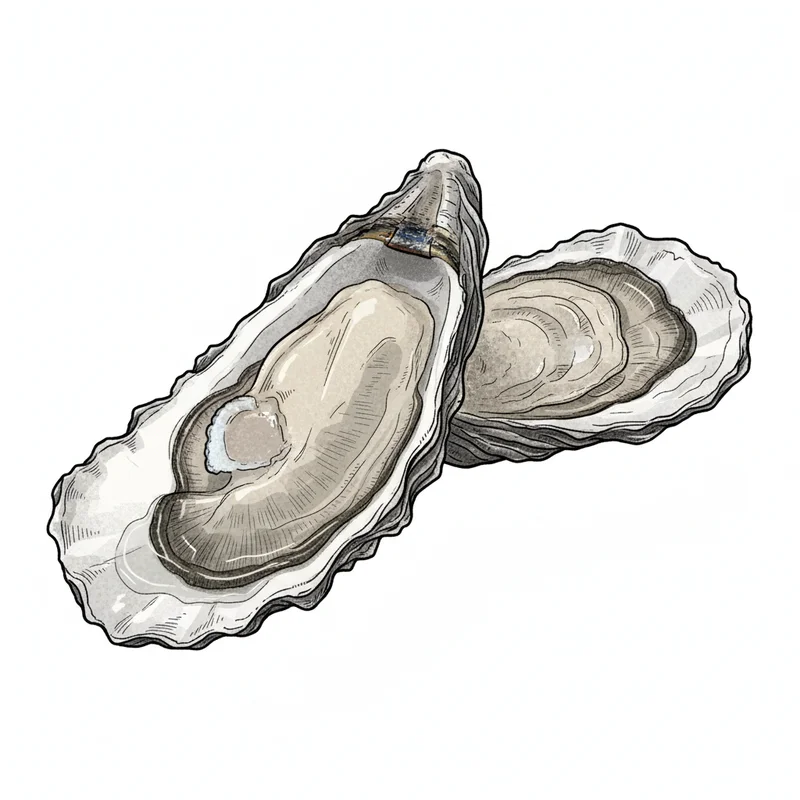
Rocky Nook
Crassostrea virginica
A Cape Cod oyster from Kingston, Massachusetts. Medium-high brine with silky, buttery sweet meats and a lingering briny finish. Creamy texture with balanced salinity.
At a Glance
Rocky Nook is an Eastern oyster (Crassostrea virginica) from the US East Coast. It is notably briny (4/5 brininess) and distinctly sweet (4/5 sweetness), with briny, sweet, buttery flavors and a finish that is buttery sweet with lingering brine. It is considered a beginner-friendly oyster.
Flavor Profile
Finish
Buttery sweet with lingering brine
Expert Notes
Rocky Nook oysters from Kingston, Massachusetts showcase a distinctive balance of medium-high brine with a luxuriously buttery sweet finish. Their silky meats deliver a creamy texture that distinguishes them from other Cape Cod oysters, while the lingering brininess provides satisfying depth. Grown in the protected waters near Duxbury Harbor, these oysters combine the classic Massachusetts salinity with an unusually smooth, rich character that appeals to both beginners and connoisseurs. Origin & Characteristics
- Species
- Crassostrea virginica
- Native to
- USA
- Grown in
- Kingston, Massachusetts
- Size
- Small to Medium (2.75-3.5 inches)
- Shell Color
- Gray-white
- Meat Color
- Cream to light gray
Perfect Pairings
What Experts Say
Across 6 sources, tasters describe this oyster as:
Unique notes: mushroom, smooth as glass
"Great minerality with medium salinity. Lacking a bit of a meaty or fruity quality but that's traded with a very pleasant clean taste. Very inoffensive and a crowd pleaser"
mineralcleanmedium salinity
"Some of my favorites, strong mineral tones, earthy. Mid to low salt, just enough to bring everything out!"
mineralearthylow salt
"Very nice oyster with medium brine, and mid to larger sized meat. Enjoyed some today and will eat them whenever I can find them!"
medium brine
"You'll probably find that these oysters remind you of Duxbury Bay; however, their taste is strikingly different from the Island Creeks due to their proximity to the brackish mouth of the Jones River. Mildly salty and oh-so-sweet, these oysters have a finish as smooth as glass. They are highly complex with earthy hints of mushroom. As Skip says, 'there's a lot going on in that bite.'"
mildly saltysweetsmoothearthymushroom
"Medium-high brine with silky meats and a buttery sweet finish."
medium-high brinesilkybutterysweet
"This unique environment imparts a flavor profile less salty than typical Atlantic oysters. It is accompanied by a delightful earthy undertone and a sweet, creamy finish."
less saltyearthysweetcreamy
About the Farm
Rocky Nook Oyster Company
Est. 2011Founded by John Wheble, Tom Taylor, and Greg Parker, Rocky Nook revived commercial oyster farming in Kingston Bay after a 60-year hiatus. John Wheble, a former commercial fisherman who grew up in Kingston, is proud to be growing oysters in his hometown, with the oysters named after the Rocky Nook area of Kingston.
- Cultivation Method
- bottom culture
History & Background
Rocky Nook oysters derive their name from the Rocky Nook area in Kingston, Massachusetts, which has historical significance for oyster farming. The first commercial crop in 60 years was harvested in 2011, reviving a tradition that had been dormant since the 1950s.
These oysters are considered 'diamonds in the rough' as they are one of the few oysters not tended to regularly or over-harvested, given more time to develop untouched.
Did You Know?
- First commercial oyster harvest in Kingston in 60 years occurred in 2011
- Island Creek Oysters founder Skip Bennett went to nursery school with grower Greg Barker and still plays hockey with him
- The oysters are planted from the same batch of seed that Island Creek Oysters uses
- Hand-harvested by just two guys who aren't always available, making them limited and special
Sources & References
This information was compiled from 6 sources.
- Rocky Nook — Oysterater
- Rocky Nook Oysters from Kingston, MA — Island Creek Oysters
- Rocky Nook Oyster — Oysterology Online — Pangea Shellfish
- Rocky Nook Oysters - The Oyster Encyclopedia — Oyster Encyclopedia
- Rocky Nook Oyster Company harvest makes history in Kingston — Kingston Reporter
- Island Creek Oysters, Duxbury MA — Edible SEMA
Similar Oysters
Watch Hill
US East CoastSmall farm-raised Rhode Island oyster from Winnapaug Pond. High salinity with crisp brininess leading to a distinctive mellow buttery sweet finish. Firm pink meat in unique fan-like shells.
Cedar Island Select
US East CoastA flagship North Carolina oyster from Cedar Island Bay's pristine waters. Large and deep-cupped with balanced brininess and a distinctive sweet, buttery finish. Sustainably farmed in floating cages.
Chadwick Creek
US East CoastDelicate and buttery North Carolina oyster from Pamlico Sound. Deep-cupped with bright white shells, featuring a sweet finish and balanced brininess. Cultivated in off-bottom cages.
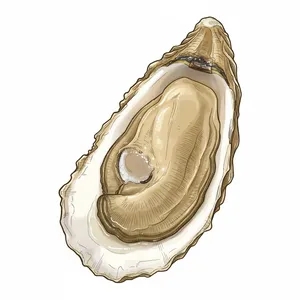
East Beach Blonde
US East CoastFarmed in floating cages in Ninigret Pond, Rhode Island. Distinguished by pale golden shells and creamy, golden flesh with a sophisticated flavor profile featuring strong initial brine, distinctive buttery notes, and a delicate sweet finish.
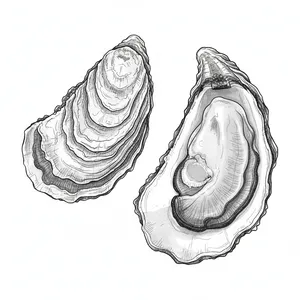
Snow Hill
US East CoastGrown in floating bags in Chincoteague Bay, Maryland. Bold and briny with creamy, bread-like sweetness. Balances ocean salt with freshwater character for approachable yet flavorful taste.
Learn More
The Big Five: A Complete Guide to Commercial Oyster Species
Comprehensive guide to C. virginica (Atlantic), C. gigas (Pacific), C. sikamea (Kumamoto), O. lurida (Olympia), and O. edulis (European Flat)
Read article → Biology & SpeciesThe Atlantic Oyster (C. virginica): From Maritime Brine to Gulf Sweetness
Deep dive into America's indigenous East Coast oyster - flavor profiles, regional variations, and famous varieties
Read article → Merroir & EnvironmentWhat Is Merroir? How Water Shapes Oyster Flavor
Merroir is the marine version of terroir: how salinity, temperature, tides, and plankton in the growing water shape an oyster's flavor. The science, plus how to taste it.
Read article →