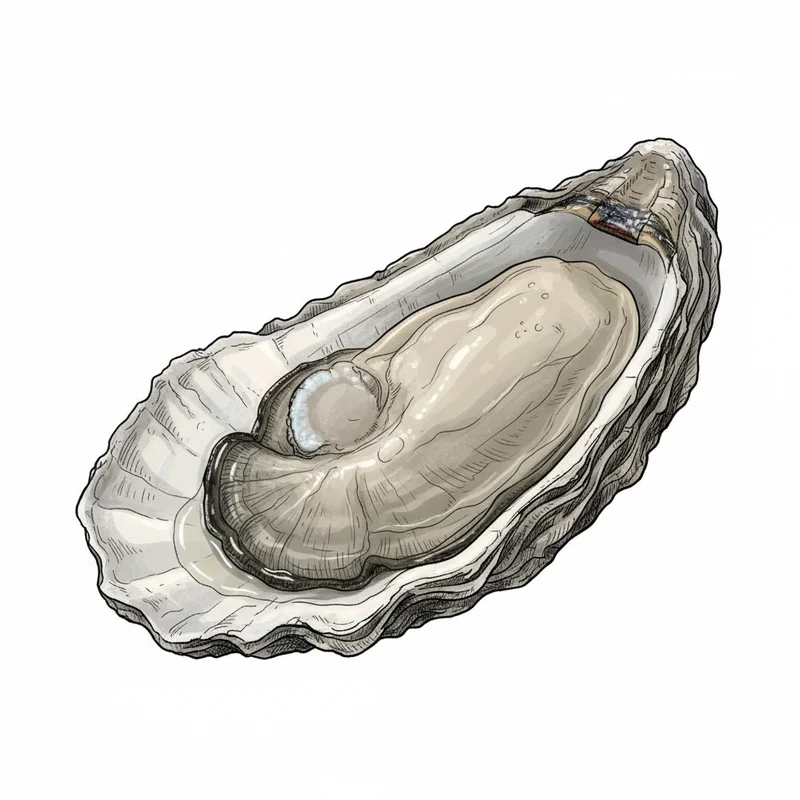
Saddle Rock
Crassostrea virginica
A revived New York classic from Long Island Sound's Connecticut side. Medium-sized with medium brine and notable saltiness—think of them as a larger, saltier Bluepoint with a robust, full-flavored character.
At a Glance
Saddle Rock is an Eastern oyster (Crassostrea virginica) from the US East Coast. It is moderately briny (3/5 brininess) and subtly sweet (2/5 sweetness), with briny, salty flavors and a finish that is clean, salty, lingering. It is considered a beginner-friendly oyster.
Flavor Profile
Finish
Clean, salty, lingering
Expert Notes
Saddle Rock oysters carry a storied New York heritage dating back to 1827 when exceptionally large and tasty oysters were discovered near Norwalk Harbor in the East River. Now farmed on the Connecticut side of Long Island Sound, these revived classics deliver medium brine with a notably saltier punch than their Bluepoint cousins. The deeply cupped shells cradle plump, flavorful meats that showcase the robust character of Long Island Sound's nutrient-rich waters. Origin & Characteristics
- Species
- Crassostrea virginica
- Native to
- USA
- Grown in
- Connecticut side of Long Island Sound
- Size
- Medium to Large (3-4 inches)
- Shell Color
- Gray-white
- Meat Color
- Cream to light gray
What Experts Say
Across 8 sources, tasters describe this oyster as:
Unique notes: peculiar
"They are from the Connecticut side of Long Island Sound, and of medium size, with medium brine. Think of them as a larger, saltier Bluepoint."
saltybriny
"Another Long Island Sound, NY oyster. This beauty is moderately salty with a clean finish."
moderately saltyclean
"Fresh Saddle Rock oysters, which are one of New York's most iconic and oldest oyster types. Unlike the (currently) very popular Gillardeau oysters being sold all over Shanghai, Saddle Rock oysters are smaller in size."
"The original Saddle-Rock oyster was not only very large, but possessed a peculiar, delicious flavor, which gave it its reputation."
delicious
History & Background
The original Saddle Rock was discovered in 1827 near a rock formation in the East River near Norwalk Harbor. These oysters were exceptionally large and tasty, quickly becoming all the rage in New York. By 1832, the original Saddle Rock oysters were completely depleted from overharvesting. The name lived on as any large oyster was sold as a 'Saddle Rock,' and the name has now been cleverly revived and trademarked for oysters from the Connecticut side of Long Island Sound.
Saddle Rock is one of New York's famous old oyster names and a prime example of an oyster craze. The name became so popular that it continued to be used long after the original source was exhausted. It represents the historic pattern of overconsumption that characterized many 19th century New York oyster varieties.
Did You Know?
- The original Saddle Rock oysters were completely depleted within just 5 years of discovery (1827-1832)
- Saddle Rock was Sacramento's very first restaurant name when it opened in Old Sacramento in 1849
- The name 'Saddle Rock' was originally given because oysters were discovered near an equestrian-shaped rock formation
- Any large oyster was sold as a 'Saddle Rock' after the originals were gone, making it one of history's first oyster branding schemes
Sources & References
This information was compiled from 8 sources.
- Saddle Rock - The Oyster Guide — oysterguide.com
- The Natural History of the Oyster I - Popular Science Monthly — wikisource.org
- Oyster Descriptions - Fortune Fish & Gourmet — fortunefishco.net
- Saddle Rock Oyster - Oysterater — oysterater.com
- Saddle Rock Oysters straight off the Mystic Pier 17 @ Shanghai — theshanghaikid.com
- New York's Insatiable Appetite for Truly Enormous Oysters — atlasobscura.com
- The Case for Oysters, Our Sixth Ingredient of the Week — ediblebrooklyn.com
- Oystering in Connecticut, from Colonial Times to the 21st Century — connecticuthistory.org
Similar Oysters
Montauk Pearl
US East CoastFarm-raised in Montauk's pristine waters since 2009. Medium-sized with distinctive black-striped shells and intensely briny, savory flavor. Dense, plump meat with a crisp, clean finish.
Pleasure House
US East CoastLarge, hand-cultivated oysters from Virginia Beach's legendary Lynnhaven River. Fat and firm with bold briny saltiness, buttery notes, and a smooth, creamy finish. A quintessential Virginia Bay oyster from a boutique family operation.
Quonset Point
US East CoastA distinctive Rhode Island oyster with a round 'bear paw' shape and deep cup. Briny and salty with mild sweetness, cultivated in the nutrient-rich tides of Narragansett Bay's East Passage.
Stump Sound Single
US East CoastHighly prized North Carolina oyster from Stump Sound, one of the saltiest estuaries on the East Coast. Intensely briny and ocean-forward with buttery richness and mineral notes from the unique lagoon system where fresh and salt waters meet.
Basket Island
US East CoastA quintessential Maine oyster from Casco Bay. Medium to large size with classic Northeast salinity, firm texture, and balanced brininess. Clean and refreshing with a perfect cup size.
Learn More
The Big Five: A Complete Guide to Commercial Oyster Species
Comprehensive guide to C. virginica (Atlantic), C. gigas (Pacific), C. sikamea (Kumamoto), O. lurida (Olympia), and O. edulis (European Flat)
Read article → Biology & SpeciesThe Atlantic Oyster (C. virginica): From Maritime Brine to Gulf Sweetness
Deep dive into America's indigenous East Coast oyster - flavor profiles, regional variations, and famous varieties
Read article → Merroir & EnvironmentWhat Is Merroir? How Water Shapes Oyster Flavor
Merroir is the marine version of terroir: how salinity, temperature, tides, and plankton in the growing water shape an oyster's flavor. The science, plus how to taste it.
Read article →