
Village Bay
Crassostrea virginica
A refined Eastern Canadian oyster from New Brunswick's pristine Bedec Bay. Medium salinity with sweet, creamy flavor, subtle hazelnut and cucumber notes, and a bright, buttery finish. Farmed for 4-6 years in nutrient-rich Atlantic waters.
At a Glance
Village Bay is an Eastern oyster (Crassostrea virginica) from the Canada East Coast. It is moderately briny (3/5 brininess) and distinctly sweet (4/5 sweetness), with sweet, medium brine flavors and a finish that is bright, clean, buttery. It is considered a beginner-friendly oyster.
Flavor Profile
Finish
Bright, clean, buttery
Expert Notes
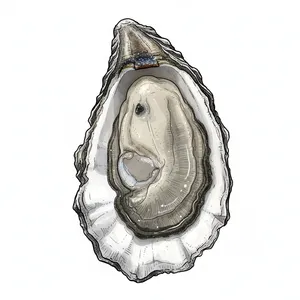
Village Bay oysters are cultivated in the pristine waters of Bedec Bay, New Brunswick, where they are farmed for 4 to 6 years in nutrient-rich waters fed from the Northumberland Strait. These oysters offer a refined, well-balanced flavor profile with medium salinity, subtle hazelnut notes, and a distinctive creamy, buttery finish. The unique teardrop-shaped shells house plump meats that deliver a delicate taste with hints of cucumber and sweetness, making them a favorite among oyster enthusiasts seeking a refined raw bar experience. Origin & Characteristics
- Species
- Crassostrea virginica
- Native to
- Canada
- Grown in
- Bedec Bay, Richibucto-Village, New Brunswick
- Size
- Medium (2.75 inches)
- Shell Color
- White to light brown
- Meat Color
- Plump, moderately firm
Perfect Pairings
What Experts Say
Across 6 sources, tasters describe this oyster as:
Unique notes: succulent, crisp cucumber-like finish, plump meats
"These oysters have a medium salinity profile with a bright, clean finish."
medium salinitybrightclean
"Medium salinity with a bright clean finish."
medium salinitybrightclean
"The $2 premium oyster of the day, the Village Bay oyster from New Brunswick, beautifully shaped and succulent in texture."
succulent
"Village Bay oysters typically offer: Light-to-moderate brine, Clean ocean aroma, Creamy texture, A crisp, cucumber-like finish. Cold-water growth produces consistently plump meats and beautiful shells."
light-to-moderate brinecleancreamycrispcucumber
"Village Bay oyster is raised in the icy cold waters of Bedec Bay, New Brunswick. It is a 2½-3 inch cocktail oyster with plump meats."
plump
About the Farm
Village Bay Oysters (King Family)
Est. 1969In 1969, M. Armand King started developing oyster aquaculture in Richibucto-Village, New Brunswick, joining other individuals to transform the community. The King family has been in the seafood business for six decades, starting in the lobster business before transitioning to oysters as their primary business in the mid-nineties.
- Cultivation Method
- floating bags
History & Background
Village Bay Oysters has a rich history dating back to 1969 when M. Armand King initiated a movement that transformed the community of Richibucto-Village, New Brunswick. The oysters got their name from their origin in Richibucto-Village. The King family ceased lobster operations in the mid-nineties and began growing oysters as their primary business. The company is currently run by Danny King (son of the founder) and is Canada's largest oyster operation by acres farmed.
These oysters transformed the community of Richibucto-Village from a lobster fishing area into Canada's largest oyster farming operation.
Did You Know?
- Canada's largest oyster operation by acres farmed
- The King family initially operated a substantial lobster processing facility before transitioning to oysters
- Oysters are farmed for 4 to 6 years before reaching market size
Sources & References
This information was compiled from 6 sources.
- Village Bay Oysters - The Oyster Encyclopedia — oysterencyclopedia.com
- Village Bay Oyster — Oysterology Online | Pangea Shellfish Company — pangeashellfish.com
- About Us - Village Bay — villagebay.ca
- Daufuskie & Miyagi Oysters: Gulf & West Coast — sherwoodislandoysters.com
- Chewies Kitslano - Oyster Happy Hour on Sunny Patio — pickydiners.com
- LIVE OYSTERS - Fortune Fish Co. — fortunefishco.net
Similar Oysters
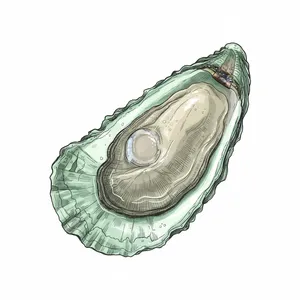
Colville Bay
Canada East CoastCanada's most sought-after oyster. Stunning jade shells, crunchy texture, and bright nutty-sweet flavors with a floral lemon zest finish.
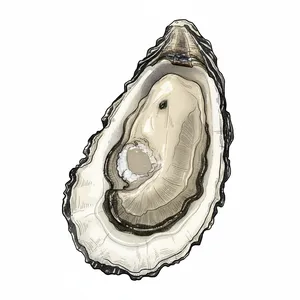
Beausoleil
Canada East CoastThe perfect starter oyster from New Brunswick's Miramichi Bay. Small, refined, and elegantly mild with yeasty notes, subtle hazelnut sweetness, and a creamy texture. Farmed in floating trays that ensure pristine, uniform shells.
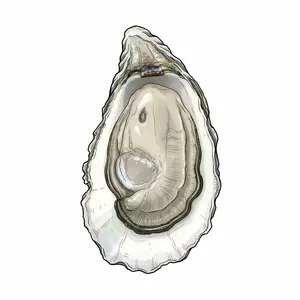
Conway Cup
Canada East CoastA deeply cupped Prince Edward Island oyster from Cascumpec Bay. Sweet and delicate with mild brininess and a clean finish. Bottom-grown on sandy substrate for firm, full meats.
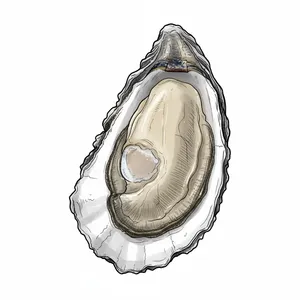
Daisy Bay
Canada East CoastA well-balanced Prince Edward Island oyster grown wild in red bay mud. Leads with bright salinity and finishes with mild cucumber smoothness and sweet notes. Cultivated for 4-6 years in pristine northern waters.
La Saint Simon
Canada East CoastSmall, delicate oyster from New Brunswick's Acadian Peninsula. Suspension-cultured with a firm texture, medium brininess, and a distinctive sweet-citrus finish that showcases the Maritime's refined oyster style.
Learn More
The Big Five: A Complete Guide to Commercial Oyster Species
Comprehensive guide to C. virginica (Atlantic), C. gigas (Pacific), C. sikamea (Kumamoto), O. lurida (Olympia), and O. edulis (European Flat)
Read article → Biology & SpeciesThe Atlantic Oyster (C. virginica): From Maritime Brine to Gulf Sweetness
Deep dive into America's indigenous East Coast oyster - flavor profiles, regional variations, and famous varieties
Read article → Merroir & EnvironmentWhat Is Merroir? How Water Shapes Oyster Flavor
Merroir is the marine version of terroir: how salinity, temperature, tides, and plankton in the growing water shape an oyster's flavor. The science, plus how to taste it.
Read article →