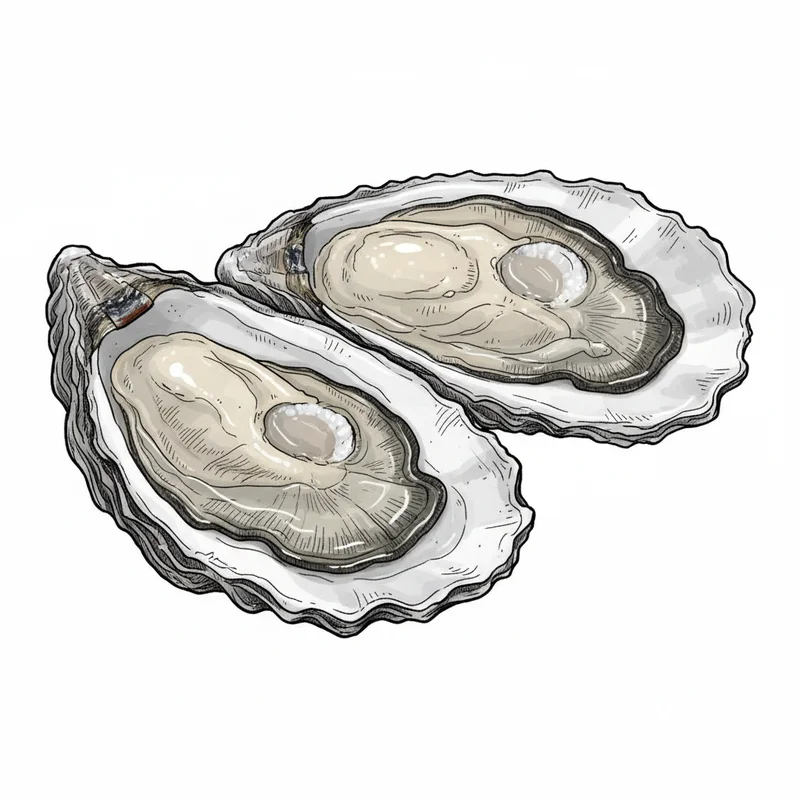
Wallace Bay
Crassostrea virginica
Sub-tidally cultivated Nova Scotia oyster from the cold waters of Northumberland Strait. Distinctly mineral-forward with high salinity and a fresh, clean finish. Deep-cupped shells from nutrient-rich northern waters.
At a Glance
Wallace Bay is an Eastern oyster (Crassostrea virginica) from the Canada East Coast. It is notably briny (4/5 brininess) and subtly sweet (2/5 sweetness), with briny, mineral, salty flavors and a finish that is fresh, clean, crisp aftertaste.
Flavor Profile
Finish
Fresh, clean, crisp aftertaste
Expert Notes
Wallace Bay oysters are cultivated sub-tidally in the cold, clean, nutrient-rich waters of Nova Scotia's Northumberland Strait. These oysters deliver a distinctly mineral-forward profile with high salinity that reflects their pristine northern waters. The pronounced briny character is balanced by a fresh, clean finish that showcases the quality of their cultivation environment. Their deep-cupped shells house meats with a refreshing, crisp quality that appeals to those who appreciate a bold, mineral-driven oyster. Origin & Characteristics
- Species
- Crassostrea virginica
- Native to
- North America
- Grown in
- Wallace Bay, North Shore Nova Scotia, Northumberland Strait
- Size
- Medium (2.5-3.5 inches)
- Shell Color
- Gray-white
- Meat Color
- Cream to light gray
What Experts Say
Across 7 sources, tasters describe this oyster as:
Unique notes: peat, lamb, wild
"a full, gamy flavor, followed by a subtle sweetness and moderate briny finish"
gamysweetbriny
"The flavor is positively gamy, like no farmed oyster I know. Why these should be so much stronger in flavor than PEI oysters, grown right across the straits, I have no idea, but something gets a bit more wild and robust here."
gamywildrobuststrong
"This oyster is very similar to Malpeque, it is has a slightly bigger shell and is harvested from Prince Edward Island. Meat is very full, sweet and briny."
sweetbrinyfull
"Nova Scotia - These oysters are fished from Wallace Bay, Nova Scotia. They are robust oysters, wild in nature, and tough from the waters in which they grow. The flavor is briny with a mineral finish."
brinymineralrobust
"Wallace Bay, Nova Scotia – mineral. When paired with a Wallace Bay, a mineral East Coast oyster, it was an identical experience as with the Quonnie Rock."
mineral
"Wallace Bay oysters are from Nova Scotia, known for their mineral, salty taste with a fresh, clean finish. They are wild and robust, often compared to peat and lamb."
mineralsaltyfreshcleanwild
About the Farm
Wild oysters harvested by divers from Wallace Bay, located west of Tatamagouche in Nova Scotia's Northumberland Strait.
- Cultivation Method
- wild harvest
History & Background
The seaside town of Wallace, Nova Scotia, is named for William Wallace, the thirteenth-century Scottish hero of independence who managed to thoroughly piss off the English for a few years before being captured.
Wallace Bay oysters are known for being significantly stronger in flavor than nearby PEI oysters grown right across the straits, despite similar growing conditions.
Did You Know?
- These oysters spend 5 years growing in the icy depths of Wallace Bay before harvest
- They are harvested by hand from divers, not farmed
- Often compared to the flavor of peat and lamb due to their wild, gamy character
Sources & References
This information was compiled from 7 sources.
- Wallace Bay - The Oyster Encyclopedia — oysterencyclopedia.com
- The Five-Minute Oyster Guide That Will Make You Look Like an Expert — vice.com
- OYSTER VARIETIES - The Seafood Merchants — theseafoodmerchants.com
- Different Wine Pairings For Different Oysters — pangeashellfish.com
- Get Stuffed - Pique Newsmagazine — piquenewsmagazine.com
- All the Oysters- What's What, Where They're From, and How They Taste — cookingdistrict.com
- Cape Breton Oyster — Oysterology Online — pangeashellfish.com
Similar Oysters
Malagash Thrumcap
Canada East CoastWild, bottom-grown oyster from Nova Scotia's Malagash Basin. Mildly salty with a distinctive smoky, mineral finish and firm texture from the pristine northern Atlantic waters.
Lameque
Canada East CoastSmall cold-water oyster from Chaleur Bay, New Brunswick. Heavy, gnarly shells with intensely briny, metallic flavor. Robust and wild—not for beginners.
Irish Point
Canada East CoastA cocktail-sized PEI oyster with striking bright green shells. High salinity with a powerful brine that transitions to a sweet, earthy, citrus finish. Excellent meat quality from cold northern waters.
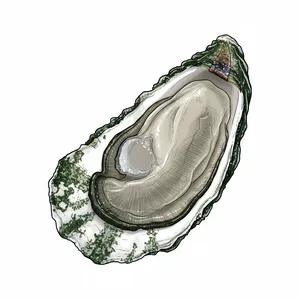
Bras D'or
Canada East CoastWild-harvested Maritime oyster from Cape Breton's Bras D'Or Lakes. Light-bodied with assertive brine, hints of seaweed, and a clean, steely finish. A quintessential Atlantic oyster from pristine Nova Scotia waters.
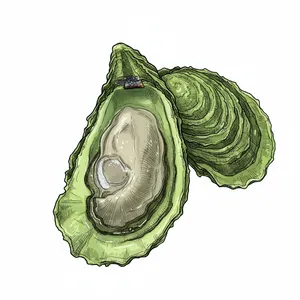
Lucky Lime
Canada East CoastDistinctive PEI oyster with moss-green shells and briny, seaweed-like flavor with refreshing citrus and lime finish.
Learn More
The Big Five: A Complete Guide to Commercial Oyster Species
Comprehensive guide to C. virginica (Atlantic), C. gigas (Pacific), C. sikamea (Kumamoto), O. lurida (Olympia), and O. edulis (European Flat)
Read article → Biology & SpeciesThe Atlantic Oyster (C. virginica): From Maritime Brine to Gulf Sweetness
Deep dive into America's indigenous East Coast oyster - flavor profiles, regional variations, and famous varieties
Read article → Merroir & EnvironmentWhat Is Merroir? How Water Shapes Oyster Flavor
Merroir is the marine version of terroir: how salinity, temperature, tides, and plankton in the growing water shape an oyster's flavor. The science, plus how to taste it.
Read article →