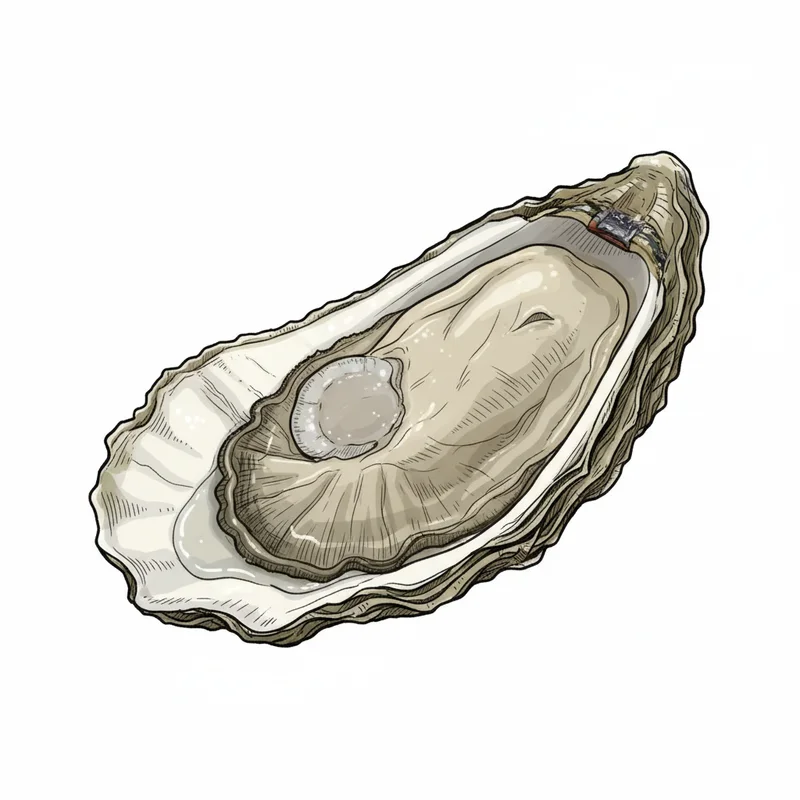
Beavertail
Crassostrea virginica
Large, deeply cupped oyster from Rhode Island's Narragansett Bay with a distinctive beaver tail shape. Bold and briny with buttery sweetness, grown in deep suspended trays that capture pure ocean flavor.
At a Glance
Beavertail is an Eastern oyster (Crassostrea virginica) from the US East Coast. It is notably briny (4/5 brininess) and moderately sweet (3/5 sweetness), with briny, bold, buttery flavors and a finish that is bold, buttery, and clean.
Flavor Profile
Finish
Bold, buttery, and clean
Expert Notes
Beavertail oysters are aptly named for their distinctive broad, flat shape resembling a beaver's tail. Grown in suspended trays 20-40 feet below the surface in the East Passage of Narragansett Bay, these oysters capture the true taste of open ocean water that pushes into Rhode Island's glacially-cut passages. Their large, deeply cupped shells house plump, pleasantly chewy meat with a bold briny flavor balanced by buttery sweetness and hints of seaweed, finishing clean and satisfying. Origin & Characteristics
- Species
- Crassostrea virginica
- Native to
- USA
- Grown in
- East Passage, Narragansett Bay, Rhode Island
- Size
- Large (3.5-4 inches)
- Shell Color
- Light-colored, khaki-white
- Meat Color
- Cream to light gray
What Experts Say
Across 8 sources, tasters describe this oyster as:
Unique notes: fresh sea, easy finish
"The flavor profile is clean and briny with slight hints of seaweed and they sit in a large well-cupped body. They're delicious."
cleanbrinyseaweed
"They have an elaborate briny flavor with hints of sweetness."
brinysweet
"Held in suspended trays as deep as 20-40ft below the surface, Beavertail Oysters are grown from planted seed at Salt Water Farms in the East Passage of Narragansett Bay, Rhode Island."
"Contained in a 2-inch light-colored shell, this oyster tasted like the fresh sea. There's a good amount of saltiness in that small body. It's briny, but it finishes lightly and leaves a clean feeling."
saltybrinyclean
"A large, cupped oyster defined by its characteristic 'beaver tail' shape. Grown in the deep, cold waters of the East Pass of Narragansett Bay."
"Slightly briny and medium plumpness. Good. Slightly briny, plump, easy finish. A bit bigger oyster than others I have had so far this year in RI. Delicious oyster but found it to not be as briny as led to believe."
brinyplump
"Beavertails are very clean and deeply cupped."
clean
"Beavertail Oysters are grown from planted seed at Saltwater Farms' in the East Passage of Narragansett Bay. They are harvested from deep, cold waters."
About the Farm
Salt Water Farms
Salt Water Farms is a carefully sited shellfish farm producing a sustainable crop in the East Passage of Narragansett Bay, Rhode Island.
- Cultivation Method
- suspended culture
History & Background
Beavertail oysters are named for their distinctive shell shape that resembles a beaver's tail. They are cultivated in the deep waters of the East Passage of Narragansett Bay in Rhode Island.
These oysters are best farmed around 3½ to 4 inches in size and are popular in raw bars throughout the Northeast.
Did You Know?
- Held in suspended trays as deep as 20-40 feet below the surface
- Named after their distinctive beaver tail-shaped shell
Sources & References
This information was compiled from 8 sources.
- THE OYSTER REPORT — Paul Evans NY
- Shellfish — Gadaleto Seafood
- shellfish oysters clams mussels — Tony & Sons' Seafood
- Oyster Tasting Log - Peek & Eat — Peek & Eat
- Beaver Tail Oyster — Oysterater
- What Type of Oyster Eater Are You? — PA Eats
- Superior Foods Oysters — Superior Foods
- OysterFinder — The Oyster Guide
Similar Oysters
East Beach Blonde
US East CoastFarmed in floating cages in Ninigret Pond, Rhode Island. Distinguished by pale golden shells and creamy, golden flesh with a sophisticated flavor profile featuring strong initial brine, distinctive buttery notes, and a delicate sweet finish.
Ichabod Flat
US East CoastHand-harvested intertidal oyster from Plymouth's historic mudflats in Cape Cod Bay. Meaty and briny with a buttery, bisque-like richness. Thick shells and firm texture from cold Massachusetts waters.
Moonstone
US East CoastBold Rhode Island salt pond oyster from Point Judith Pond. Rich, intense brine with meaty texture and a sweet nutty finish. Grown using rack-and-bag nursery and bottom culture methods.
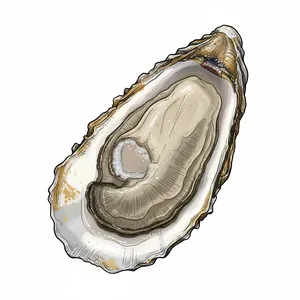
Ninigret Cup
US East CoastRhode Island oyster from Ninigret Pond. Medium-sized with a deep cup, featuring subtle brine, sweet buttery notes, and a distinctively thick creamy finish. Raised in cages then bottom-planted for strength.
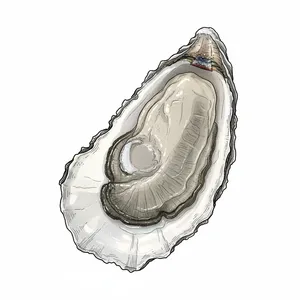
Norumbega
US East CoastRobust, meaty oysters from Maine's fabled Damariscotta River. Hand-harvested by scuba divers after 2-3 years bottom-planted. Sweet, buttery opening transitions to refreshing brininess with firm texture and beautiful deep cups.
Learn More
The Big Five: A Complete Guide to Commercial Oyster Species
Comprehensive guide to C. virginica (Atlantic), C. gigas (Pacific), C. sikamea (Kumamoto), O. lurida (Olympia), and O. edulis (European Flat)
Read article → Biology & SpeciesThe Atlantic Oyster (C. virginica): From Maritime Brine to Gulf Sweetness
Deep dive into America's indigenous East Coast oyster - flavor profiles, regional variations, and famous varieties
Read article → Merroir & EnvironmentWhat Is Merroir? How Water Shapes Oyster Flavor
Merroir is the marine version of terroir: how salinity, temperature, tides, and plankton in the growing water shape an oyster's flavor. The science, plus how to taste it.
Read article →