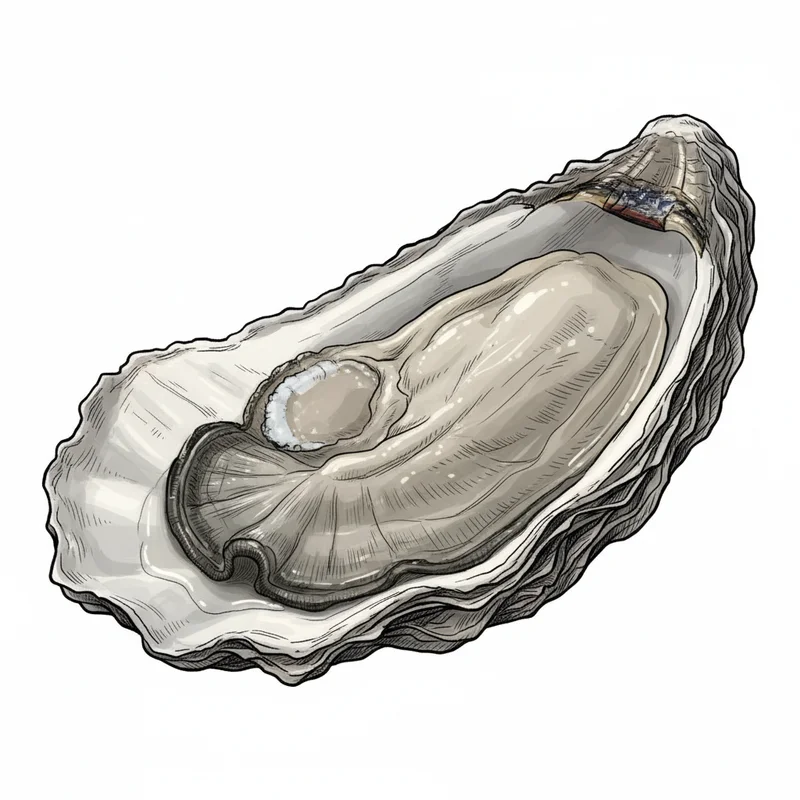
Bluepoint (Long Island Sound)
Crassostrea virginica
America's most famous oyster since the 1800s. Bottom-planted in Long Island Sound with heavy, gnarly shells. Intensely briny and bold with metallic notes, firm texture, and a mineral finish. A salty classic for purists.
At a Glance
Bluepoint (Long Island Sound) is an Eastern oyster (Crassostrea virginica) from the US East Coast. It is notably briny (4/5 brininess) and subtly sweet (2/5 sweetness), with briny, metallic, bold flavors and a finish that is light herbal or mineral, clean, bracing.
Flavor Profile
Finish
Light herbal or mineral, clean, bracing
Expert Notes
Perhaps the most recognized oyster name in America, Bluepoint is the definition of a salty classic. Harvested from the deep, cold waters of the Long Island Sound since the early 1800s, these bottom-planted oysters deliver an intense hit of high salinity right up front, followed by a firm, springy texture. Known for being big, strong, and wild with heavy, gnarly shells, they offer that fresh-ocean-wave sensation with a bracing, metallic brininess and light mineral finish. A true staple of American shellfish culture and historic favorite dating back to Queen Victoria, these are bold oysters not for the timid. Origin & Characteristics
- Species
- Crassostrea virginica
- Native to
- USA
- Grown in
- Long Island Sound, Connecticut, Norwalk Islands, Connecticut, Westport Islands, Connecticut, Oyster Bay, Long Island, New York
- Size
- Medium to Large (3-4 inches)
- Shell Color
- Heavy, gnarly, gray-white
- Meat Color
- Light gray to cream
Perfect Pairings
What Experts Say
Across 9 sources, tasters describe this oyster as:
Unique notes: satiny, liquid meats, oceanic, refreshing, crisp
"Harvested from the cold, briny waters of Long Island Sound, Bluepoints have a crisp salinity balanced with subtle minerality. Their clean, refreshing taste and firm texture make them a classic that has been celebrated on raw bars for more than a century."
brinycrispmineralcleanrefreshing
"Generally, Blue Point oysters have satiny, almost liquid meats with a high brininess and very mild flavor."
brinymildsatinyliquid
"Served at many restaurants, has a medium to light brine, with a mineral finish. Not horrible but not the best either. An average oyster, would never go out of my way to enjoy one."
brinymineral
"Famous in name is a decent all around oyster. Has many all around qualities and recognizably round flat flange with an average cup depth. Best served at a deep chill which brings out its best characteristics. A great banquet oyster which is a potential explanation for their fame. Excellent for the uninitiated."
mild
"Had an assortment of sizes, a couple small ones and the other four large. The first small one was extremely ocean-y. I absolutely loved it. The remainder were not so ocean-y, but still had good taste, good mouth feel, juiciness, and texture. Good tasting oyster!"
oceanicbrinyjuicy
"Moderately high salinity with a briny punch and a mineral aftertaste."
brinysaltymineral
"A must-have introductory oyster. The middle-of-the-road minerality and salinity makes them perfect for everything from eating naked to stuffing a la Rockefeller."
mineralsaltymild
"A little creamy, overly meaty, almost no taste. Would be a 1 but gain a star for the pea crabs."
creamymeatymild
About the Farm
Norm Bloom & Son
Arguably the largest oyster producer of the Northeast, claiming that they supply 8 out of 10 Bluepoints on the market. This three-generation family business helped popularize the Bluepoint in its early days.
- Cultivation Method
- bottom culture
History & Background
Blue Point oysters have been a fixture on oyster menus since the early 1800s when wild oysters were harvested in Long Island's Great South Bay near the town of Blue Point, NY. Originally planted by Humphret Avery off the shore of Blue Point, New York in 1815. The Great South Bay fishery thrived until around 1910 when pollution consumed the Long Island Sound. A major coastal storm in 1931 and a major hurricane in 1938 all but ended the oyster industry in Great South Bay. Since then, Connecticut beds have recovered and Long Island Sound has become the primary source of Bluepoints.
America's most famous oyster, appearing on nearly every oyster menu in Manhattan and beyond. Queen Victoria is said to have favored them. The name 'Blue Point' has become somewhat generic, applied to oysters from New York, Connecticut, Delaware, New Jersey, and Virginia, leading some to call it 'the most bastardized name in all of seafood.'
Did You Know?
- You can find pea crabs in these oysters occasionally
- The proper spelling is 'Blue Point' (after the town) not 'Bluepoint'
- Any oyster from Long Island Sound can technically be called a Bluepoint
- They were so popular in early New York that Manhattan literally grew on piles of oyster shells
- Four train-lengths full of oysters moved daily from Long Island to Grand Central a century ago
Sources & References
This information was compiled from 9 sources.
- Bluepoint Oyster — Oysterater
- Bluepoint Oysters: Then and Now — In A Half Shell
- Blue Point Oyster | Blue Point Oyster Taste | Long Island Oyster — Chef's Resources
- Shucking Great Pairings: Celebrating National Oyster Week at Colloca Estate Winery — Colloca Estate Winery
- Long Island Blue Point Oyster — Oysterology Online — Pangea Shellfish
- 7 Types Of Oysters And How To Eat Them, According To A Seafood Expert — Foodie
- Blue Points: The Most Bastardized Name in Seafood and Why You Should Care — Pangea Shellfish
- Blue Point Oysters - The Oyster Encyclopedia — Oyster Encyclopedia
- The Case for Oysters, Our Sixth Ingredient of the Week — Edible Brooklyn
Similar Oysters
Speciale
US East CoastA wild Long Island oyster with bold, briny character. Heavy shells, meaty texture, complex mineral and metallic notes with cucumber undertones.
Olde Salt
US East CoastRack and bag cultured oyster from Chincoteague Bay, Virginia. Bold, intensely briny with the truest taste of the ocean, thanks to direct Atlantic water influx. Smooth, clean finish despite high salinity.
Cape Blue
US East CoastHand-grown Cape Cod Bay oyster from Barnstable Harbor. Medium-sized with distinctive white-and-black shells, highly briny with firm texture and a slightly nutty finish. Rich New England clambake flavor.
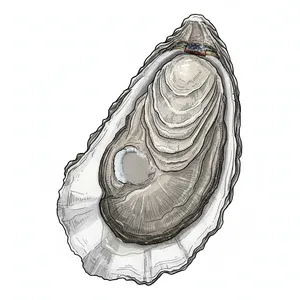
East End
US East CoastClassic East Coast oyster with high salinity and pronounced minerality. Medium-sized with a chewy texture, delivering briny, vegetal flavors and a clean, crisp finish.
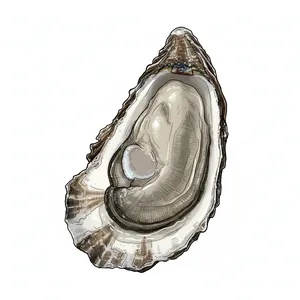
Narragansett
US East CoastWild-harvested and farmed oysters from Rhode Island's historic Narragansett Bay. Long and skinny with shallow cups, these oysters deliver strong brine with earthy, mineral notes and a clean finish that reflects the challenging bay conditions.
Learn More
The Big Five: A Complete Guide to Commercial Oyster Species
Comprehensive guide to C. virginica (Atlantic), C. gigas (Pacific), C. sikamea (Kumamoto), O. lurida (Olympia), and O. edulis (European Flat)
Read article → Biology & SpeciesThe Atlantic Oyster (C. virginica): From Maritime Brine to Gulf Sweetness
Deep dive into America's indigenous East Coast oyster - flavor profiles, regional variations, and famous varieties
Read article → Merroir & EnvironmentWhat Is Merroir? How Water Shapes Oyster Flavor
Merroir is the marine version of terroir: how salinity, temperature, tides, and plankton in the growing water shape an oyster's flavor. The science, plus how to taste it.
Read article →