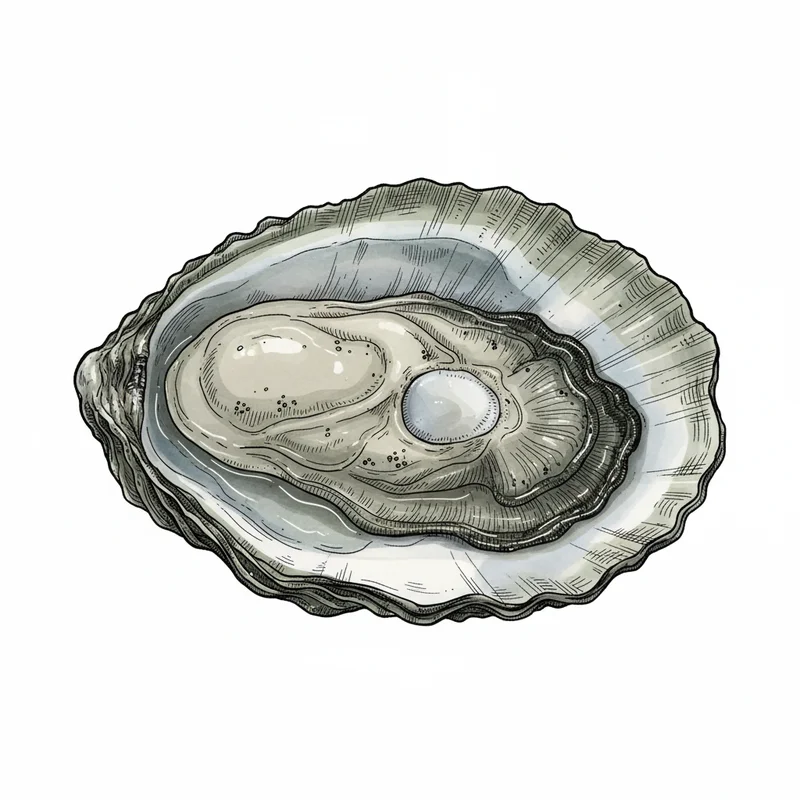
Bluff
Ostrea chilensis
The legendary oyster of New Zealand. Intensely mineral and briny with firm texture and complex, bold flavors from the ice-cold Foveaux Strait.
At a Glance
Bluff is a Chilean Flat oyster (Ostrea chilensis) from New Zealand. It is notably briny (4/5 brininess) and subtly sweet (2/5 sweetness), with briny, mineral, metallic flavors and a finish that is long, intense, mineral-rich.
Flavor Profile
Finish
Long, intense, mineral-rich
Expert Notes
The Bluff oyster is a powerhouse of flavor from New Zealand's frigid Foveaux Strait. Closely related to the European Flat, it delivers an even more potent mineral punch with bold briny notes and complex metallic undertones. The cold-water environment and firm texture create a distinct, memorable eating experience that rivals the most celebrated flat oysters in the world. Origin & Characteristics
- Species
- Ostrea chilensis
- Native to
- New Zealand and Chile
- Grown in
- Foveaux Strait, Stewart Island
- Size
- Medium (2.5-3.5 inches)
- Shell Color
- Gray-green
- Meat Color
- Cream-gray
What Experts Say
Across 8 sources, tasters describe this oyster as:
Unique notes: the Champagne of oysters, melts on your tongue like a buttery dream, wild tides and icy currents, subantarctic
"These itty bitty bivalves didn't earn cult-like international status for nothing. They pack a whole bunch of history, nutrition, and righteous tradition into a tiny package. A tiny, briny, sweet and singular package whose renowned flavor melts on your tongue like a buttery dream."
brinysweetbuttery
"Sweet, briny, and silky smooth, and served raw with a squeeze of lemon, battered and fried, or straight from the shell at the Bluff Oyster Festival, they're the taste of Southland distilled."
sweetbrinysilkysmooth
"They deliver a burst of intense, creamy salinity. This flavour speaks of wild tides, icy currents, and untouched southern waters. The oysters are carefully harvested, cleaned, and served with little fanfare—because they simply don't need it. Their natural brine is so rich that many locals insist they should be eaten completely unadorned."
intensecreamysaltybriny
"Strong, robust flavor with intense ocean brininess. Firmer and meatier than Pacific oysters. Bluff oysters are best enjoyed raw to truly appreciate their bold, salty taste — but they're also delicious lightly battered or grilled."
strongrobustbrinyintensebold
"They taste way different to the ones we have here the raw oysters up here these are actually a really sweet. Really enjoyed the flavor of these consider they're not scrape on the shell and they've been in a pennant for two or three days. These are very tasty. They have really nice flavor to them. The flavor is really sweet."
sweetdifferent
"Bluff oysters are rich, buttery, and intensely briny—often described as 'the Champagne of oysters.' Cold, nutrient-rich currents produce slow-growing oysters with legendary depth of flavor."
richbutteryintensely brinydeep
About the Farm
Bluff oysters are wild-harvested from the Foveaux Strait off the southern tip of New Zealand's South Island, one of the few natural oyster beds in the world. Commercial harvesting began in the 1860s, and the fishery has been managed for over 100 years with strict quotas to ensure sustainability.
- Cultivation Method
- wild harvest
History & Background
The Foveaux Strait is one of the oldest commercial fisheries in New Zealand, with Bluff oysters harvested here for over 100 years. Oystering has helped shape Bluff, one of New Zealand's oldest towns. The indigenous Māori settled on the island around 1250 AD and have treasured these oysters for nearly 1,000 years as one of the most beloved traditional dishes of New Zealand.
Bluff oysters are considered New Zealand's national treasure and are celebrated annually at the Bluff Oyster and Food Festival every May, drawing visitors from around the globe. The season runs from March to August, during which the town of Bluff becomes a culinary pilgrimage site.
Did You Know?
- Known by various names including dredge oysters, flat oysters, deep-water oysters, mud oysters, and Foveaux Strait oysters
- The Māori know them as tio paruparu
- A quota system was introduced in the 1960s with limited season to protect the oyster beds for future generations
- Approximately 10 million oysters are harvested each year once they reach at least 4 years of age
- Tripadvisor reviewers have called them 'Unlike any other oyster [I've] tasted'
- They measure just 1½ inches across, petite compared to other oyster varieties
Sources & References
This information was compiled from 8 sources.
- What Are Bluff Oysters And What Do They Taste Like? — Food Republic
- Bluff Oyster | Southland, New Zealand — Southland NZ
- Bluff Oysters: A Culinary Treasure from New Zealand — Kooks Secrets
- Auckland's Oysters: Types, Tastes, and How to Enjoy Them Like a Local — The Oyster Bar Co
- Pinctada & Bluff Oysters: Wild Oyster Guide — Sherwood Island Oysters
- 16 Best Oysters in the World — TasteAtlas
- New Zealand's must-eat seafood — 100% Pure New Zealand
- Do BLUFF OYSTERS Taste As Good As They Say? — Weka Digital Media NZ
Similar Oysters
Belon (France)
FranceThe legendary European flat oyster from Brittany's Belon River. Intensely metallic with a distinctive coppery taste from high iron content. Bold, brassy, and powerful—considered the Cadillac of oysters by connoisseurs.
European Flat
FranceA refined yet powerful oyster with distinctive metallic and coppery notes. The European species offers a bold mineral character unlike any Pacific or Atlantic oyster.
Royal Courtesan
Canada West CoastBeach-raised Pacific oyster from Cortes Island, BC. Bold, briny, and metallic with robust mineral intensity and a strong, clean finish. Cultivated by renowned oyster farmer Brent Petkau.
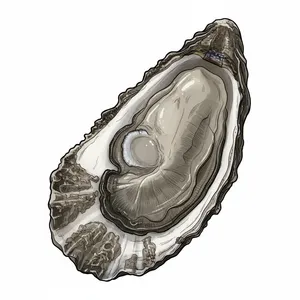
Speciale
US East CoastA wild Long Island oyster with bold, briny character. Heavy shells, meaty texture, complex mineral and metallic notes with cucumber undertones.
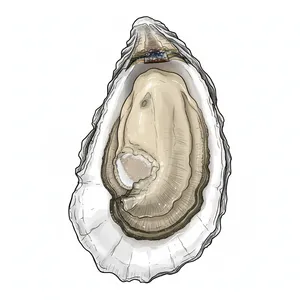
Great White
US East CoastCape Cod's flagship oyster from Barnstable Harbor. Large with thick shells and dense, savory meats. Distinctively briny and mineral-forward with a powerful ocean taste shaped by twice-daily tidal flows.
Learn More
What Is Merroir? How Water Shapes Oyster Flavor
Merroir is the marine version of terroir: how salinity, temperature, tides, and plankton in the growing water shape an oyster's flavor. The science, plus how to taste it.
Read article → Practical GuidesVibrio and Raw Oysters: A Clear-Headed Guide to Oyster Safety
Understanding Vibrio vulnificus without fear-mongering - risk factors, prevention, and when to cook
Read article → Culinary & PairingsBeyond Cocktail Sauce: The Art of the Oyster Mignonette
Classic and creative mignonette recipes engineered to complement specific oyster flavor profiles
Read article →