
Caraquet
Crassostrea virginica
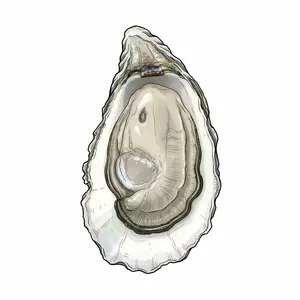
A delicate wild-harvested oyster from New Brunswick's legendary Caraquet Bay. Small and slow-grown over four years, with subtle brine, mineral notes, and a refined clean finish that makes it the perfect accessible oyster.
At a Glance
Caraquet is an Eastern oyster (Crassostrea virginica) from the Canada East Coast. It is mildly briny (2/5 brininess) and subtly sweet (2/5 sweetness), with delicate, mild brine flavors and a finish that is clean, salty, refined. It is considered a beginner-friendly oyster.
Flavor Profile
Finish
Clean, salty, refined
Expert Notes
Caraquet oysters are legendary staples of the Canadian Maritimes, cherished by fishermen and loggers for generations. Growing wild in the cold waters of Caraquet Bay in northern New Brunswick, these oysters take four years to reach maturity due to the short growing season, resulting in firm texture and a deep cup despite their small size. The flavor profile is deliberately subtle—a hint of brine, mineral notes, and a whisper of seaweed that disappears quickly, making them the quintessential 'oyster next door': delicate, dainty, and inoffensive rather than bold or powerful. Origin & Characteristics
- Species
- Crassostrea virginica
- Native to
- Canada
- Grown in
- Caraquet Bay, New Brunswick
- Size
- Small (2-2.75 inches)
- Shell Color
- Gray-white
- Meat Color
- Cream to light gray
What Experts Say
Across 8 sources, tasters describe this oyster as:
Unique notes: crab-like sweetness, almond, amino acids
"In flavor, the Caraquet flirts with nonexistence: a hint of brine, a tickle of amino acids, and it's gone."
brinesubtledelicateamino acids
"This oyster is harvested from New Brunswick, Canada. They are oblong in shape, and the shell is marbled light brown and white. The meat is sweet with a hint of brine and a slightly metallic note."
sweetbrinemetallic
"The thin body broke instantly upon chewing and released a slightly salty, yet surprisingly metallic briny flavor."
saltymetallicbrinydelicate
"Nice little gems that, depending on the season, have had the most amazing crab like sweetness I've ever tasted in an oyster."
sweetcrabseasonal
"The delicate, yet generous taste of the Dugas Caraquette oyster is uniquely balanced by the saltwater of the Caraquet Bay and the freshwater of the two rivers that spill into it. Its plump, firm texture offers a sweet almond taste in a shell that is robust yet easy to open."
delicatesweetalmondfirmbalanced
"Delicate cold water oysters from way up north in New Brunswick"
delicatecleancold water
About the Farm
La Dugas Caraquette (Dugas Family)
The Dugas family is a 7-generation oyster producer in Caraquet Bay, cultivating oysters using ancestral techniques that are environmentally conscious and refined over generations.
- Cultivation Method
- wild harvest
History & Background
Once the toast of Montreal and a favorite of Canadian loggers, Caraquet oysters have been harvested from Caraquet Bay since at least the 18th century. The town of Caraquet was founded around 1760, and the Mi'kmaq peoples have thousands of years of history in the region. By the 1820s-1880s, overfishing threatened the oyster beds.
Traditionally consumed by loggers and fishermen, often served by stomping into rough pubs and dropping shucked Caraquets into a pint of beer before chugging it. The oyster is celebrated in Pascal Poirier's 1884 quote as something worthy of being 'served on a golden platter to the gods of Olympus.'
Did You Know?
- The traditional logger's way to eat Caraquets: drop shucked oysters into a pint of beer and chug it
- Takes about 4 years to reach only 2 to 2.5 inches in size due to cold northern waters
- Caraquet Bay is the only bay in New Brunswick that still offers profitable oyster farming
- The bay provides the most important reproductive stock in the province with over 10,000 collectors annually
Sources & References
This information was compiled from 8 sources.
- Caraquet - New Brunswick — The Oyster Guide
- Home | La Dugas Caraquette — La Dugas Caraquette
- Caraquet Oyster — Oysterater
- New York Oyster Lovers at Essex — In A Half Shell
- Live Oyster Descriptions 2016 — Fortune Fish Co.
- Caraquet Oysters at the Roadhouse — Zingerman's Roadhouse
- Caraquette Oysters — The Oyster Encyclopedia
- Port of Caraquet — Wikipedia
Similar Oysters
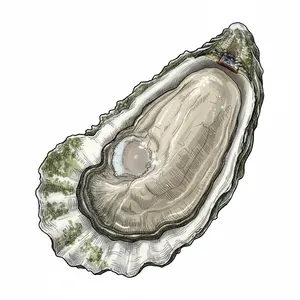
Northumberland
Canada East CoastClean, mild oyster from the Northumberland Strait between PEI and New Brunswick. Mildly sweet with balanced brine and a cool finish. Known for their larger size and light, firm texture shaped by nutrient-rich Atlantic waters.
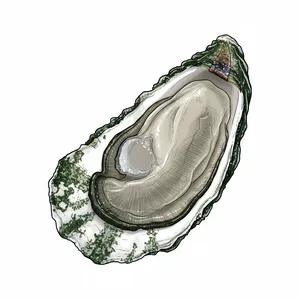
Bras D'or
Canada East CoastWild-harvested Maritime oyster from Cape Breton's Bras D'Or Lakes. Light-bodied with assertive brine, hints of seaweed, and a clean, steely finish. A quintessential Atlantic oyster from pristine Nova Scotia waters.
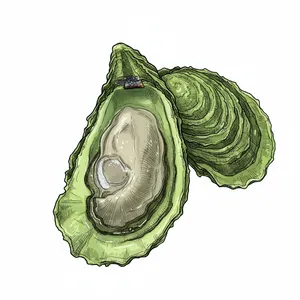
Lucky Lime
Canada East CoastDistinctive PEI oyster with moss-green shells and briny, seaweed-like flavor with refreshing citrus and lime finish.
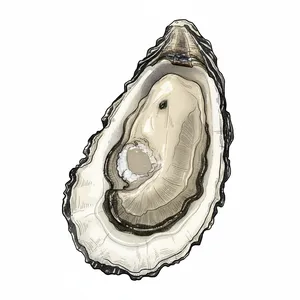
Beausoleil
Canada East CoastThe perfect starter oyster from New Brunswick's Miramichi Bay. Small, refined, and elegantly mild with yeasty notes, subtle hazelnut sweetness, and a creamy texture. Farmed in floating trays that ensure pristine, uniform shells.
Conway Cup
Canada East CoastA deeply cupped Prince Edward Island oyster from Cascumpec Bay. Sweet and delicate with mild brininess and a clean finish. Bottom-grown on sandy substrate for firm, full meats.
Learn More
The Big Five: A Complete Guide to Commercial Oyster Species
Comprehensive guide to C. virginica (Atlantic), C. gigas (Pacific), C. sikamea (Kumamoto), O. lurida (Olympia), and O. edulis (European Flat)
Read article → Biology & SpeciesThe Atlantic Oyster (C. virginica): From Maritime Brine to Gulf Sweetness
Deep dive into America's indigenous East Coast oyster - flavor profiles, regional variations, and famous varieties
Read article → Merroir & EnvironmentWhat Is Merroir? How Water Shapes Oyster Flavor
Merroir is the marine version of terroir: how salinity, temperature, tides, and plankton in the growing water shape an oyster's flavor. The science, plus how to taste it.
Read article →