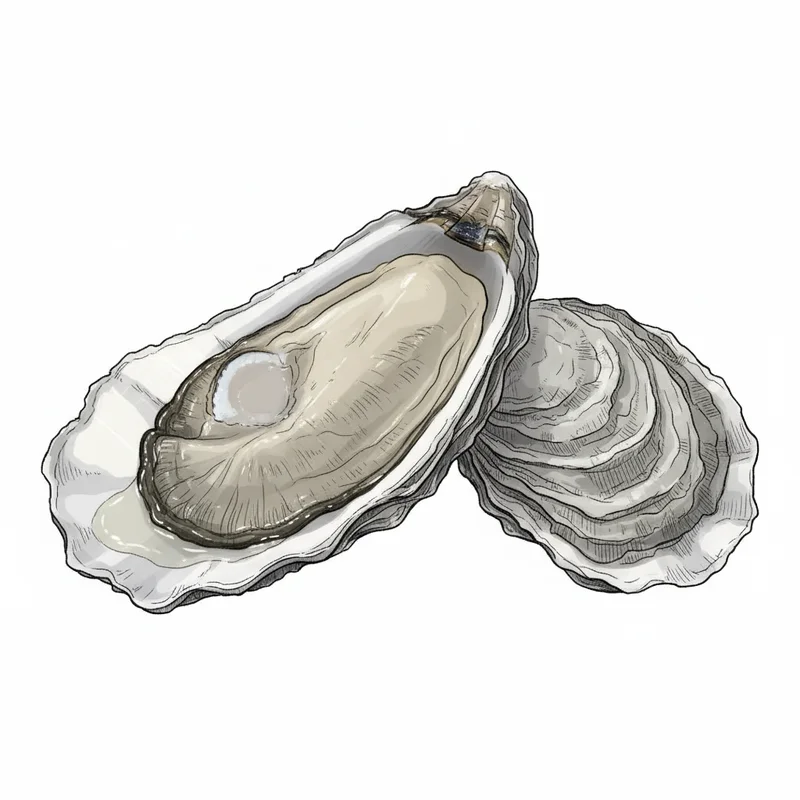
Cedar Island
Crassostrea virginica
Farm-raised North Carolina oyster from Core Sound near Cedar Island. Medium-sized with full, firm meat and a bright, crisp brininess that delivers a clean, salty finish.
At a Glance
Cedar Island is an Eastern oyster (Crassostrea virginica) from the US East Coast. It is notably briny (4/5 brininess) and subtly sweet (2/5 sweetness), with briny, clean flavors and a finish that is crisp, salty brine with a clean finish.
Flavor Profile
Finish
Crisp, salty brine with a clean finish
Expert Notes
Cedar Island oysters from North Carolina's Core Sound showcase the bright, briny character of the Mid-Atlantic waters. Farmed in the pristine waters surrounding Cedar Island near Beaufort, these oysters develop full, firm meats with a pronounced salinity that reflects their coastal heritage. The crisp, clean finish and robust brine make them a standout choice for those who appreciate a straightforward, ocean-forward oyster experience. Origin & Characteristics
- Species
- Crassostrea virginica
- Native to
- USA
- Grown in
- Core Sound, Cedar Island, North Carolina
- Size
- Medium (2.5-3.5 inches)
- Shell Color
- Gray-white with uniform shape
- Meat Color
- Cream to light gray
What Experts Say
Across 7 sources, tasters describe this oyster as:
Unique notes: metallic, wild ocean flavor, estuarine
"Mid-level salt with a sweet meaty finish"
saltysweetmeaty
"Our area is mid to high salinity and that gives just the right amount of salt but doesn't over power the oyster flavor which finishes up sweet and buttery."
saltysweetbuttery
"Just the right amount of wild ocean flavor with proper amount of brine to enjoy with a great glass of wine."
brinyocean-forward
"Super fresh, meaty, briny oysters with a bit of a metallic quality"
freshmeatybrinymetallic
"Cedar Island Selects or Harkers Island oysters reflect their estuarine environment with a clean, slightly sweet flavor and a lingering mineral finish."
cleansweetmineral
About the Farm
Carolina Mariculture Co.
Carolina Mariculture Co., owned and operated by Jay and Jennifer Styron, is a small, family-owned oyster farm located on Cedar Island, NC. They raise oysters using mariculture practices, buying seed from a hatchery and raising them to market size in floating cages on their lease in Core Sound.
- Cultivation Method
- floating bags
History & Background
The Cedar Island oyster farming operation represents North Carolina's emerging oyster culture. The area is known for nutrient-rich, saline waters of Cedar Island Bay with some of the best water quality in North Carolina for growing oysters.
Featured in PBS shows including 'A Chef's Life' and 'North Carolina Now', Cedar Island Select oysters are described as 'the Downeast version of champagne' and represent the Carolina's emergence as America's next hot spot for oysters.
Did You Know?
- Due to their farming practices, these oysters can be enjoyed year round - no more eating them only in months with an 'R'
- Approximately 75% of the oysters consumed in NC are imported from other states, making Cedar Island a local alternative
- The wire cages act as small artificial reefs, offering protection for many varieties of juvenile fish and crustaceans
Sources & References
This information was compiled from 7 sources.
- Carolina Mariculture oysters, our story — carolinamariculture.com
- Cedar Island Selects Oyster — oysterater.com
- Cedar Island Select Oysters: The Downeast version of champagne — beaufortrestaurantguide.com
- North Carolina oyster growers to share bounty at 2018 Pelican Awards — nccoast.org
- NC Oyster Dinner 2017 — oysterguide.com
- Oysters — lowcountrybella.com
- Oysters Tell the Story of Our Coast — coastalreview.org
Similar Oysters
Sunken Meadow Gem
US East CoastCage-cultured Cape Cod oyster from Eastham with strong briny Wellfleet character. Medium-sized with delicate shape, clean ocean flavors, and pleasant seaweed notes in the finish.
Narragansett
US East CoastWild-harvested and farmed oysters from Rhode Island's historic Narragansett Bay. Long and skinny with shallow cups, these oysters deliver strong brine with earthy, mineral notes and a clean finish that reflects the challenging bay conditions.
Pemaquid
US East CoastA Maine institution. Large, powerful oysters with rock-hard shells, plump firm meats, and clean briny-sweet flavor with lemony zest.
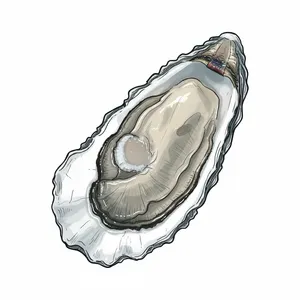
Row 34
US East CoastAn innovative rack-and-bag oyster from Duxbury Bay, Massachusetts. Clean and crisp with strong briny minerality, nutty umami notes, and less vegetal character than bottom-planted varieties. Named after the experimental 34th row of oyster trays.
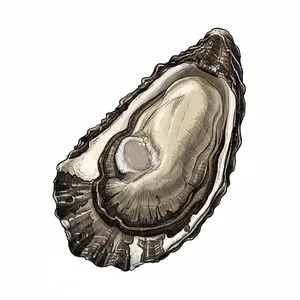
Wellfleet
US East CoastCape Cod classic. High brine, clean finish, with subtle sweetness.
Learn More
The Big Five: A Complete Guide to Commercial Oyster Species
Comprehensive guide to C. virginica (Atlantic), C. gigas (Pacific), C. sikamea (Kumamoto), O. lurida (Olympia), and O. edulis (European Flat)
Read article → Biology & SpeciesThe Atlantic Oyster (C. virginica): From Maritime Brine to Gulf Sweetness
Deep dive into America's indigenous East Coast oyster - flavor profiles, regional variations, and famous varieties
Read article → Merroir & EnvironmentWhat Is Merroir? How Water Shapes Oyster Flavor
Merroir is the marine version of terroir: how salinity, temperature, tides, and plankton in the growing water shape an oyster's flavor. The science, plus how to taste it.
Read article →