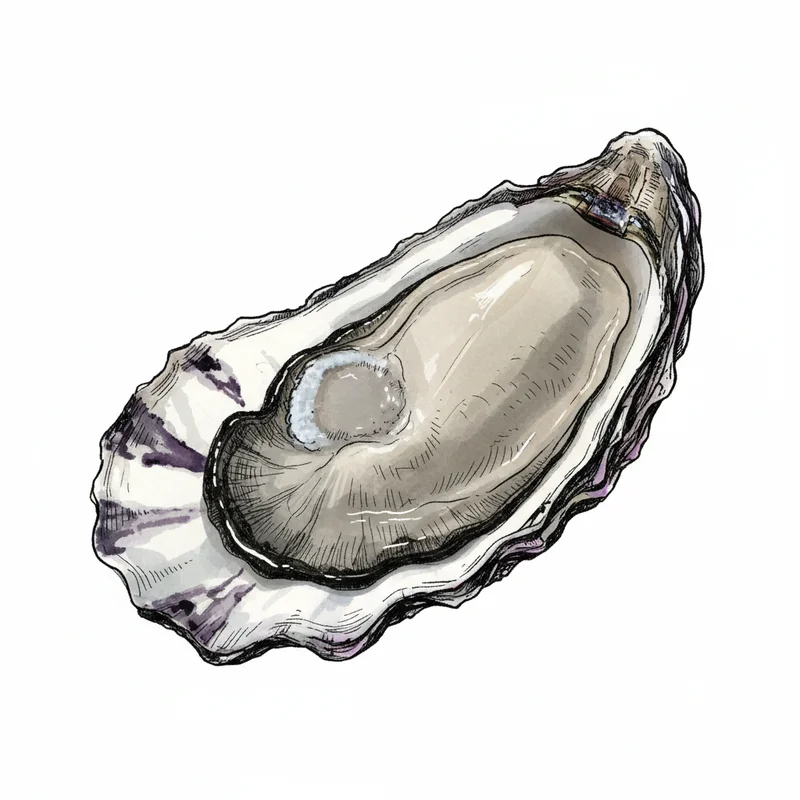
Duxbury
Crassostrea virginica
A balanced New England classic. Plump and tender with harmonious briny-sweet flavor, buttery notes, and a clean finish.
At a Glance
Duxbury is an Eastern oyster (Crassostrea virginica) from the US East Coast. It is moderately briny (3/5 brininess) and moderately sweet (3/5 sweetness), with briny, sweet, buttery flavors and a finish that is clean, salty, slightly sweet. It is considered a beginner-friendly oyster.
Flavor Profile
Finish
Clean, salty, slightly sweet
Expert Notes
Duxbury oysters exemplify the quintessential New England oyster with their plump, tender meats and balanced flavor profile. The initial ocean brine gives way to buttery richness and subtle nutty umami notes, reminiscent of a traditional New England clambake. Their firm yet tender texture and clean finish make them approachable yet complex enough to satisfy seasoned oyster enthusiasts. Origin & Characteristics
- Species
- Crassostrea virginica
- Native to
- USA
- Grown in
- Duxbury Bay, Massachusetts, Cape Cod Bay
- Size
- Medium (3-3.5 inches)
- Shell Color
- White with black and purple streaks
- Meat Color
- Light gray-cream
What Experts Say
Across 10 sources, tasters describe this oyster as:
Unique notes: celery, eelgrass, seaweed, silky
"Unusual southwest winds in Duxbury Bay, forty miles south of Boston, sometimes create a natural upweller effect, blowing warm surface waters across Cape Cod Bay to Wellfleet and drawing up cold, extremely salty water from the bottom. If you like brutally briny oysters, Duxburies will be among your favorites."
brinysaltycold
"Island Creeks have an amazing butter-and-brine taste. They are as salty as all getout, making them the classic Boston partner for a pint of Sam Adams Lager, and every single one is delightfully firm and beautifully clean tasting."
butterybrinysaltyfirmclean
"I have recently been offered by several restaurants to purchase the Duxbury XL oysters. I would describe the first taste as silky. Has a sweet brine flavor with an obvious buttery finish. Has become one of my favorites."
silkysweetbrinybuttery
"These are great oysters for just about any occasion. Fantastic briny flavor typically housed in a deep cup with plenty of brine/liquor."
briny
"Love. Perfect. Will order anytime I see them. Briny and beautiful."
briny
"Salty, slightly sweet brininess with a complementing minerality, with hints of butter, celery and eelgrass."
saltysweetbrinymineralbuttery
"Briny and salty with a clean, sweet finish and a firm, meaty texture that delights the palate."
brinysaltycleansweetfirm
"Signature Duxbury flavor in various shapes & sizes: sweet and buttery with a crisp brine."
sweetbutterybrinycrisp
"The quintessential East Coast oyster, they're consistent yet complex, with up-front notes of ocean brine and seaweed, and a smooth, sweet finish. Deep cups encourage plump meats for a toothy, chewy bite you can really sink your teeth into. Well balanced from beginning to end."
brinyseaweedsweetsmoothplump
"Briny with a sweet, buttery finish and firm texture."
brinysweetbutteryfirm
About the Farm
Island Creek Oysters
Est. 1992Founded by Skip Bennett in the Island Creek neighborhood of Duxbury, Massachusetts. Skip was the first person to successfully grow oysters in Duxbury Bay, a location he would later describe as 'The Napa Valley of Oyster Farming'.
- Cultivation Method
- bottom culture
History & Background
Duxbury Harbor has a long history of oyster farming dating back to the 1800s. The oyster industry was initially established by local fishermen who began to cultivate oysters in the bay. Curiously, Duxbury Bay never had a wild oyster population until farming began. Skip Bennett started Island Creek Oysters, named after the Duxbury neighborhood where he grew up, and for eight years was the only person growing shellfish in Duxbury Bay.
Island Creek Oysters won Best Oyster at the largest blind oyster tasting ever held. They are the classic Boston partner for a pint of Sam Adams Lager and have been served at state dinners at the White House.
Did You Know?
- The name 'Island Creek' was coined by Sandy Ingber, the legendary chef at Grand Central Oyster Bar, who told Skip Bennett that 'Duxburies' was a terrible name
- At high tide, there are 35 billion gallons of water in Duxbury Bay; at low tide, just 7 billion gallons
- Duxbury Bay has 15-20 million oysters at any given time
- The bay experiences near-complete tidal exchange twice daily, bringing fresh plankton and cold water
Sources & References
This information was compiled from 10 sources.
- Duxbury - The Oyster Guide — oysterguide.com
- Island Creek - The Oyster Guide — oysterguide.com
- Duxbury Oyster Reviews — oysterater.com
- Island Creek Oysters from Duxbury, MA — islandcreekoysters.com
- Duxbury Standard Oysters - The Oyster Encyclopedia — oysterencyclopedia.com
- Duxbury Standard Oyster — Oysterology Online — pangeashellfish.com
- Oysters - Wulfs Fish — wulfsfish.com
- Duxbury Oysters — chefs-resources.com
- Duxbury Harbor Oysters - The Oyster Encyclopedia — oysterencyclopedia.com
- Tide to Table Profile: Island Creek Oysters — fisheries.noaa.gov
Similar Oysters
Bodie Island
US East CoastThe Outer Banks' first farmed oyster from North Carolina. Medium-sized with balanced salinity, offering a harmonious blend of sweet and salt with firm texture from off-bottom tray cultivation.
Crab Slough
US East CoastWild-harvested oyster from Oregon Inlet in North Carolina's Outer Banks, open only October through March. Balanced briny-sweet flavor with buttery sweet corn and asparagus notes. Strong shells and firm texture shaped by dynamic currents. Often contains tiny pea crabs, considered a local delicacy.
Little Island
US East CoastA bright, fresh Maine oyster from the Bagaduce River. Mildly salty with sharp brine up front, delicate meats, and a sweet, creamy finish. Surface-cultured for smooth shells and deep cups, perfect for the half-shell.
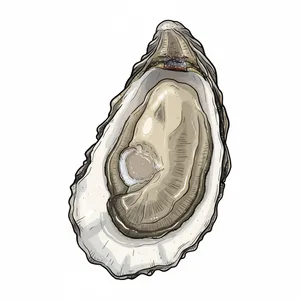
Matunuck
US East CoastA balanced Rhode Island oyster from Potter Pond. Crisp and briny with a subtle salinity, balanced by mild sweetness and a clean finish. Slowly grown over 3-5 years for exceptional quality.
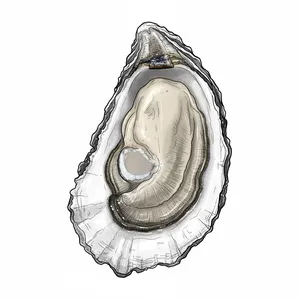
Cedar Island Select
US East CoastA flagship North Carolina oyster from Cedar Island Bay's pristine waters. Large and deep-cupped with balanced brininess and a distinctive sweet, buttery finish. Sustainably farmed in floating cages.
Learn More
The Big Five: A Complete Guide to Commercial Oyster Species
Comprehensive guide to C. virginica (Atlantic), C. gigas (Pacific), C. sikamea (Kumamoto), O. lurida (Olympia), and O. edulis (European Flat)
Read article → Biology & SpeciesThe Atlantic Oyster (C. virginica): From Maritime Brine to Gulf Sweetness
Deep dive into America's indigenous East Coast oyster - flavor profiles, regional variations, and famous varieties
Read article → Merroir & EnvironmentWhat Is Merroir? How Water Shapes Oyster Flavor
Merroir is the marine version of terroir: how salinity, temperature, tides, and plankton in the growing water shape an oyster's flavor. The science, plus how to taste it.
Read article →