
Galveston Bay
Crassostrea virginica
Texas-sized Gulf Coast oyster from Galveston Bay. Large, firm, and exceptionally meaty with mild brine and natural sweetness. Freshwater influence creates a fatty, creamy texture with subtle minerality and vegetable notes. Perfect for raw or chargrilled preparations.
At a Glance
Galveston Bay is an Eastern oyster (Crassostrea virginica) from the US Gulf Coast. It is mildly briny (2/5 brininess) and distinctly sweet (4/5 sweetness), with sweet, mild brine flavors and a finish that is crisp, clean with hints of sweet vegetables. It is considered a beginner-friendly oyster.
Flavor Profile
Finish
Crisp, clean with hints of sweet vegetables
Expert Notes
Galveston Bay oysters are true Texas-sized gems, developing exceptionally large, firm bodies with a unique flavor profile influenced by the bay's mix of saltwater and freshwater. Eastern bay oysters tend toward saltier profiles, while western bay specimens are notably fatty and sweet with less brine. The freshwater influence from Texas rivers allows their natural minerality to shine through, creating a mellow sweetness with subtle vegetable notes. Their thick, sometimes beautifully ruffled shells house meaty oysters that are equally excellent raw or chargrilled. Origin & Characteristics
- Species
- Crassostrea virginica
- Native to
- USA
- Grown in
- Galveston Bay, Texas, East Galveston Bay, Port Bolivar
- Size
- Large (3-5 inches)
- Shell Color
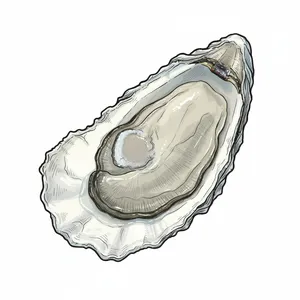
- Gray-white with distinctive ruffled patterns
- Meat Color
- Cream to light gray
Perfect Pairings
What Experts Say
Across 10 sources, tasters describe this oyster as:
Unique notes: asparagus, green bean, umami, snappy
"Mouth-wateringly salty, sweet and chewy, with lingering flavors of asparagus and green bean and a strong umami sea taste on the back of the palate. Twice as big and twice as firm as most East Coasters. The crinkled bill is the sign of an oyster grown in a high-salinity environment, and it guarantees a good hit of salt."
saltysweetchewyasparagusgreen bean
"East Galveston Bay reefs famous for their brininess. Oysters of the fat and creamy variety were found farther north in Trinity Bay. Gulf oysters from the right spot can compete with any in the country, and can certainly outsize them all (making them the best cooking oyster by far)."
brinyfatcreamy
"Oysters from Galveston Bay are prized for their briny, fresh flavor and firm texture. Thanks to the bay's unique combination of fresh and saltwater, these oysters develop a distinct taste profile."
brinyfreshfirm
"East Galveston Bay oyster reefs produce saltier oysters. Oysters harvested farther to the west, away from the Gulf's saltwater inflow, taste less briny and tend to be fatter and sweeter than East Bay oysters. Central Galveston Bay oysters are, naturally, somewhere in the middle. Gulf oysters are at their biggest and sweetest from January to March."
saltybrinyfatsweet
"The East Bay oysters, especially those from Pepper Grove, Elm Grove and Ladies' Pass were the most popular among the tasters. These were the southernmost reefs represented and the oysters were the briniest. Trinity Bay oysters were bigger, fatter and sweeter with creamy-colored and completely opaque appearance, but less briny. The Central Galveston Bay oysters struck a lovely balance on the salty and sweet scales."
brinyfatsweetcreamybalanced
"I savored the wonderfully slick texture. Snappy Galveston bivalves proved that Gulf oysters from the right spot can compete with any in the country."
slicksnappy
About the Farm
Galveston Bay has traditionally relied on wild harvest from natural oyster reefs rather than farming. Texas is one of the few states that harvest oysters from natural beds instead of farming them in crates, with this unique oyster industry thriving for over 150 years. Recently, small-scale aquaculture operations like Barrier Beauties and Lone Star Oyster Company have emerged.
- Cultivation Method
- wild harvest
History & Background
Galveston Bay has been a historical haven for thriving oyster reefs dating back to Native American communities who relied on oysters as a key food source. In the late 1800s, when Galveston was known as the Wall Street of the West, the island was home to an oyster industry that rivaled France in sophistication, with distinct oystering areas throughout the 600 square miles of Galveston Bay and shell-lined finishing pools. The Great Hurricane of 1900 wiped out both the fishing fleet and restaurants, though the industry eventually returned in the early 20th century.
With the arrival of the locavore movement, Galveston Bay oysters started to emerge from their generic anonymity. In 2010, Foodways Texas held a symposium in Galveston hiring fishermen to harvest the best oysters from historic reefs, making it possible to once again compare the storied bivalves by appellation. Named reefs include Pepper Grove, Ladies Pass, Elm Grove, Drum Village, Whitehead Reef, Sheldon's Reef, Smith Pass, Redfish Reef, Resignation Reef, Lone Oak Reef, Old Yellow, and Lost Reef.
Did You Know?
- Galveston Bay oysters are twice as big and twice as firm as most East Coast oysters
- A single oyster can filter up to 50 gallons of water per day
- Three quarters of Texas oysters are exported to other states rather than consumed locally
- The 'Rare Elm Grove Ruffles' are oysters with beautifully scalloped shells that occur in heavy currents at high salinity
- East Coast oyster expert Rowan Jacobsen wrote: 'If Galveston Bay hasn't been on your list of primo oyster appellations, that needs to change'
Sources & References
This information was compiled from 10 sources.
- Pepper Grove and Ladies Pass (Galveston Bay) — The Oyster Guide
- Pearls of the Oyster World — Houstonia Magazine
- The Texas Shell Game — Texas Highways
- What Kind of Seafood Is Galveston Known For? — Just Cast Charters
- A Dozen Galveston Oysters from 12 Different Reefs — Robb Walsh Blog
- The Major Oyster Regions of the U.S. — VinePair
- Six Things You Should Know About Galveston Bay Oysters — Perishable News
- Discovering Oysters: Guardians of Galveston Bay — Visit Galveston
- Tide to Table Profile: Barrier Beauties — NOAA Fisheries
- Lone Star Oyster Company — Farm Credit
Similar Oysters
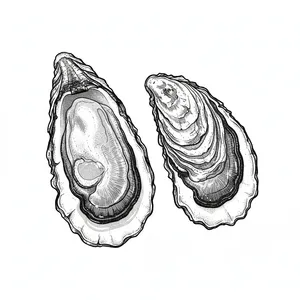
Murder Point
US Gulf CoastFamily-farmed Gulf Coast oyster from Bayou La Batre, Alabama, known as 'butter love' for its signature rich, buttery flavor. Balanced mild salinity with a sweet-mineral finish and plump, creamy texture from careful tide-tumbled cultivation.
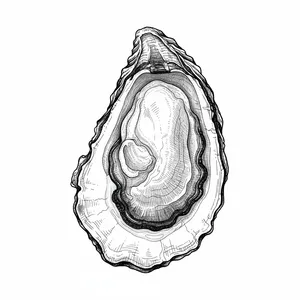
Point aux Pins
US Gulf CoastAlabama's pioneering boutique oyster from Grand Bay. Small, tender, and silky with a signature buttery, creamed-corn sweetness. Mild on brine, big on oysterness.
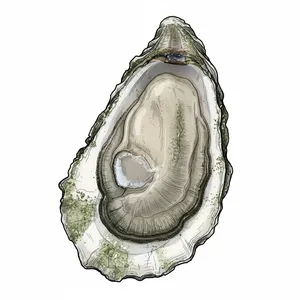
Mecox Bay
US East CoastWild-harvested Long Island oyster from the deep, cold waters of Mecox Bay. Delicate and balanced with mild brininess, pronounced sweetness, and a clean mineral finish reminiscent of classic Bluepoints.
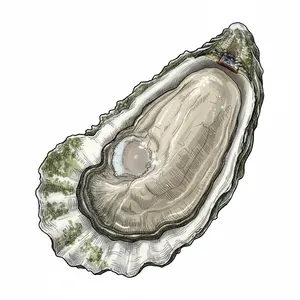
Northumberland
Canada East CoastClean, mild oyster from the Northumberland Strait between PEI and New Brunswick. Mildly sweet with balanced brine and a cool finish. Known for their larger size and light, firm texture shaped by nutrient-rich Atlantic waters.
Potomac Whitecap
US East CoastA sweetwater Chesapeake oyster from the Potomac River region. Delicate and sweet with smooth creaminess, medium brine, and a clean finish. Plump meats reflect the freshwater influence of Virginia's Upper Bay Western Shore.
Learn More
The Big Five: A Complete Guide to Commercial Oyster Species
Comprehensive guide to C. virginica (Atlantic), C. gigas (Pacific), C. sikamea (Kumamoto), O. lurida (Olympia), and O. edulis (European Flat)
Read article → Biology & SpeciesThe Atlantic Oyster (C. virginica): From Maritime Brine to Gulf Sweetness
Deep dive into America's indigenous East Coast oyster - flavor profiles, regional variations, and famous varieties
Read article → Merroir & EnvironmentWhat Is Merroir? How Water Shapes Oyster Flavor
Merroir is the marine version of terroir: how salinity, temperature, tides, and plankton in the growing water shape an oyster's flavor. The science, plus how to taste it.
Read article →