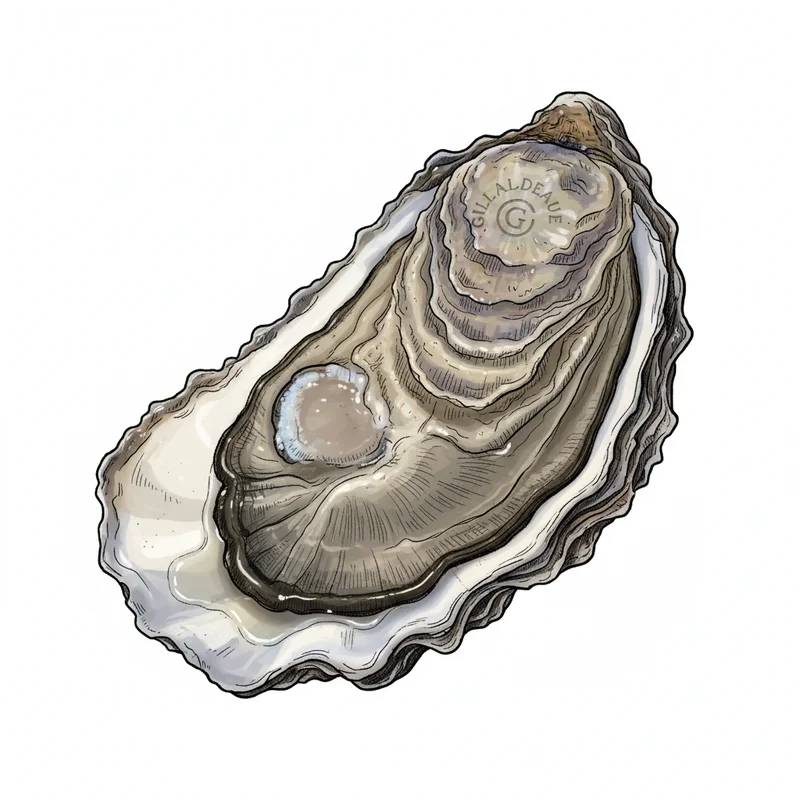
Gillardeau
Crassostrea gigas
The luxury standard. Exceptionally plump and creamy with intense minerality, sweet nuttiness, and refined balance from France's legendary fourth-generation oyster dynasty.
At a Glance
Gillardeau is a Pacific oyster (Crassostrea gigas) from France. It is moderately briny (3/5 brininess) and distinctly sweet (4/5 sweetness), with mineral, sweet, creamy flavors and a finish that is long, intensely mineral with sweet notes. It is considered a beginner-friendly oyster.
Flavor Profile
Finish
Long, intensely mineral with sweet notes
Expert Notes
Often called 'the Rolls-Royce of oysters,' Gillardeau defies its Pacific species origins by presenting an intensely mineral finish more reminiscent of Atlantic oysters. The claire-finishing in Marennes-Oléron salt ponds develops exceptional creaminess and a perfect balance between sweet nuttiness and bracing minerality. The generous, plump meat delivers rich, buttery texture with remarkable depth. Origin & Characteristics
- Species
- Crassostrea gigas
- Native to
- Asia (Pacific oyster species)
- Grown in
- Marennes-Oléron (finishing), Normandy (initial grow-out), County Cork, Ireland (initial grow-out)
- Size
- Large (3.5-4.5 inches)
- Shell Color
- Gray-brown with laser-engraved logo
- Meat Color
- Cream-white with plump flesh
What Experts Say
Across 10 sources, tasters describe this oyster as:
Unique notes: sugar and salt together, frankincense, hazelnut, scent of the sea, elastic
"It has a uniquely chewy and crunchy texture, with the scent of the sea and a soft nutty taste."
chewycrunchyscent of the seanutty
"A genuine Gillardeau oyster should have a full shell, a pristine white lining, and taste like sugar and salt together."
sweetsaltysugar and salt
"This tender-bodied oyster is rolling with rich, briny flavors."
tenderrichbriny
"Each oyster offers a beautiful balance of brininess and sweetness with a nutty finish. The meat is plump and creamy."
brinysweetnuttyplumpcreamy
"A succulent and plump oyster with a distinct flavor profile that is both sweet and salty, with a hint of nuttiness."
succulentplumpsweetsaltynutty
"The meat is plump and firm, with distinct taste, elastic and chewy, and a mixture of frankincense and a hint of hazelnut flavor."
plumpfirmelasticchewyfrankincense
About the Farm
Maison Gillardeau
Est. 1898Founded by Henri Gillardeau in 1898 in the heart of the Marennes-Oléron basin, driven by his passion for oyster farming. Now operated by the fourth generation, the family has brought an economics education to what has become the most famous name in oysters.
- Cultivation Method
- rack and bag
History & Background
At the end of the 19th century, in 1898, Henri Gillardeau laid the foundations of Maison Gillardeau in Bourcefranc-le-Chapus on the French Atlantic coast. Over four generations, the family has maintained their tradition of oyster farming and brought innovation to oyster cultivation.
Known as 'The Rolls-Royce of Oysters,' Gillardeau is a favorite of many high-end restaurants worldwide. The company invested nearly five million euros in laser technology to brand each oyster shell with a 'G' logo to combat counterfeiting, making them the first oyster company in the world to laser-mark their product.
Did You Know?
- Each Gillardeau oyster is branded with a laser-etched 'G' on the shell to prevent counterfeiting
- The company invested nearly 5 million euros in laser technology to protect their brand
- Gillardeau oysters go through 59 complex procedures and take at least 4 years to produce
- The company now produces roughly half its oysters in Normandy near Utah Beach and half in County Cork, Ireland
- Considered the luxury standard and crème de la crème among French oyster varieties
Sources & References
This information was compiled from 10 sources.
- A Guide to The World's Oysters and What They Taste Like — MICHELIN Guide
- This French Oyster is hitting the G Spot — The Peak Magazine
- Best Oysters to Travel the World For — In A Half Shell
- Gillardeau oysters — Wikipedia
- History of Maison Gillardeau — Maison Gillardeau
- Gillardeau Oysters - The Oyster Encyclopedia — The Oyster Encyclopedia
- A French family dynasty reinvents the oyster — The New York Times
- Oyster of the Month of December 2022: The Gillardeau — Oysters and Caviar
- Gillardeau oysters n2 - 12 pieces — Secrets Fine Food
- Gillardeau oysters: how to build a gastronomic luxury brand — Lantern
Gillardeau: A Closer Look
- Origin
- Maison Gillardeau, Bourcefranc-le-Chapus, Marennes-Oléron basin, France
- Species
- Pacific oyster (Magallana gigas)
- Heritage
- Family house founded by Henri Gillardeau in 1898; four generations
- Flavor
- Less briny than most — fleshy, nutty, almost sweet, with a hazelnut finish
- Signature
- Each shell is laser-engraved with a 'G' to guarantee authenticity
- Style
- Premium spéciale: low-density rearing, sacks turned regularly to shape the shell
If there is one oyster brand the world knows by name, it is Gillardeau. The house was founded in 1898 by Henri Gillardeau — by some accounts an illiterate farmhand who turned his hand to oysters — in Bourcefranc-le-Chapus, on France's Atlantic coast in the Marennes-Oléron basin near La Rochelle and the Île d'Oléron. Four generations have run the business since: Henri's son Jean, then Gérard, and today Thierry Gillardeau, who brought an economics education to what has been called the most famous name in oysters. The pivotal year was 1978, when Gérard — then head of the company — created the emblematic Gillardeau oyster as we know it today and partnered with the vast Rungis wholesale market outside Paris, carrying the family's reputation far beyond their village.
What makes a Gillardeau different is deliberate restraint. Rather than maximizing volume, the family focuses on premium 'spéciales' — fleshier oysters that command higher prices. Density is kept intentionally low, with roughly 135 to 150 oysters placed in mesh sacks that could hold a thousand, and workers rotate the sacks every couple of weeks to shape the shells and stress the oysters into optimal growth. Cultivation takes several years, and today the raw material comes from beds well beyond Charente-Maritime: since 2004 the company has expanded to pristine waters in Ireland, Normandy, and Portugal, with roughly half its production reported from Normandy near Utah Beach and half from County Cork, Ireland, where the water is cleaner and there is less agricultural runoff. Grading and inspection are done by hand before each oyster receives its mark.
That mark is the brand's most famous flourish: a 'G' laser-engraved directly onto the shell. As Gillardeau became omnipresent on restaurant menus — the name has been compared to 'Hermès for neckties' — counterfeit 'Gillardeaus' followed, and the engraving was introduced to guarantee provenance. When buying, look for the laser mark; it is the simplest way to verify you are getting the real thing.
On the palate, a Gillardeau is a Pacific oyster (Magallana gigas) at its most polished: less briny than many others, nuttier, fleshier, and almost sweet, opening with clean brine and subtle seaweed before a hazelnut richness builds and lingers. It is best served raw on the half shell with minimal garnish — this is an oyster engineered over four generations to need nothing else. In the French size system, where oysters are graded by number from largest to smallest and No. 3 is the most common restaurant size, Gillardeau spéciales are the plumper, richer end of the fines-versus-spéciales divide, and they pair naturally with a crisp white wine or crémant.
Sources for this deep dive
This deep dive was drafted from the cited sources below and is under editorial review.
- Gillardeau oysters — Wikipedia
- Oysters Gillardeau — Maison Gillardeau — Maison Gillardeau
- French family dynasty reinvents the oyster — The Bulletin
- Gillardeau Oysters — Oyster Encyclopedia
- Oyster of the Month of December 2022: The Gillardeau — Oysters & Caviar
- The Art of Ordering Oysters in France: Types and Numbering — FrenchEntrée
Similar Oysters
Calm Cove
US West CoastBeach-grown Pacific oyster from Washington's Totten Inlet and Hood Canal. Sweet and creamy with balanced brininess and a clean mineral finish. Cultivated by the Fagergren Family since 1946 in the nutrient-rich waters of South Puget Sound.
Sea Cow
US West CoastA tumbled Pacific oyster from South Puget Sound's Hammersley Inlet with extraordinary creamy richness and deep, funky earthiness. Flavors of wild mushrooms and umami make this the foie gras of the coast—an acquired taste for adventurous oyster lovers.
Marenne
FranceA refined French oyster from the famous Marennes-Oléron basin. Mild, sweet, and creamy with a subtle nutty flavor and firm texture.
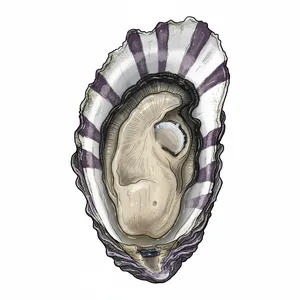
Chef's Creek
Canada West CoastA quintessential British Columbia oyster from Baynes Sound. Tray-suspended for 12-18 months, developing deep cups and full meats. High brininess with creamy texture, finishing sweet with hints of melon and lettuce.
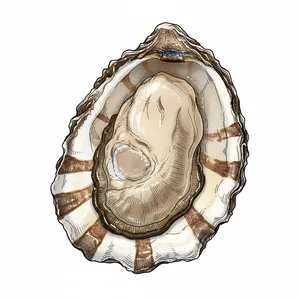
Chelsea Gem
US West CoastThe original tide-tumbled oyster from Eld Inlet's pristine waters. Deep-cupped with plump meats, mild brininess, silky creamy texture, and a signature sweet cucumber finish. A true Pacific Northwest gem.
Learn More
The Big Five: A Complete Guide to Commercial Oyster Species
Comprehensive guide to C. virginica (Atlantic), C. gigas (Pacific), C. sikamea (Kumamoto), O. lurida (Olympia), and O. edulis (European Flat)
Read article → Biology & SpeciesThe Pacific Oyster (C. gigas): Cream, Cucumber, and the Japanese Legacy
Understanding the world's most cultivated oyster - from Japanese origins to West Coast dominance
Read article → Merroir & EnvironmentWhat Is Merroir? How Water Shapes Oyster Flavor
Merroir is the marine version of terroir: how salinity, temperature, tides, and plankton in the growing water shape an oyster's flavor. The science, plus how to taste it.
Read article →