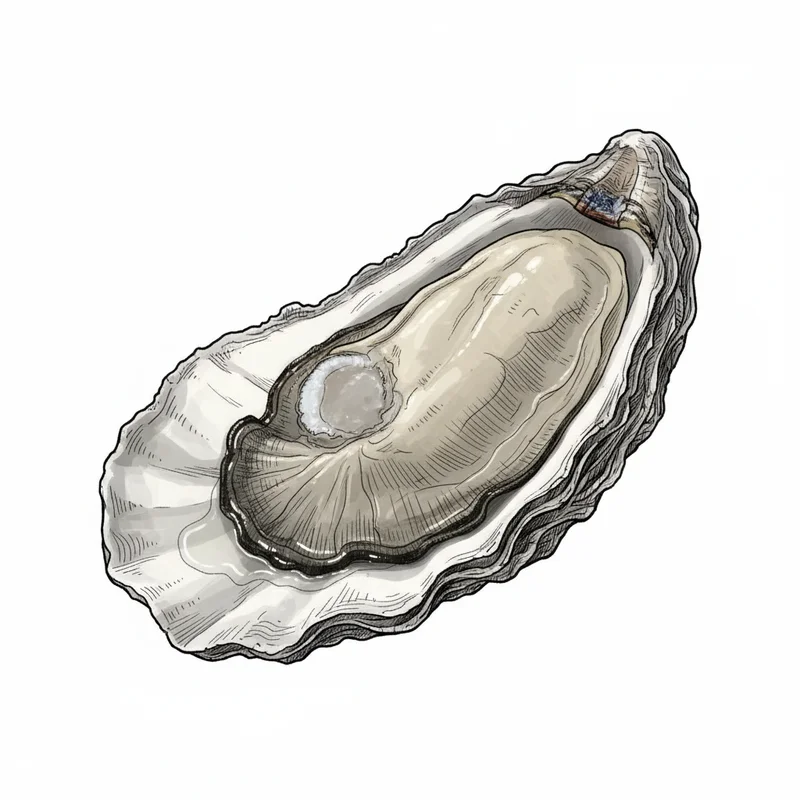
Lameque
Crassostrea virginica
Small cold-water oyster from Chaleur Bay, New Brunswick. Heavy, gnarly shells with intensely briny, metallic flavor. Robust and wild—not for beginners.
At a Glance
Lameque is an Eastern oyster (Crassostrea virginica) from the Canada East Coast. It is notably briny (4/5 brininess) and subtly sweet (2/5 sweetness), with briny, metallic, robust flavors and a finish that is strong, metallic, memorable.
Flavor Profile
Finish
Strong, metallic, memorable
Expert Notes
Lameque oysters come from the frigid waters of Chaleur Bay in New Brunswick's Acadian Peninsula, where they develop heavy, gnarly shells and a powerfully briny, metallic flavor profile. These cold-water oysters are wild and robust, not for the timid palate. The extended cold-water growth period creates firm, dense meat with a crisp texture and intense mineral character that reflects the pristine glacial waters of their Maritime home. Origin & Characteristics
- Species
- Crassostrea virginica
- Native to
- Canada
- Grown in
- Chaleur Bay, New Brunswick
- Size
- Small to Medium (2-3.5 inches)
- Shell Color
- Heavy, gnarly gray-white
- Meat Color
- Light cream to gray
What Experts Say
Across 7 sources, tasters describe this oyster as:
Unique notes: metallic, grassy, iodine, shrimp
"Sampled near Lameque, NB. Not large but mildly briny and TASTY. Hard to find these beyond the Acadien Peninsula of New Brunswick."
brinymild
"Small and delicate, with pretty white-and-green shells. They are a bit brinier than Caraquets, perhaps because they are a bit closer to the sea. Nice little oysters."
brinydelicate
"The Lameque oyster is about as cold-water as an oyster can get. Lameques have a beautiful crispness to the flavour, mild but salty. The meat is nice and shell-filling, with a firm texture."
crispmildsaltyfirm
"Heavy, gnarly shells and a briny, metallic flavor."
brinymetallic
"Mildly flavored, slightly briny, and have a grassy, iodine-like finish. They are often described as having a delicate shrimp note."
mildbrinygrassyiodineshrimp
About the Farm
La Ferme Ostréicole Chiasson Ltée
Operated by Yvon Chiasson, this oyster farm produces Lameque oysters from Miscou in northeast New Brunswick, finishing them on the bottom to toughen their shells.
- Cultivation Method
- bottom culture
History & Background
Lamèque Island forms the eastern boundary of Caraquet Bay in New Brunswick's Baie de Chaleur (Bay of Heat), making Lameque oysters slightly more exclusive than their Caraquet neighbors.
Lameque oysters are grown in some of the coldest waters where oysters can still reproduce - any colder and summer temperatures wouldn't be high enough to stimulate reproduction. Hard to find beyond the Acadian Peninsula of New Brunswick.
Did You Know?
- Lameque oysters come from waters so cold they're at the northern limit of where Eastern oysters can reproduce
- The farmer leaves these on the bottom to toughen up, resulting in thick, hard shells that are easier to shuck than exclusively tray-raised oysters
- Often voted as staff favorite 'year-round' oyster at Rodney's Oyster House
Sources & References
This information was compiled from 7 sources.
- Lameque Oyster — Oysterater
- Lamèque - New Brunswick — The Oyster Guide
- LAMEQUE — Rodney's Oyster House
- Oysters & Chablis — The Oyster Guide
- The Great Canadian Oyster and VQA Ontario Wine Pairing — WineAlign
- Seafood - New Brunswick — NB Food Export Directory
- Oysters in New Brunswick — Michael Anne Rowe
Similar Oysters
Malagash Thrumcap
Canada East CoastWild, bottom-grown oyster from Nova Scotia's Malagash Basin. Mildly salty with a distinctive smoky, mineral finish and firm texture from the pristine northern Atlantic waters.
Wallace Bay
Canada East CoastSub-tidally cultivated Nova Scotia oyster from the cold waters of Northumberland Strait. Distinctly mineral-forward with high salinity and a fresh, clean finish. Deep-cupped shells from nutrient-rich northern waters.
Bras D'or
Canada East CoastWild-harvested Maritime oyster from Cape Breton's Bras D'Or Lakes. Light-bodied with assertive brine, hints of seaweed, and a clean, steely finish. A quintessential Atlantic oyster from pristine Nova Scotia waters.
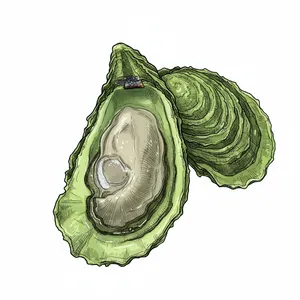
Lucky Lime
Canada East CoastDistinctive PEI oyster with moss-green shells and briny, seaweed-like flavor with refreshing citrus and lime finish.
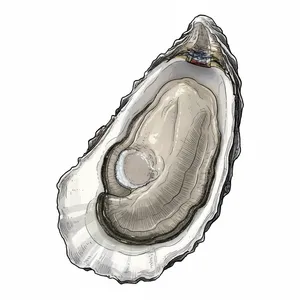
Bluepoint (Long Island Sound)
US East CoastAmerica's most famous oyster since the 1800s. Bottom-planted in Long Island Sound with heavy, gnarly shells. Intensely briny and bold with metallic notes, firm texture, and a mineral finish. A salty classic for purists.
Learn More
The Big Five: A Complete Guide to Commercial Oyster Species
Comprehensive guide to C. virginica (Atlantic), C. gigas (Pacific), C. sikamea (Kumamoto), O. lurida (Olympia), and O. edulis (European Flat)
Read article → Biology & SpeciesThe Atlantic Oyster (C. virginica): From Maritime Brine to Gulf Sweetness
Deep dive into America's indigenous East Coast oyster - flavor profiles, regional variations, and famous varieties
Read article → Merroir & EnvironmentWhat Is Merroir? How Water Shapes Oyster Flavor
Merroir is the marine version of terroir: how salinity, temperature, tides, and plankton in the growing water shape an oyster's flavor. The science, plus how to taste it.
Read article →