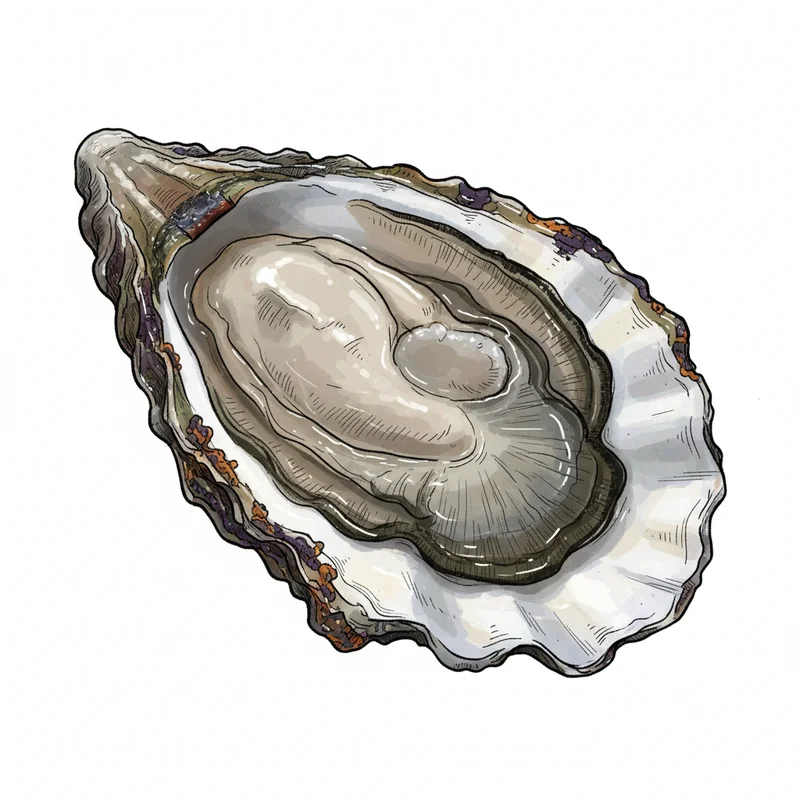
Miyagi
Crassostrea gigas
A Pacific Northwest favorite with Japanese heritage. Full-bodied and meaty with a crisp, nutty flavor, mild brine, and balanced fruit and vegetal notes.
At a Glance
Miyagi is a Pacific oyster (Crassostrea gigas) from the US West Coast. It is moderately briny (3/5 brininess) and moderately sweet (3/5 sweetness), with nutty, crisp, briny flavors and a finish that is clean, crisp with lingering fruit and vegetal notes. It is considered a beginner-friendly oyster.
Flavor Profile
Finish
Clean, crisp with lingering fruit and vegetal notes
Expert Notes
The Miyagi delivers a beautifully balanced experience with full, plump meats and a crisp texture. Its mild brininess is complemented by distinctive nutty flavors and subtle fruit and vegetal notes reminiscent of fresh lettuce and melon rind. The deep-cupped shell from tumbling cultivation produces exceptionally meaty oysters that appeal to both newcomers and experienced oyster lovers. Origin & Characteristics
- Species
- Crassostrea gigas
- Native to
- Japan (Miyagi Prefecture)
- Grown in
- Tomales Bay, California, Hood Canal, Washington, Puget Sound, Washington
- Size
- Medium-Large (2.5-3 inches)
- Shell Color
- Fluted, multi-colored with jagged edges
- Meat Color
- Cream to light gray
What Experts Say
Across 10 sources, tasters describe this oyster as:
Unique notes: nutty, umami, fruit, vegetal
"Miyagi oysters offer a delicate yet rich taste experience: Mildly Briny: Just the right amount of saltiness from the ocean. Sweet & Buttery: A pleasant, smooth finish with subtle umami flavor."
brinysweetbutteryumami
"Exactly like the description: meaty, crisp, and not too briny. I thought it was up there in the top 3 oysters I've had. Had good bulk to it and was a good value compared to the very tasty, but tiny..."
meatycrispmild brine
"Miyagi oysters are loved by foodies worldwide for their unique flavor profile. The meat is nutty with mild brine and a crisp flavor that is truly unmatched."
nuttymild brinecrisp
"Marin Miyagi oysters have deep-cupped shells with a smooth, polish-like appearance due to natural tumbling action. They develop firm texture and plump whole meats, with unique growing conditions contributing to oysters that look as good as they taste."
firmplumpmeaty
"These oysters have full plump meat with a crisp flavor and a mild brininess. Miyagi oysters have hard, sturdy shells that shuckers like to work with, and their ability to close tightly gives them a longer shelf life."
crispmild brineplump
"Pacific (C. gigas) – popularly known as Miyagi. Quick growing oysters found from Baja California to Alaska. Fluted, jagged, multi-colored shells; creamy, briny oysters that finish with a wide range of fruit and vegetal notes."
creamybrinyfruitvegetal
About the Farm
Marin Oyster Company, Inc.
Est. 1999Marin Oyster Company has been farming oysters since 1999 and is renowned for producing high-quality, California-grown oysters, mainly known for its signature Marin Miyagi™ oysters.
- Cultivation Method
- floating bags
History & Background
The Miyagi oyster—commonly referred to as Pacific oysters—originated off the coast of Japan. It is named after the Miyagi Prefecture in Japan, which is famous for its bountiful oyster beds and produces over 23% of the country's oysters. In the 1920s, they were introduced to the Washington coast. Miyagi Oysters have been cultured for over 300 years in Japan before reaching North America. After World War II, the Pacific oyster was rebranded; it was originally called the Miyagi, for Japan's Miyagi Prefecture.
Miyagi Prefecture in Japan is famous for its oyster cultivation and continues to be a leading supplier of oysters. The name carries significant cultural weight in oyster farming communities on both sides of the Pacific.
Did You Know?
- Miyagi oysters have been cultured for over 300 years in Japan
- The Pacific oyster was rebranded after WWII - originally called Miyagi after Japan's Miyagi Prefecture
- Each individual oyster filters up to 50 gallons of seawater per day
- Miyagi Prefecture produces over 23% of Japan's oysters
Sources & References
This information was compiled from 10 sources.
- Miyagi Oysters – Flavor, Cooking Tips & Health Benefits — Global Seafoods
- Miyagi Oyster - Chefs Resources — Chefs Resources
- Marin Miyagi Oysters - The Oyster Encyclopedia — Oyster Encyclopedia
- Brine and Dine! | Brainfood Blog | H&H Fresh Fish — H&H Fresh Fish
- Oysters, Marin Miyagi, CA - Royal Hawaiian Seafood — Royal Hawaiian Seafood
- Waterbar Oyster Menu — Oyster Guide
- Miyagi Oyster — Oysterology Online — Pangea Shellfish
- Olympian Dreams - Alta Journal — Alta Journal
- Waterbar: Live the Cousteau Fantasy - Oyster Guide — Oyster Guide
- Oysters Cultivation - Aquatic Network — Aquatic Network
Miyagi: A Closer Look
- Origin
- Named for Miyagi Prefecture, Japan's largest oyster-producing region on the northeast Pacific coast
- Species
- Pacific oyster (Crassostrea gigas, now often reclassified Magallana gigas)
- West Coast arrival
- Japanese seed imports began ~1912 in British Columbia; a 1919 shipment to Samish Bay, Washington seeded the U.S. industry
- Strain
- The 'Miyagi strain' — large, fast-growing stock from Japan's central Pacific coast — became the most widely planted form
- Flavor
- Mildly briny, sweet, and buttery with a clean, sometimes nutty finish and firm, meaty texture
- Cultivation
- Grown on longlines in floating, tumbled bags (e.g. Tomales Bay, CA) for three to four years to deepen the cup
The name on the menu points across the Pacific. Miyagi oysters take their name from Miyagi Prefecture, on the northeast coast of Japan's main island and the country's largest oyster-producing region. The oyster itself is the Pacific oyster (Crassostrea gigas), native to the northwest Pacific and the most widely cultivated oyster species on Earth. What makes 'Miyagi' more than a geographic footnote is that the prefecture supplied the seed stock that rebuilt the entire West Coast oyster industry after native beds gave out — and the name simply stuck to the animal that followed.
The timeline runs through the early twentieth century. After overfishing thinned native Olympia oysters and imported Eastern oysters failed to thrive, growers looked to Japan. Imports of Japanese seed reached British Columbia around 1912, though large-scale natural spawning in those cool northern waters would not be observed until 1932. The pivotal U.S. moment came in April 1919, when the American steamship President McKinley carried roughly 400 cases of oysters from Miyagi Prefecture to the Pearl Oyster Company on Samish Bay, Washington — a venture founded by J. Emy Tsukimoto and Joe Miyagi, two men who had attended high school in Olympia and worked in the local oyster trade. Many of the mature oysters died in transit, but tiny spat clinging unnoticed to their shells survived and grew, revealing that shipping juvenile seed rather than adults was the path forward. By 1928 large-scale cultivation of the Japanese oyster was underway in Washington State.
Because the Pacific oyster reproduces only unreliably in the cold Northeast Pacific, the industry stayed dependent on imported Japanese seed for decades — and later, from the 1970s onward, on hatchery-reared spat. The stock that dominated those plantings was the 'Miyagi strain,' prized as large and fast-growing, and that is why the prefecture's name traveled with the oyster onto dinner plates thousands of miles away. Taxonomy, meanwhile, has been in flux: long known as Crassostrea gigas, Pacific oysters were reclassified by the World Register of Marine Species in 2017 into the genus Magallana (as Magallana gigas) on genetic grounds, a change some researchers still contest.
Today a 'Miyagi' on a raw bar is almost always a West Coast-grown Pacific oyster rather than a Japanese import — the label signals heritage and quality more than provenance. Growers in places like Tomales Bay, California raise Magallana gigas on longlines in floating bags for three to four years, the choppy water tumbling the shells into a firmer texture and deeper cup. The result is an approachable, crowd-pleasing oyster: mildly briny and clean, with a sweet, buttery, sometimes nutty finish and enough meaty body to feel substantial. It is an easy first oyster for the uninitiated and a reliable workhorse of the West Coast half shell — a small monument, on every menu, to a century-old seed trade with Miyagi Prefecture.
Sources for this deep dive
This deep dive was drafted from the cited sources below and is under editorial review.
- Japanese Immigrants and Washington's Oyster Industry — Maritime Washington National Heritage Area
- Magallana gigas — Species Summary — Smithsonian Environmental Research Center (NEMESIS)
- Pacific oyster — Wikipedia
- Marin Miyagi Oysters — The Oyster Encyclopedia
- Miyagi Oysters: The Ultimate Guide to Flavor, Recipes, and Health Benefits — Global Seafoods
- Oyster Culture in North America: History, Present and Future — World Oyster Society
Similar Oysters
Golden Nugget
US West CoastA rare tumbled cocktail oyster from Tomales Bay's north shore. Small and deep-cupped with plump ivory meat, delivering high brine that mellows into a rich, buttery finish with hints of melon and cucumber.
Humboldt Gold
US West CoastIntertidal beach-cultured Pacific oyster from Humboldt Bay, Northern California. Full, plump meats with medium brininess, buttery sweetness, and a clean cucumber finish. Excellent for both beginners and connoisseurs.
Blue Pool
US West CoastTumbled Pacific oyster from Hood Canal's Hamma Hama River. Deep-cupped with smooth shells, featuring a creamy, crunchy texture and complex flavor profile of cucumber, crisp brine, and a distinctive sweet-vegetal finish.
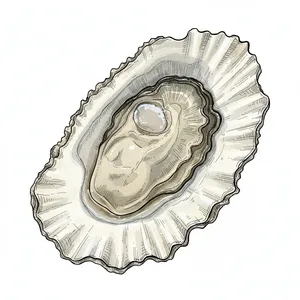
Calm Cove
US West CoastBeach-grown Pacific oyster from Washington's Totten Inlet and Hood Canal. Sweet and creamy with balanced brininess and a clean mineral finish. Cultivated by the Fagergren Family since 1946 in the nutrient-rich waters of South Puget Sound.
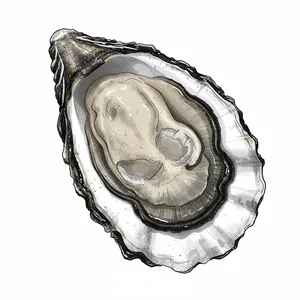
Cold Creek
US West CoastCultivated Pacific oyster from Southern Puget Sound with plump, sweet meat and midsized white-and-black shells. Balanced brininess with a distinctive salty-melon finish reminiscent of a New England clambake.
Learn More
The Big Five: A Complete Guide to Commercial Oyster Species
Comprehensive guide to C. virginica (Atlantic), C. gigas (Pacific), C. sikamea (Kumamoto), O. lurida (Olympia), and O. edulis (European Flat)
Read article → Biology & SpeciesThe Pacific Oyster (C. gigas): Cream, Cucumber, and the Japanese Legacy
Understanding the world's most cultivated oyster - from Japanese origins to West Coast dominance
Read article → Merroir & EnvironmentWhat Is Merroir? How Water Shapes Oyster Flavor
Merroir is the marine version of terroir: how salinity, temperature, tides, and plankton in the growing water shape an oyster's flavor. The science, plus how to taste it.
Read article →