
Sweet Neck
Crassostrea virginica
A consistently briny Martha's Vineyard oyster from Katama Bay. Crisp and clean with balanced salinity from Gulf Stream waters, finishing with subtle sweetness reminiscent of rainwater or sweet apple.
At a Glance
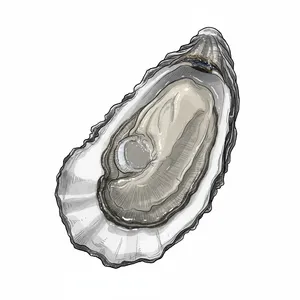
Sweet Neck is an Eastern oyster (Crassostrea virginica) from the US East Coast. It is notably briny (4/5 brininess) and moderately sweet (3/5 sweetness), with briny, clean flavors and a finish that is clean, crisp, hint of sweetness like rainwater or sweet apple.
Flavor Profile
Finish
Clean, crisp, hint of sweetness like rainwater or sweet apple
Expert Notes
Sweet Neck oysters are raised in the high-salinity waters of Katama Bay, seven miles off Martha's Vineyard, where Gulf Stream currents deliver plankton-rich water. The proximity to the Atlantic Ocean gives these oysters a distinctly crisp, clean brininess that's more pronounced than protected in-shore varieties. Consistency is their defining trait—supple, rich meat with balanced brine and a subtle sweetness at the finish, along with nuances of seaweed and miso that emerge when the initial salinity mellows. Origin & Characteristics
- Species
- Crassostrea virginica
- Native to
- USA
- Grown in
- Katama Bay, Martha's Vineyard, Massachusetts
- Size
- Medium (~3 inches)
- Shell Color
- Gray-white
- Meat Color
- Cream
Perfect Pairings
What Experts Say
Across 8 sources, tasters describe this oyster as:
Unique notes: rainwater, sweet apple, grassy, sweet carrot
"Consistently fresh, clean, briny oysters with a touch of sweetness."
freshcleanbrinysweet
"Lovely, big briney oysters with a nice hard shell for good shucking. To my palate they finished with a pleasant grassy note as well."
brinygrassy
"Consistency is the defining characteristic of Sweet Necks. They're clean and fresh with balanced brine and a hint of sweetness at the end, like rainwater or sweet apple. Jack prefers his with just two drops of lemon...simple."
cleanfreshbalanced brinesweetrainwater
"Expect to taste the crisp, clean, brininess inherent to an oyster raises seven miles off shore."
crispcleanbriny
"These 2.5 inches 'Selects' are plump, full-bodied, with a balanced brine and a sweet carrot finish."
plumpfull-bodiedbalanced brinesweetcarrot
"Boldly briny oysters raised by Jack Blake, a legend who has been farming oysters on Martha's Vineyard for 30 years."
boldly briny
About the Farm
Sweet Neck Farm
Est. 1999Jack Blake, known as a 'godfather of aquaculture' on Martha's Vineyard, moved away from construction in 1999 to focus on oyster farming. He previously fished commercially and grew quahogs, which is where the name Sweet Neck comes from.
- Cultivation Method
- suspended culture
History & Background
Jack Blake has been farming oysters on Martha's Vineyard for over 30 years, becoming one of the original oyster farms on the island. The name 'Sweet Neck' comes from Jack's previous work growing quahogs before transitioning to oysters.
Jack Blake is referred to as a 'godfather of aquaculture' on Martha's Vineyard and has mentored many other farmers. Sweet Neck is one of 12 oyster farms in Katama Bay, and by local law only 1% of Katama Bay can be utilized for shellfishing.
Did You Know?
- Jack Blake designed his own wind-powered tumbler for the oysters
- The farm uses two separate floating platforms: one wind-powered raft for tumbling and another propeller-based upweller
- Jack welds his own stainless steel and mesh cages for the oysters
- The operation is completely green, powered by wind and engineered entirely by Jack
Sources & References
This information was compiled from 8 sources.
- Sweet Neck Oyster — Oysterater
- Sweet Neck Oysters from Martha's Vineyard, MA — Island Creek Oysters
- A Trip to Sweet Neck Farm on Martha's Vineyard — In a Half Shell
- An oyster primer, wild, farm raised, all good — Martha's Vineyard Times
- Sweet Neck East Coast Oysters — Coastal Seafoods
- Shellebrating Oyster Farming on Martha's Vineyard — Point B Realty
- Meet the Shuckers — Edible Vineyard
- About Us — Cottage City Oysters
Similar Oysters
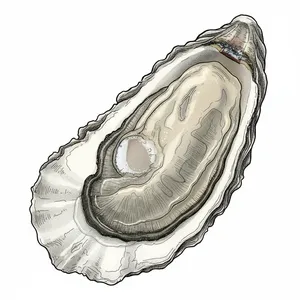
Basket Island
US East CoastA quintessential Maine oyster from Casco Bay. Medium to large size with classic Northeast salinity, firm texture, and balanced brininess. Clean and refreshing with a perfect cup size.
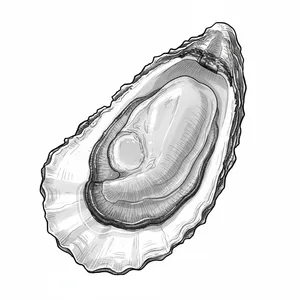
Chilmark
US East CoastDeep-water aquacultured oyster from Menemsha Pond on Martha's Vineyard. Large, briny, and full-bodied with a crisp, clean sea salt blast and sweet finish. Mineral-rich flavor from ancient freshwater springs and Atlantic tidal flow.
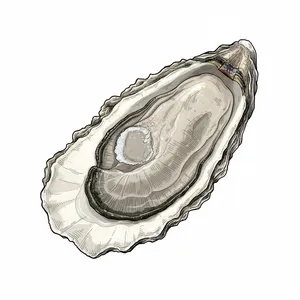
Pemaquid
US East CoastA Maine institution. Large, powerful oysters with rock-hard shells, plump firm meats, and clean briny-sweet flavor with lemony zest.
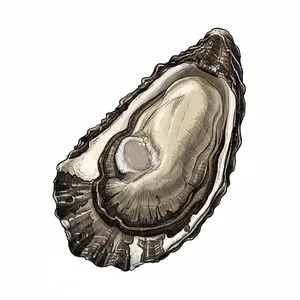
Wellfleet
US East CoastCape Cod classic. High brine, clean finish, with subtle sweetness.
Blue Point (Great South Bay)
US East CoastThe legendary Blue Point oyster, restored to its original Great South Bay home. Full-salt brininess with sweet honeydew finish and distinctive pine and anise notes. A historic American favorite since the 1820s.
Learn More
The Big Five: A Complete Guide to Commercial Oyster Species
Comprehensive guide to C. virginica (Atlantic), C. gigas (Pacific), C. sikamea (Kumamoto), O. lurida (Olympia), and O. edulis (European Flat)
Read article → Biology & SpeciesThe Atlantic Oyster (C. virginica): From Maritime Brine to Gulf Sweetness
Deep dive into America's indigenous East Coast oyster - flavor profiles, regional variations, and famous varieties
Read article → Merroir & EnvironmentWhat Is Merroir? How Water Shapes Oyster Flavor
Merroir is the marine version of terroir: how salinity, temperature, tides, and plankton in the growing water shape an oyster's flavor. The science, plus how to taste it.
Read article →