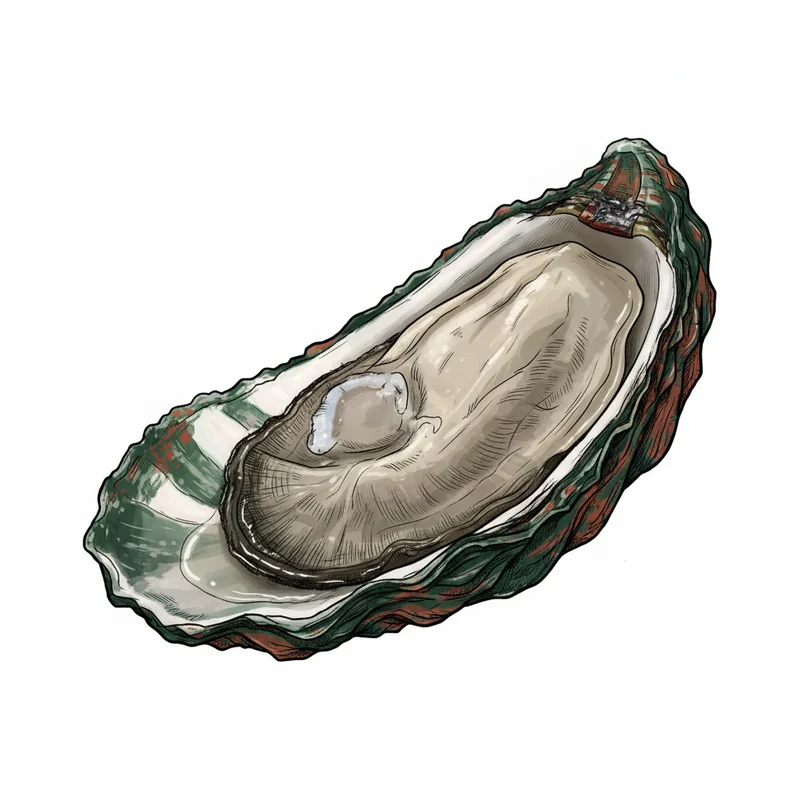
Tomahawk
Crassostrea virginica
A medium-sized East Coast oyster raised by the Shinnecock Nation in Long Island's Shinnecock Bay. Notable for its chewy texture, moderate salinity, and distinctive herbal finish with celery and sagebrush notes. Pretty jade shells with brick-colored swirls.
At a Glance
Tomahawk is an Eastern oyster (Crassostrea virginica) from the US East Coast. It is moderately briny (3/5 brininess) and moderately sweet (3/5 sweetness), with mild brine, herbal flavors and a finish that is volatile, herbal finish with celery and sagebrush notes. It is considered a beginner-friendly oyster.
Flavor Profile
Finish
Volatile, herbal finish with celery and sagebrush notes
Expert Notes
Tomahawk oysters are a trademarked brand raised by the Shinnecock Nation using rapid-growth techniques that bring them to market size in just a year. The intense tides of Shinnecock Bay cause the oysters to develop strong adductor muscles, resulting in a noticeably chewy, firm texture. The flavor profile is surprisingly complex—moderate salinity balanced with sweetness, but distinguished by an almost volatile, herbaceous finish reminiscent of celery and sagebrush that sets them apart from other East Coast varieties. Origin & Characteristics
- Species
- Crassostrea virginica
- Native to
- USA
- Grown in
- Shinnecock Bay, Southampton, Long Island, New York
- Size
- Medium (2-3 inches)
- Shell Color
- Jade with brick-colored swirls
- Meat Color
- Ivory to light gray
What Experts Say
Across 6 sources, tasters describe this oyster as:
Unique notes: celery, sagebrush, lemony, seaweed
"A noticeably chewy, medium-sized oyster with moderate salinity, decent body, and pretty jade shells with brick-colored swirls. I have no idea what accounts for the almost volatile, celery & sagebrush finish, but I like it."
chewymoderate salinitycelerysagebrush
"Tomahawks are fresh and crisp with a sweet aftertaste and bright salinity. This 3 inch wild oyster has a firm texture."
freshcrispsweetbright salinityfirm
"Tomahawks are chewy, medium-sized oyster with moderate salinity and pretty jade shells with brick-colored swirls."
chewymoderate salinity
"Tomahawk Oysters have well defined cups, a medium brine with a clean, fresh flavor and a lemony finish."
medium brinecleanfreshlemony
"Tomahawk oysters are small, firm, and have a mild, clean flavor with a hint of seaweed."
firmmildcleanseaweed
About the Farm
Shinnecock Nation
The Shinnecock Indians of Long Island grow oysters in Shinnecock Bay using modern plastic trays, then move them to the bay bottom where daily tidal exposure strengthens the oysters' adductor muscles, allowing them to reach market size in about a year.
- Cultivation Method
- rack and bag
History & Background
Originally grown by the Wampanoag Tribe in Menemsha Pond, Martha's Vineyard, Massachusetts, but that operation was abandoned. The Tomahawk brand is now a trademarked variety raised by the Shinnecock Indians in Southampton, New York, reviving an ancient Indigenous oyster farming tradition.
Ages ago, the Shinnecock Indians grew oysters by capturing free-swimming larvae on branches placed in Shinnecock Bay, then moving the tiny spat to safer salt ponds for growout. Today they use modern methods while maintaining their cultural connection to oyster cultivation.
Did You Know?
- The daily tidal exposure acts like 'Pilates' for the oysters, strengthening their adductor muscles
- These oysters grow to market size in about a year—roughly twice the normal rate
- The Tomahawk name is trademarked and distinct from the old Martha's Vineyard Tomahawks
Sources & References
This information was compiled from 6 sources.
- Tomahawk (Shinnecock) — The Oyster Guide
- Tomahawk Oysters — Chefs Resources
- Live Oysters — Fortune Fish Co
- Oyster Varieties — The Seafood Merchants
- Oyster Tasting Log — Peek & Eat
- The Tomahawk — The SF Oyster Nerd
Similar Oysters
Dodge Cove
US East CoastA Maine institution from the Damariscotta River. One of Maine's first farmed oysters, featuring a distinctive sweet-and-sour citrus flavor with bright lemon notes, restrained brine, and rare dappled pastel shells.
New Point
US East CoastA sustainably farmed New Jersey oyster from Northern Barnegat Bay. Large, strong shells with crisp, succulent texture. Fresh and briny with balanced salinity and a mild, sweet finish.
Paramour
US East CoastA mild, refined East Coast oyster cultivated in Narragansett Bay, Rhode Island, with origins from Virginia's Atlantic-facing Parramore Island. Despite full ocean exposure, it delivers a surprisingly gentle brine with firm meat and a clean, fruity finish.
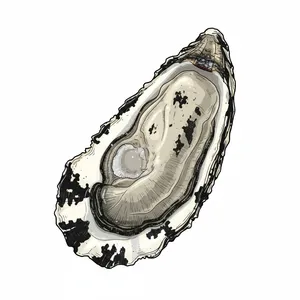
Stingray
US East CoastThe quintessential Chesapeake Bay oyster from Mobjack Bay, Virginia. Perfectly balanced between sweet and salty with a clean, crisp finish. Distinctive white shell with black markings.
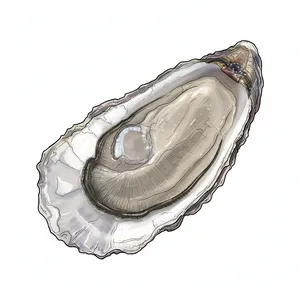
Bodie Island
US East CoastThe Outer Banks' first farmed oyster from North Carolina. Medium-sized with balanced salinity, offering a harmonious blend of sweet and salt with firm texture from off-bottom tray cultivation.
Learn More
The Big Five: A Complete Guide to Commercial Oyster Species
Comprehensive guide to C. virginica (Atlantic), C. gigas (Pacific), C. sikamea (Kumamoto), O. lurida (Olympia), and O. edulis (European Flat)
Read article → Biology & SpeciesThe Atlantic Oyster (C. virginica): From Maritime Brine to Gulf Sweetness
Deep dive into America's indigenous East Coast oyster - flavor profiles, regional variations, and famous varieties
Read article → Merroir & EnvironmentWhat Is Merroir? How Water Shapes Oyster Flavor
Merroir is the marine version of terroir: how salinity, temperature, tides, and plankton in the growing water shape an oyster's flavor. The science, plus how to taste it.
Read article →