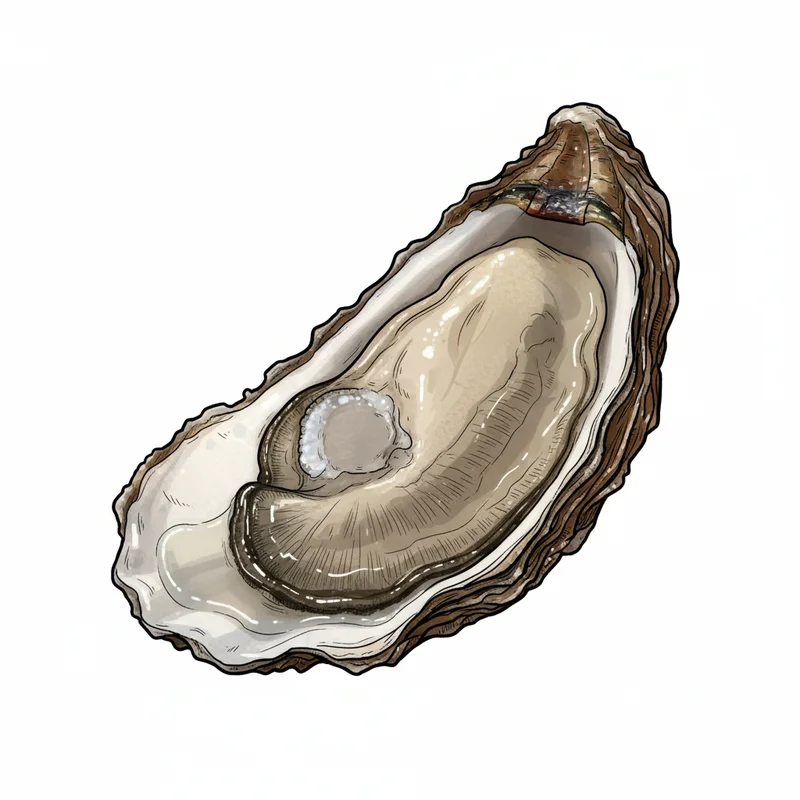
Wild Goose
Crassostrea virginica
Rack-and-bag raised oyster from Narragansett Bay, Rhode Island. Strong brine and mineral-forward with beautiful brown shells, exceptional meat fill, and a distinctive sweet, creamy umami finish.
At a Glance
Wild Goose is an Eastern oyster (Crassostrea virginica) from the US East Coast. It is notably briny (4/5 brininess) and moderately sweet (3/5 sweetness), with briny, mineral flavors and a finish that is sweet, creamy umami finish.
Flavor Profile
Finish
Sweet, creamy umami finish
Expert Notes
Wild Goose oysters from Narragansett Bay showcase the classic characteristics of this glacially-carved drowned river valley with its bedrock foundation. Grown using rack-and-bag floating gear and tumbled to strengthen their beautiful brown shells, these oysters deliver a strong brine up front that reflects the bay's full oceanic salinity from significant tidal exchange. The mineral-forward profile gives way to a notably sweet finish with smooth, silky meats and a creamy umami quality that sets them apart from other Rhode Island varieties. Origin & Characteristics
- Species
- Crassostrea virginica
- Native to
- USA
- Grown in
- West Passage, Narragansett Bay, Rhode Island, Rome Point Oyster Farm
- Size
- Medium (3-3.5 inches)
- Shell Color
- Brown
- Meat Color
- Cream to light gray
What Experts Say
Across 7 sources, tasters describe this oyster as:
Unique notes: ocean-forward, earthy, buttery
"Ocean Salty flavor with a Creamy & Sweet finish to them! If you are looking for a fresh & sweet yet strong flavored Oyster, these are for you!"
saltycreamysweetstrong
"Strong And Crisp Oceany Brine With A Creamy Umami (Essence of Deliciousness) Finish. Have the most 'Ocean' flavor of the Oysters we offer!"
strongcrispbrinycreamyumami
"Strong brine with a creamy Umami finish."
strongbrinycreamyumami
"Strong brine up front with an earthy, mineral finish. Beautiful brown shells with great meat fill and well rounded flavor."
strongbrinyearthymineral
"Full oceanic brine with buttery umami finish."
brinyocean-forwardbutteryumami
"Rich mineral ocean flavor from the West Passage of Narragansett Bay often described as a drowned river valley carved by ice age glaciers."
mineralocean-forwardrich
About the Farm
Rome Point Oyster Farm
Grown and harvested by oystermen Thomas & Russell Blank, who has been a fisherman for most of his life. Rome Point Oyster Farm operates in the West Passage of Narragansett Bay, Rhode Island.
- Cultivation Method
- rack and bag
History & Background
Wild Goose oysters are cultivated in Narragansett Bay, Rhode Island, an area carved by ice age glaciers centuries ago. The West Passage of Narragansett Bay is often described as a drowned river valley formed during the last ice age.
Part of the Ocean State Shellfish Cooperative, which operates as a 'microbrewery' for oysters with thirteen different oyster farms based in 4 distinct waterways in Rhode Island.
Did You Know?
- Described as having the most 'Ocean' flavor of all oysters offered by The Lobster Guy
- Cultivated in waters carved by ice age glaciers
- Known for their beautiful brown shells with exceptional meat fill
Sources & References
This information was compiled from 7 sources.
- Wild Goose Oysters! - The Lobster Guy — thelobsterguy.com
- Fresh East Coast Oysters - The Lobster Guy — thelobsterguy.com
- Wild Goose Oysters - OSSC — oceanstateoysters.com
- Wild Goose Oyster - Oysterology Online | Pangea Shellfish Company — pangeashellfish.com
- About The Farms - Ocean State Shellfish Cooperative — oceanstateoysters.com
- Oysters - Cape Cod Shell — capecodshell.com
- Wild Goose Oysters (RI) - Element Seafood — elementseafood.com
Similar Oysters
Cotuit
US East CoastAmerica's oldest oyster brand since 1857. Rich, complex, with strong mineral brine balanced by sweet notes and a lingering slate finish.
Whale Rock
US East CoastA rare, premium oyster from the Mystic River cultivated by Connecticut's cooperative. Four-inch deep-cupped shells with mineral-rich, sweet-briny flavor and perfect shell shapes make these a sought-after variety.
Standish Shore
US East CoastPremium Duxbury Bay oyster with sharp brine, sweet-buttery meat, and deep cups. Tumbled multiple times for hard, uniform shells with distinctive black and purple streaks. Melt-in-your-mouth texture with a crisp mineral finish.
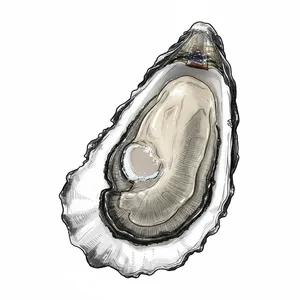
Great South Bay
US East CoastIconic Long Island oyster from the historic Blue Point grounds. Briny with high salinity, plump and meaty with firm texture, balanced sweetness, and a distinctive mineral-woody finish. Cultivated in floating cages near Fire Island Inlet.
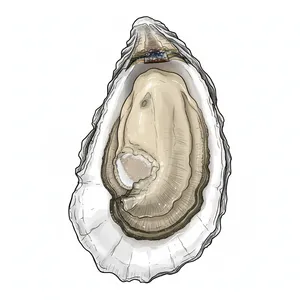
Great White
US East CoastCape Cod's flagship oyster from Barnstable Harbor. Large with thick shells and dense, savory meats. Distinctively briny and mineral-forward with a powerful ocean taste shaped by twice-daily tidal flows.
Learn More
The Big Five: A Complete Guide to Commercial Oyster Species
Comprehensive guide to C. virginica (Atlantic), C. gigas (Pacific), C. sikamea (Kumamoto), O. lurida (Olympia), and O. edulis (European Flat)
Read article → Biology & SpeciesThe Atlantic Oyster (C. virginica): From Maritime Brine to Gulf Sweetness
Deep dive into America's indigenous East Coast oyster - flavor profiles, regional variations, and famous varieties
Read article → Merroir & EnvironmentWhat Is Merroir? How Water Shapes Oyster Flavor
Merroir is the marine version of terroir: how salinity, temperature, tides, and plankton in the growing water shape an oyster's flavor. The science, plus how to taste it.
Read article →