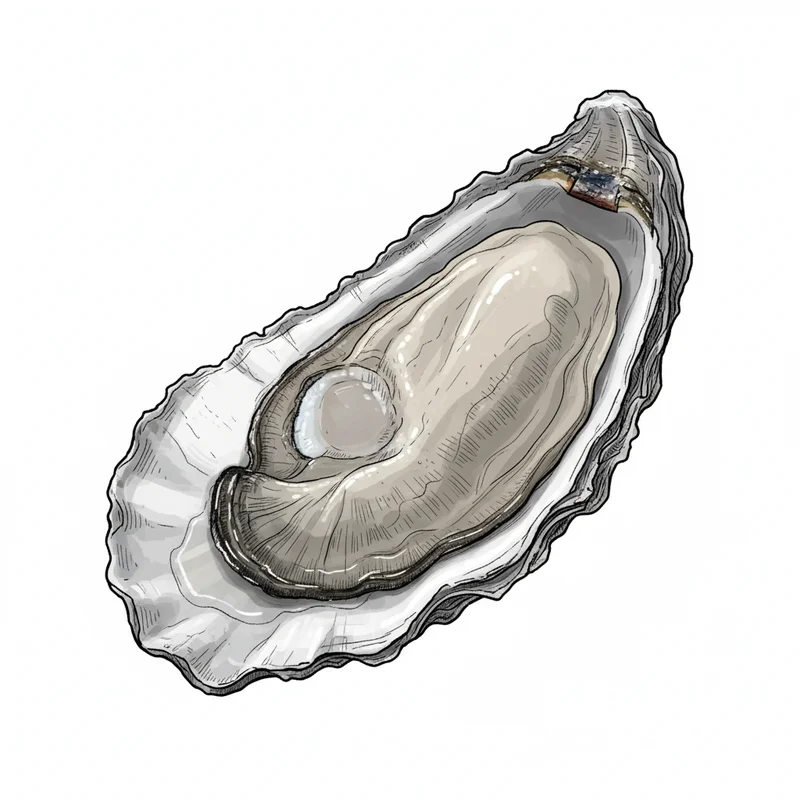
York River
Crassostrea virginica
Lower Bay Virginia oyster from the mouth of the York River. High salinity with mild brininess that transitions to a sweet, clean finish. Crisp mineral notes and smooth texture define this classic Chesapeake variety.
At a Glance
York River is an Eastern oyster (Crassostrea virginica) from the US East Coast. It is notably briny (4/5 brininess) and moderately sweet (3/5 sweetness), with mild brine, sweet flavors and a finish that is sweet, clean, crisp with mineral notes.
Flavor Profile
Finish
Sweet, clean, crisp with mineral notes
Expert Notes
York River oysters hail from the Lower Bay Western Shore region where the York River meets the Chesapeake Bay near Virginia's Mobjack Bay. These oysters exhibit the high salinity characteristic of lower bay varieties, with crisp, clean mineral notes that reflect their ocean-influenced environment. The mild saltiness transitions smoothly into a sweet, clean finish that makes them a quintessential example of Virginia's Lower Bay oyster profile. Origin & Characteristics
- Species
- Crassostrea virginica
- Native to
- USA
- Grown in
- Mouth of York River, Mobjack Bay region, Virginia
- Size
- Medium (2.5-4 inches)
- Shell Color
- Gray-white
- Meat Color
- Cream to light gray
Perfect Pairings
What Experts Say
Across 10 sources, tasters describe this oyster as:
Unique notes: artichoke leaves dipped in butter sauce, succulent, meaty
"York River Oysters are moderately salty with a sweet finishing taste, and are superb served naked on the half shell, on a cracker, in a stew, steamed, or fried."
moderately saltysweet
"A mild saltiness that transitions smoothly into a sweet, clean finish"
mildsaltysweetclean
"Mild saltiness moving to a sweet finish."
mildsaltysweet
"They are saltier than other Chesapeake oysters I've had, while still not being as punishingly, bitter salty as Chincoteagues and others that are grown on the Atlantic side of the Eastern Shore. The moderate salt is perfectly balanced by an irresistible sweetness and an instantly and unmistakably recognizable flavor of artichoke leaves dipped in butter sauce."
saltysweetartichokebuttery
"These oysters tend to have the highest salinity ratings (4-5) and often feature crisp, clean finishes with mineral notes."
saltycrispcleanmineral
"It's salty with a sweet flavor. It has just enough salt to satisfy your craving, without dominating the taste of the oyster."
saltysweet
"These York River delicacies... were sweet, salty and succulent to say the very least."
sweetsaltysucculent
"Your 'Forbidden' oysters were top-of-the-line; clean, meaty and salty."
cleanmeatysalty
About the Farm
York River Oysters
Owner and grower Tommy Leggett raises oyster seed in the salty waters of the York River until they reach market size. Formerly the head of the Oyster Recovery Project for the Chesapeake Bay Foundation, Tommy has been key to the resurgence of the Virginia oyster industry.
- Cultivation Method
- floating bags
History & Background
York River oysters have been well-regarded for centuries. Prior to 1880, good oyster rocks (bottoms) were common in the York River as the result of generations of oyster growth. The York River, a Chesapeake Bay tributary, was historically rich with oyster beds and has been a primary resource for indigenous peoples and later watermen.
York River oysters are part of the Lower Bay Western Shore region (Region 6) of Virginia's distinctive oyster appellations. The Forbidden Oysters brand, grown by Greg Garrett whose family has been eating Chesapeake oysters since Jamestown, has made a notable splash in the regional oyster scene.
Did You Know?
- York River oysters grow in waters with salinity around 20-22 parts per thousand (2-2.2% salt)
- The oysters are sometimes grown as triploids (three sets of chromosomes), making them sexless so they feed and fatten year-round instead of entering reproductive mode
- York River oysters have distinctive umber and sienna tones to their shells, a characteristic rarely seen in other regions
Sources & References
This information was compiled from 10 sources.
- York River Oysters: Home — yorkriveroysters.com
- Oyster Regions - Virginia Oyster Trail — virginiaoystertrail.com
- Everything You Need to Know About Virginia Oysters — virginia.org
- Forbidden Oysters - The Oyster Guide — oysterguide.com
- York River Oyster - Chefs Resources — chefs-resources.com
- About - York River Oysters — yorkriveroysters.com
- Aquaculture by Design Chesapeake Bay - The Nature Conservancy — nature.org
- Reviews for: Greg Garrett's Forbidden Oysters — localharvest.org
- Virginia is for (Oyster) Lovers - Orvis News — orvis.com
- Oysters in Virginia — s1030794421.onlinehome.us
Similar Oysters
Damariscotta
US East CoastMaine's finest. Dense, powerful oysters with thick shells, firm ivory meats, and a balanced flavor of strong brine, subtle sweetness, and mineral complexity.
Genuine Blue Point
US East CoastThe legendary Long Island oyster harvested from Great South Bay for over two centuries. Strong, briny, and robust with satiny meats, a fresh crisp texture, and a sweet aftertaste that sparkles with mineral salinity.
Great South Bay
US East CoastIconic Long Island oyster from the historic Blue Point grounds. Briny with high salinity, plump and meaty with firm texture, balanced sweetness, and a distinctive mineral-woody finish. Cultivated in floating cages near Fire Island Inlet.
Capers Blades
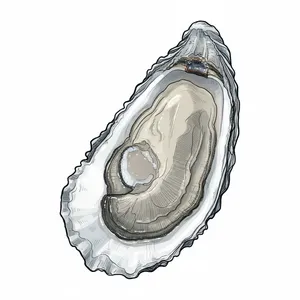
US East CoastWild-harvested blade oysters from Capers Island, South Carolina. Hand-selected by Clammer Dave from natural reefs, delivering clean, sweet meat with intensely briny, tongue-curling salty liquor and a robust, metallic finish.
Copps Island
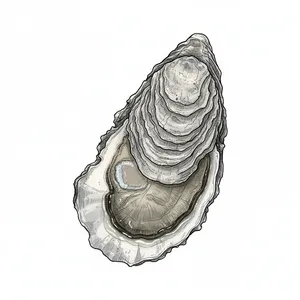
US East CoastA bold Long Island Sound oyster from Connecticut's historic Copps Island Oysters farm. Large and strong with heavy shells, delivering an intensely briny and metallic flavor with sweet undertones. Cultivated using traditional methods for over 150 years.
Learn More
The Big Five: A Complete Guide to Commercial Oyster Species
Comprehensive guide to C. virginica (Atlantic), C. gigas (Pacific), C. sikamea (Kumamoto), O. lurida (Olympia), and O. edulis (European Flat)
Read article → Biology & SpeciesThe Atlantic Oyster (C. virginica): From Maritime Brine to Gulf Sweetness
Deep dive into America's indigenous East Coast oyster - flavor profiles, regional variations, and famous varieties
Read article → Merroir & EnvironmentWhat Is Merroir? How Water Shapes Oyster Flavor
Merroir is the marine version of terroir: how salinity, temperature, tides, and plankton in the growing water shape an oyster's flavor. The science, plus how to taste it.
Read article →