Hog Island Oyster Company
About Hog Island Oyster Company
- Founded
- July 1983, in Tomales Bay, California
- Founders
- John Finger and Michael Watchorn, both marine biologists
- Location
- Marshall Farm on Tomales Bay, CA; hatchery and nursery in Humboldt Bay, CA
- Species
- Pacific (Crassostrea gigas), Kumamoto, Atlantic, and European flat oysters
- Cultivation
- Rack-and-bag system adapted from French aquaculture
- Scale
- Roughly 160 saltwater acres in Tomales Bay; sells over 5 million oysters a year
- Started with
- A 5-acre lease and a handful of spat
Hog Island Oyster Co. began in July 1983, when two marine biologists, John Finger and Michael Watchorn, planted their first oyster seed in Tomales Bay, California. Their early motto was "strong backs and weak minds," and their starting capital amounted to a five-acre shellfish lease, a handful of spat, and a lot of ambition. Marine scientists by training, they set out to prove that great oysters could be grown sustainably on the Northern California coast, and over four decades they built one of the most recognizable names in American shellfish.
Today the company occupies roughly 160 saltwater acres in Tomales Bay, where its Marshall Farm serves as the company's home base. Hog Island starts its shellfish seed from scratch at its own hatchery and nursery in Humboldt Bay, a few hundred miles up the coast, where it also grows Pacific and Kumamoto oysters before they finish in Tomales. This vertically integrated approach, from hatchery seed to harvest, gives the company tight control over quality and lets it raise several species and brands, including its flagship Sweetwater, alongside Kumamotos, Atlantics, and French-style varieties.
The farm's signature growing method in Tomales Bay is a "rack-and-bag" system adapted from French aquaculture, in which oysters are planted by the hundreds into mesh bags suspended on long cables and racks above the bay floor. NOAA Fisheries has profiled the operation as a model of low-impact aquaculture: the oysters require no feed, fertilizer, or added fresh water, and they actively filter and clean the surrounding water as they grow. Founder John Finger has framed the work as producing food that is low on the food chain while improving the health of the bay itself, an argument that has made Hog Island a frequent reference point in conversations about sustainable protein.
What makes a Hog Island oyster taste the way it does is, in Finger's words, "one of the purest tastes of place." The cold, clean, nutrient-rich waters of Tomales Bay, flushed by Pacific tides, give the oysters their characteristic balance, and tasters of the Sweetwater in particular tend to describe a buttery, sweet, not-too-briny profile. The company grows distinct lines tuned to different waters and methods, so a Hog Island Atlantic, a Kumamoto, and a Sweetwater each express the merroir and handling behind them.
Beyond the farm, Hog Island has become a Bay Area institution. It runs oyster bars and restaurants, sells over five million oysters a year to wholesale and retail customers, and welcomes visitors to its Tomales Bay farm for guided tours, tastings, and shuck-your-own experiences on the water. After more than 40 years, the brand has come to stand for the idea that an oyster can be both a celebrated delicacy and a genuinely sustainable crop.
Farm details
- Cultivation Method
- bottom culture
- Growing Waters
- Barnstable Harbor, Cape Cod Bay, Massachusetts; Tomales Bay, California; Discovery Bay, Washington; Straits of Juan de Fuca; Humboldt Bay, California; Walker Creek, Tomales Bay
Oysters from Hog Island Oyster Company
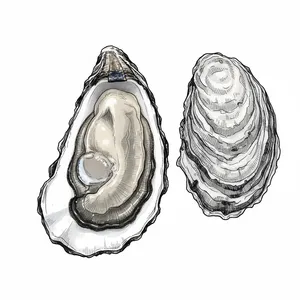
Cape Blue
US East CoastHand-grown Cape Cod Bay oyster from Barnstable Harbor. Medium-sized with distinctive white-and-black shells, highly briny with firm texture and a slightly nutty finish. Rich New England clambake flavor.
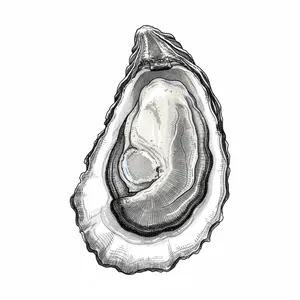
French Hog
US West CoastA large, buttery Pacific oyster from Tomales Bay, California. Mild and refined with distinctive cucumber and melon notes. Farmed using traditional French rack and bag methods.
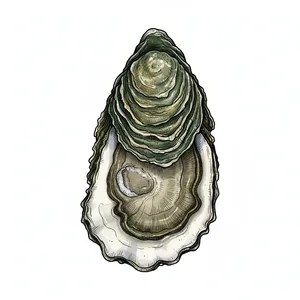
Hog Island Atlantic
US West CoastA unique East Coast oyster variety raised in California's Tomales Bay. Small with handsome green-gold shells, intensely briny with crisp minerality and surprising fruity depth that peaks in summer.
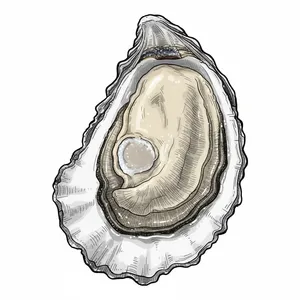
Hog Island Cliffside
US West CoastLarge, deeply cupped Pacific oyster from Discovery Bay, Washington. Intensely briny with herbaceous spinach/kale notes and a distinctive umami finish reminiscent of aged beef or dried nori. Complex and bold.
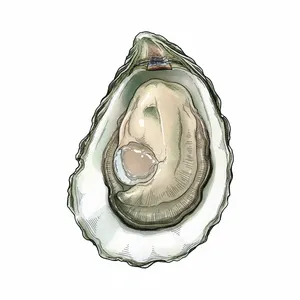
Hog Island Kumamoto
US West CoastExceptionally sweet Kumamoto from Humboldt and Tomales Bay. Tiny, deep-cupped oysters with creamy texture and honeydew-watermelon flavors. Virtually no brininess makes them perfect for beginners.
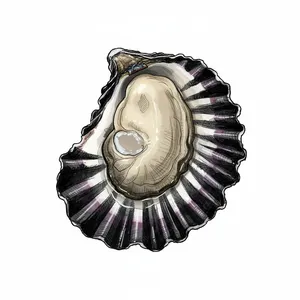
Hog Island Sweetwater
US West CoastThe signature California oyster from Tomales Bay. Rich and sweet with creamy, buttery texture, balanced brine, and a slightly smoky finish.
Sources
This profile was drafted from the cited sources below and is under editorial review.
- Our Story — Hog Island Oyster Co.
- Our Oysters — Hog Island Oyster Co.
- Tide to Table Profiles: Hog Island Oyster Co. — NOAA Fisheries
- The World on an Oyster — Life & Thyme
- Wholesale — Hog Island Oyster Co.
- Tomales Bay Farm — Hog Island Oyster Co.
- Hog Island Oyster Co., Marshall, California — Restaurant Review — Condé Nast Traveler