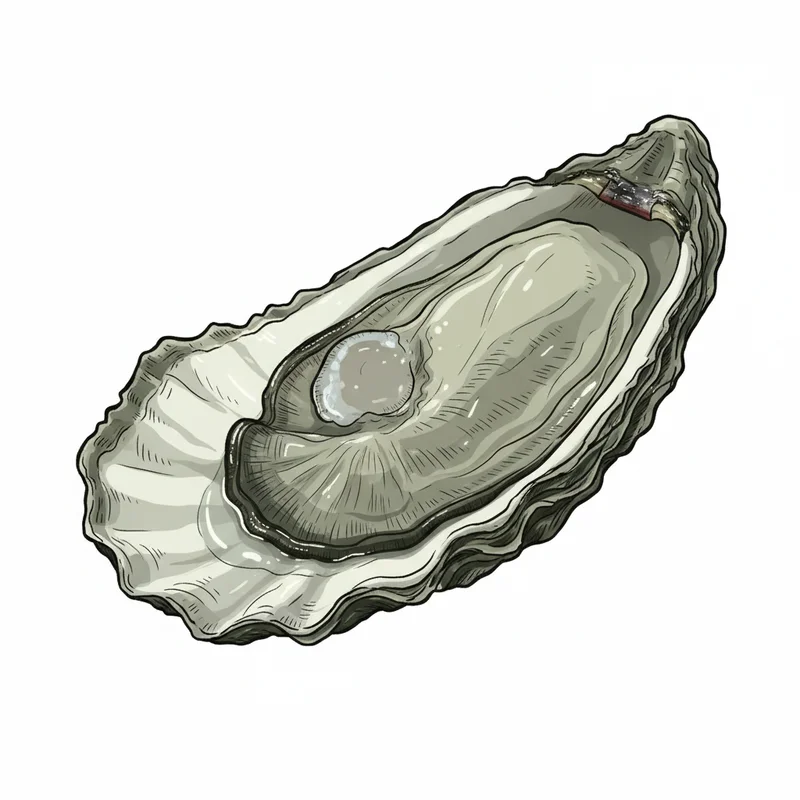
Fine de Claire
Crassostrea gigas
France's distinguished standard. Finished in salt ponds for sweet, fruity notes with a buttery texture and precise, briny finish.
At a Glance
Fine de Claire is a Pacific oyster (Crassostrea gigas) from France. It is notably briny (4/5 brininess) and moderately sweet (3/5 sweetness), with briny, sweet, fruity flavors and a finish that is clean, crisp, distinguished.
Flavor Profile
Finish
Clean, crisp, distinguished
Expert Notes
Fine de Claire oysters are finished in rectangular salt ponds (claires) for a minimum of one month, where they fatten and develop their signature sweeter, fruitier flavor from the phytoplankton-rich waters. The result is a precise, distinguished taste that's remarkably consistent—a strong standard in France with delicate buttery notes and firm texture. Origin & Characteristics
- Species
- Crassostrea gigas
- Native to
- France
- Grown in
- Marennes-Oléron Basin
- Size
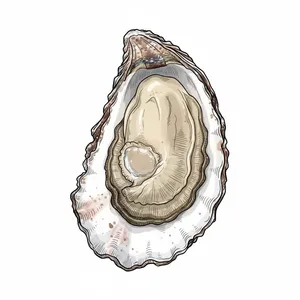
- Large (3-4 inches)
- Shell Color
- Gray-green
- Meat Color
- Light green-gray
What Experts Say
Across 6 sources, tasters describe this oyster as:
Unique notes: precise, distinguished, vegetal, iodized, oceanic, green, lean
"These can be found at pretty much every oyster bar in France. They are the standard go-to, and it's a strong standard. The ones I've had have been a bit lean and green, more like an American oyster than their more pampered siblings in Marenne. Quality is remarkably consistent."
leangreenbrinyconsistent
"Really is hard to beat these. Many, I know, prefer Speciales, but I find their taste a little muddy. These fines de claires have such a precise and distinguished taste."
precisedistinguishedclean
"Very large and briny! Not bad just unexpected. Best served chilled and with lemon."
brinylarge
"Had these in Bayeux- wonderful. Like Kumomotos in flavor. Shell size about 3 inch with deep cups."
sweetmilddelicate
"In the claires, the oysters are less densely populated than in the open sea. They have access to a different type of phytoplankton and a lower salinity environment. This causes them to purge any strong, overly briny or 'muddy' flavours, resulting in a more delicate, nuanced taste with subtle sweet or nutty notes."
delicatenuancedsweetnuttyrefined
"Better known than the previous two kinds of oysters, the Fine de Claire has an elongated shell, with a softer-coloured flesh that yields a salty and nutty flavour."
saltynutty
"It is an oyster with a marine and iodized flavor, very popular for lovers of not very fleshy oysters."
marineiodizedlean
"Expect light salinity, a crisp vegetal finish, and a clean, oceanic aftertaste."
light salinitycrispvegetalcleanoceanic
About the Farm
Marennes-Oléron Basin Collective
The Marennes Oléron organization is a renowned collective of oyster producers based in the Marennes-Oléron basin, France's largest and most historic oyster-farming region, where freshwater rivers meet the Atlantic Ocean creating a unique marshy environment.
- Cultivation Method
- salt pond
- Certifications
- Protected Geographical Indication (PGI/IGP)
History & Background
The term 'Fine de Claire' comes from the French word 'claire,' meaning a shallow salt pond used for oyster finishing. These man-made basins were originally salt pans converted into maturation beds for oysters. The Marennes-Oléron basin has been the epicentre of French oyster cultivation for centuries, with methods refined over generations.
Fine de Claire oysters are the standard go-to oyster at practically every oyster bar in France. They are the most exported oyster from France and are especially prized in European seafood platters. They represent the entry-level of the claire trio, with Speciales de Claire and Pousses en Claire being progressively more refined.
Did You Know?
- Green-gilled hues often emerge from the presence of Navicula bluephila algae in the claire ponds
- Thousands of acres south of the city of Marennes have been converted into claires for oyster finishing
- Oysters must spend a minimum of 28 days in the claires at a density of around 20 oysters per square metre to qualify as Fine de Claire
- The claire finishing process was developed by converting old salt marshes into oyster maturation ponds
Sources & References
This information was compiled from 6 sources.
- Fine de Claire — Oysterater
- The Art of Affinage: Unveiling the Secrets of Fine de Claire Oysters — Avant Marketplace / Seafood Market Singapore
- From France with Love: Wine Pairing Amélie's Fine de Claire — Huitres Amélie
- Fine de Claire Oysters — The Oyster Encyclopedia
- The Fine de Claire Oyster — Chiron Fils Huitres
- A Guide to The World's Oysters and What They Taste Like — Michelin Guide
Fine de Claire: A Closer Look
- Origin
- Marennes-Oléron basin, Charente-Maritime, French Atlantic coast
- Certification
- IGP Huîtres Marennes Oléron (since 2009) — the only French oysters with this protected origin sign
- Affinage
- Finished at least 28 days in claires (clay ponds) at a maximum density of 3 kg/m²
- Flavor
- Delicate and well-balanced brine with the distinctive 'claire' finish; briefly lingering
- Texture
- Less fleshy, more juicy, with a soft, translucent mantle
- Green variant
- Fine de Claire Verte (Label Rouge): green gills from the marennine pigment of a navicule microalga
The Fine de Claire is not a single farm's oyster but the signature product of an entire landscape: the Marennes-Oléron basin on France's Atlantic coast, more than 3,000 hectares stretching from the banks of the Seudre river to the eastern shore of the Île d'Oléron. Its defining feature is the 'claire' — a shallow clay basin, typically a former salt marsh, that fills at high tide and holds its water when the sea recedes. Because claires are shallow and sun-warmed, phytoplankton develops rapidly in them, and oysters raised at sea are transferred into these ponds for a finishing period the French call affinage.
The rules are precise. To be sold as a Fine de Claire, an oyster must be finished in the claires for a minimum of 28 days, between November and March, at a maximum density of 3 kilograms per square metre. This system is policed: since 2009, Marennes-Oléron oysters have held Protected Geographical Indication (IGP) status — the only French oysters to carry this official sign of origin and quality — with independent inspectors verifying that oysters are cultured on the French Atlantic coast and genuinely finished in claire ponds within the basin. The Fine de Claire sits within a family of claire-finished grades: the Spéciale de Claire, hand-selected for roundness and shell depth and finished at least a month for a firmer, meatier, sweeter oyster; and the Label Rouge Pousse en Claire, which spends four to eight months in the ponds at no more than five oysters per square metre.
The most celebrated variation is the Fine de Claire Verte, a Label Rouge oyster whose gills turn a striking green. The color comes from a navicule microalga that blooms in the claires; as the oyster filters it, it retains the alga's pigment, marennine. The Verte follows the same 28-day, 3 kg/m² regime and is produced only from October through May, out of respect for the oyster's reproductive cycle.
On the plate, the Fine de Claire is the lighter, saltier side of the French fines-versus-spéciales divide: less fleshy and more juicy than a spéciale, with a soft consistency, a translucent mantle, an agreeable marine aroma, and a good salt balance carrying the particular 'finished' taste of the claires that lingers briefly on the palate. It is the refined, approachable French oyster — in France you will most often order it by size number (No. 3 is the standard restaurant calibre, with smaller numbers meaning bigger oysters), served raw and paired with a local white wine or crémant.
Sources for this deep dive
This deep dive was drafted from the cited sources below and is under editorial review.
- La Fine de Claire — Huîtres Marennes Oléron
- La Fine de Claire Verte — Huîtres Marennes Oléron
- La Spéciale de Claire — Huîtres Marennes Oléron
- Les secrets d'élevage des huîtres Marennes-Oléron — Ministère de l'Agriculture (France)
- The Art of Ordering Oysters in France: Types and Numbering — FrenchEntrée
Similar Oysters
Beach Angel
Canada West CoastBeach-grown Pacific oyster from Cortes Island, BC. Firm and sweet with robust briny flavor, featuring distinctive notes of cucumber, grass, and melon rind. Crisp and ocean-fresh.
Effingham Inlet
Canada West CoastPremium Pacific oyster from a pristine deep-water fjord in Barkley Sound, BC. Tray-suspended and tumbled for uniform deep cups. Plump, cream-colored meat with vibrant brine, natural sweetness, and a smooth watermelon-lettuce finish.
Elkhorn
US West CoastBeach-grown Pacific oyster from Washington's Willapa Bay. Firm and meaty with intense, robust flavor featuring high brininess, natural sweetness, and a distinctive mineral-melon finish.
Fanny Bay
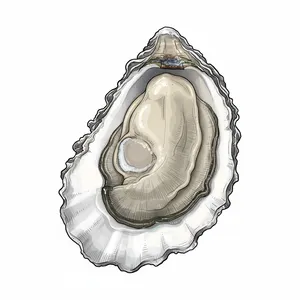
Canada West CoastThe archetypal BC oyster. Smooth and balanced with sweet, buttery notes and a signature crisp cucumber finish.
Fat Bastard
US West CoastThe largest of Taylor Shellfish's tide-tumbled Pacific oysters from Washington State. Bold, briny, and savory with a sweet finish, plump texture, and deep cups filled with generous liquor.
Learn More
The Big Five: A Complete Guide to Commercial Oyster Species
Comprehensive guide to C. virginica (Atlantic), C. gigas (Pacific), C. sikamea (Kumamoto), O. lurida (Olympia), and O. edulis (European Flat)
Read article → Biology & SpeciesThe Pacific Oyster (C. gigas): Cream, Cucumber, and the Japanese Legacy
Understanding the world's most cultivated oyster - from Japanese origins to West Coast dominance
Read article → Merroir & EnvironmentWhat Is Merroir? How Water Shapes Oyster Flavor
Merroir is the marine version of terroir: how salinity, temperature, tides, and plankton in the growing water shape an oyster's flavor. The science, plus how to taste it.
Read article →