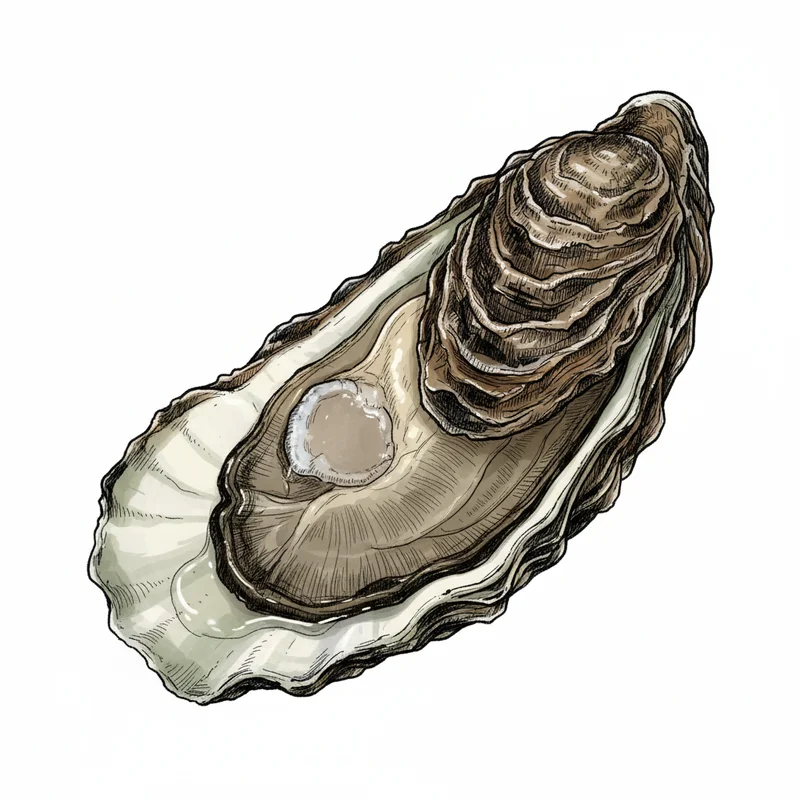
Salt Pond Select
Crassostrea virginica
Bottom-cultured heavyweight from Point Judith Pond, Rhode Island. Large, intensely briny oysters with pronounced metallic and mineral notes, creamy plump meats, and a concentrated tidepool flavor that demands an experienced palate.
At a Glance
Salt Pond Select is an Eastern oyster (Crassostrea virginica) from the US East Coast. It is intensely briny (5/5 brininess) and subtly sweet (2/5 sweetness), with intense brine, mineral, metallic flavors and a finish that is concentrated tidepool brine, pronounced mineral.
Flavor Profile
Finish
Concentrated tidepool brine, pronounced mineral
Expert Notes
Salt Pond Selects are oyster-lover's oysters: big, bountiful, and intensely flavorful. Grown in the tidal pools of Point Judith Pond for 2.5-3 years, they develop a concentrated, demi-glace-like brine that's unusually metallic for a virginica. These heavyweight oysters feature hints of iron and petrol flavors, with creamy, plump meats that deliver an overall complex flavor profile. Not for the timid, but oyster aficionados will love the big, bold taste. Origin & Characteristics
- Species
- Crassostrea virginica
- Native to
- USA
- Grown in
- Point Judith Pond, Rhode Island
- Size
- Large (3-4 inches)
- Shell Color
- Bronze and black-striped with white-green bottom
- Meat Color
- Creamy, plump
What Experts Say
Across 6 sources, tasters describe this oyster as:
Unique notes: concentrated tidepool, demi-glace with seawater, iron, petrol, tannic
"Another heavyweight from Point Judith Pond, Rhode Island (home of Moonstones), Salt Ponds are oyster-lover's oysters: big, bountiful, and intensely flavorful. If you made a demi-glace with seawater, you'd approximate the concentrated tidepool brine of a Salt Ponds. They are unusually metallic for a virginica, with hints of the iron and petrol flavors found in other Point Judith Pond oysters. These 2.5-year-old oysters are very large, heavy, and strong. The shells—bronze and black-striped on top, a lovely white-green on the bottom—shuck smoothly every time, yielding a rich meat that will take you back to childhood days of lazing around the New England shore."
brinymetallicironpetrolconcentrated
"I recently tried them again and they were even better–everything I wrote above, but bigger and sweeter. These monster three-year-olds make you want to laugh at the little girlie-oysters served up in so many rawbars."
sweetlargeintense
"Salt Pond Selects are grown in Point Judith Pond (also home to Moonstones). Their large meats have an extremely sweet and simultaneously tannic flavor with a briny finish."
sweettannicbriny
"Fantastic oyster. Meaty, salty. Great with an IPA."
meatysalty
"An all time favorite. Always large or giant. Buttery yet still meaty texture with a strong salty bath of brine. Classic 'two bite' oyster."
butterymeatysaltybriny
"Excellent. These were my favorite among seven (mostly VA/MD) kinds of oysters I tried at Pearl Dive Oyster Palace in DC. I enjoyed three raw: outstanding texture and salt."
salty
About the Farm
Salt Pond Selects
Raised by Dave Roebuck on a 22 acre farm in Point Judith Pond, Rhode Island, in the tidal waters shared with Moonstone oysters.
- Cultivation Method
- bottom culture
History & Background
Salt Pond Select oysters were described by Rowan Jacobsen as 'the best-kept secret in oysters' when he first discovered them in 2008.
These oysters are often called 'oyster-lover's oysters' for their intense, uncompromising flavor profile that appeals to experienced palates.
Did You Know?
- Rowan Jacobsen called these 'monster three-year-olds' that make you want to laugh at little girlie-oysters
- Harvested by diving or bull rake from the shallow salt pond
- Classic 'two bite' oyster due to their large size
- The shells are bronze and black-striped on top, a lovely white-green on the bottom
Sources & References
This information was compiled from 6 sources.
- Salt Ponds - The Oyster Guide — oysterguide.com
- The Best-Kept Secret - The Oyster Guide — oysterguide.com
- Salt Pond Select Oyster — oysterater.com
- Oysters - Cape Cod Shellfish — capecodshell.com
- Salt Pond Oysters - Salt Pond Selects — chefs-resources.com
- Salt Pond Oysters - Rhode Island Oyster Trail — rioystertrail.com
Similar Oysters
Rome Point
US East CoastA powerful, full-strength oyster from Rhode Island's Narragansett Bay. Intensely briny and mineral-rich with a luxurious buttery, umami finish. Grown in oceanic conditions using rack and bag methods with tumbling.
Speciale
US East CoastA wild Long Island oyster with bold, briny character. Heavy shells, meaty texture, complex mineral and metallic notes with cucumber undertones.
Great White
US East CoastCape Cod's flagship oyster from Barnstable Harbor. Large with thick shells and dense, savory meats. Distinctively briny and mineral-forward with a powerful ocean taste shaped by twice-daily tidal flows.
Naked Cowboy
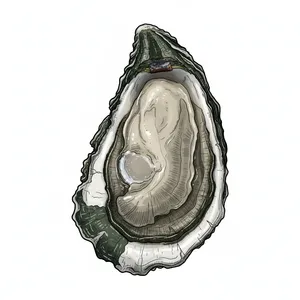
US East CoastWild-harvested from Long Island Sound, the Naked Cowboy is an iconic oyster with massive, plump meats and a ruggedly bold personality. Intensely briny with strong mineral and metallic notes, this is a big, strong, savory oyster for experienced lovers—not for sissies.
Oysterponds
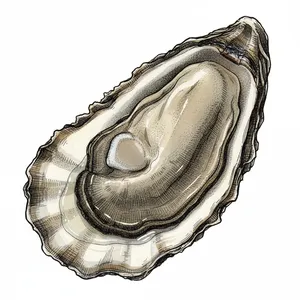
US East CoastLarge, deep-cupped Long Island oyster with distinctive umber-and-black shells. Intensely briny and savory with strong mineral character, tannic bite, and full musky flavor. Best September through April.
Learn More
The Big Five: A Complete Guide to Commercial Oyster Species
Comprehensive guide to C. virginica (Atlantic), C. gigas (Pacific), C. sikamea (Kumamoto), O. lurida (Olympia), and O. edulis (European Flat)
Read article → Biology & SpeciesThe Atlantic Oyster (C. virginica): From Maritime Brine to Gulf Sweetness
Deep dive into America's indigenous East Coast oyster - flavor profiles, regional variations, and famous varieties
Read article → Merroir & EnvironmentWhat Is Merroir? How Water Shapes Oyster Flavor
Merroir is the marine version of terroir: how salinity, temperature, tides, and plankton in the growing water shape an oyster's flavor. The science, plus how to taste it.
Read article →