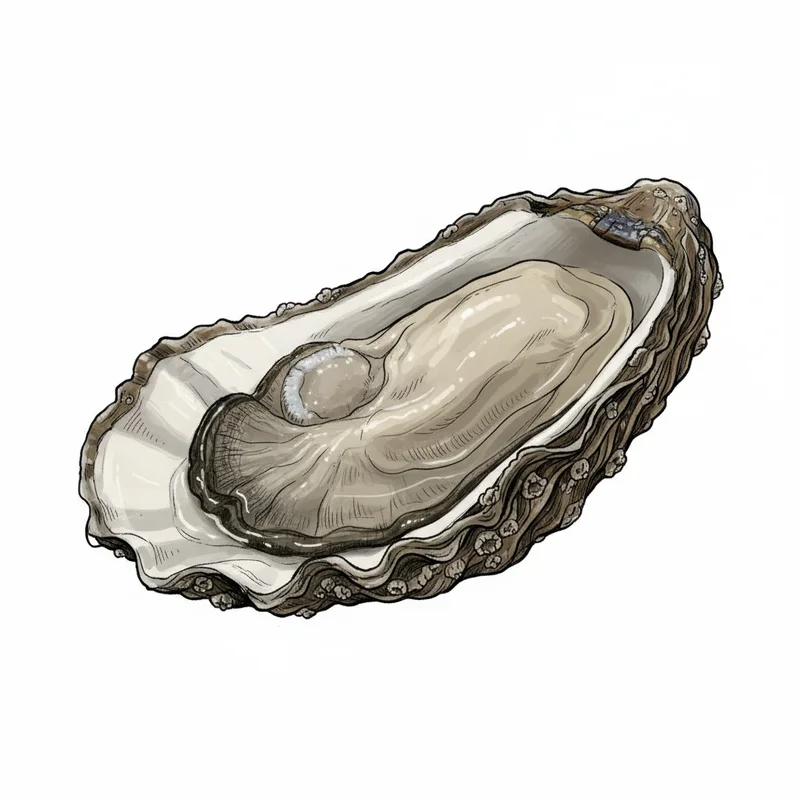
Ships Point
Crassostrea gigas
Beach-grown Pacific oyster from Baynes Sound, British Columbia. Moderately salty with a mild, sweet flavor and distinctive bitter cucumber finish. Naturally tumbled by winter storms.
At a Glance
Ships Point is a Pacific oyster (Crassostrea gigas) from the Canada West Coast. It is moderately briny (3/5 brininess) and moderately sweet (3/5 sweetness), with briny, sweet flavors and a finish that is bitter cucumber finish. It is considered a beginner-friendly oyster.
Flavor Profile
Finish
Bitter cucumber finish
Expert Notes
Ships Point oysters are gritty, no-nonsense Pacific oysters from the cold waters of Baynes Sound. Grown on rocky, hard ground that naturally tumbles the oysters during winter storms and Qualicum winds, they develop brownish, barnacle-encrusted shells. These Fanny Bay doppelgangers offer a moderately salty flavor with a bitter cucumber finish. Marketed for having a smaller stomach with less green algae, resulting in a milder overall taste profile. Origin & Characteristics
- Species
- Crassostrea gigas
- Native to
- Japan
- Grown in
- Ships Point, Baynes Sound, Vancouver Island
- Size
- Medium (3 inches)
- Shell Color
- Brownish with barnacle-encrusted shells
- Meat Color
- Light gray to cream
What Experts Say
Across 7 sources, tasters describe this oyster as:
Unique notes: gritty, no-nonsense, rustic
"Brownish, barnacle-encrusted three-inch Pacifics, as gritty and no-nonsense as you'd expect from beach life. Grown in Baynes Sound, these are Fanny Bay doppelgangers. The flavor is moderately salty with a bitter cucumber finish. The oyster is marketed as having a smaller stomach, thus less green algae in the gut and a milder flavor."
moderately saltybittercucumbermilder
"Ships Point Oysters are a Pacific Northwest oyster from Baynes Sound in one of the British Columbia oyster appellations near Vancouver Island. They are truly a rustic, barnacle-covered Intertidal Beach-grown oyster. Medium brininess, mild cucumber flavor, and sometimes a little bitterness."
medium brininessmildcucumberbitterness
"These oysters are virtually identical to Fanny Bays: three inches, elongated, rough-shelled, with medium salt, a very clean flavor, and the familiar cucumber finish."
medium saltcleancucumber
"Generic bag-to-beach BC oyster, small size, barnacled shell. Salinity: Moderate."
moderate salinity
About the Farm
Fanny Bay Oysters
Fanny Bay Oysters has been growing oysters in Fanny Bay for over 40 years. Ships Point, Berray Road, and Denman Island are their three main beach growing areas on Vancouver Island, where the ground is hard and rocky, and oysters get a natural tumble with each winter storm or Qualicum wind that blows.
- Cultivation Method
- bottom culture
History & Background
Ships Point is one of several oyster appellations in Baynes Sound, British Columbia, sheltered by Denman Island from the Strait of Georgia. The area has a history of oyster aquaculture dating back to Joseph McLellan's pioneer work importing oyster seed from Japan around 1947.
Ships Point oysters are considered Fanny Bay doppelgangers, representing the traditional rustic, barnacle-covered beach-grown Pacific oysters characteristic of the Baynes Sound region.
Did You Know?
- Ships Point oysters are naturally tumbled by winter storms and Qualicum winds, creating their characteristic gritty, barnacle-encrusted appearance
- The oysters are marketed as having a smaller stomach with less green algae, though this claim remains somewhat unverified
Sources & References
This information was compiled from 7 sources.
- Ship's Point - British Columbia — The Oyster Guide
- Ships Point Oysters — Chef's Resources
- Our Farms | Fanny Bay Oysters — Fanny Bay Oysters
- Denman Island - British Columbia — The Oyster Guide
- Ships Point Oyster — OysteRater
- The Freckled Oyster Shellfish Co. — Freckled Oyster
- Comox Valley South - Fanny Bay, Buckley Bay etc. — Comox Valley Pictorial
Similar Oysters
Gigamoto
Canada West CoastA petite farm-raised Pacific oyster from Deep Bay, British Columbia. Small and delicate with balanced brine and sweetness, finishing with distinctive slightly smoky, vegetable-like notes.
Komo Gway
Canada West CoastBeach-grown Pacific oyster from Baynes Sound on Vancouver Island. Clean, briny flavor with firm texture, subtle cucumber notes, and a slightly sweet finish. Harvested from the traditional territory of the K'ómoks First Nation.
Beach Angel
Canada West CoastBeach-grown Pacific oyster from Cortes Island, BC. Firm and sweet with robust briny flavor, featuring distinctive notes of cucumber, grass, and melon rind. Crisp and ocean-fresh.
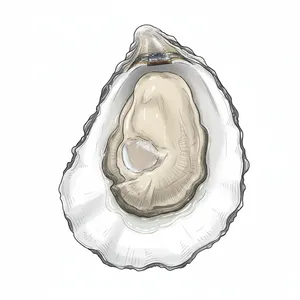
Effingham Inlet
Canada West CoastPremium Pacific oyster from a pristine deep-water fjord in Barkley Sound, BC. Tray-suspended and tumbled for uniform deep cups. Plump, cream-colored meat with vibrant brine, natural sweetness, and a smooth watermelon-lettuce finish.
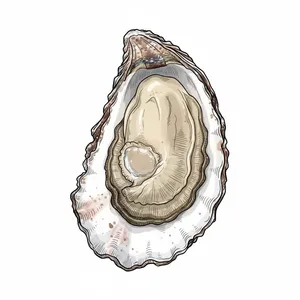
Fanny Bay
Canada West CoastThe archetypal BC oyster. Smooth and balanced with sweet, buttery notes and a signature crisp cucumber finish.
Learn More
The Big Five: A Complete Guide to Commercial Oyster Species
Comprehensive guide to C. virginica (Atlantic), C. gigas (Pacific), C. sikamea (Kumamoto), O. lurida (Olympia), and O. edulis (European Flat)
Read article → Biology & SpeciesThe Pacific Oyster (C. gigas): Cream, Cucumber, and the Japanese Legacy
Understanding the world's most cultivated oyster - from Japanese origins to West Coast dominance
Read article → Merroir & EnvironmentWhat Is Merroir? How Water Shapes Oyster Flavor
Merroir is the marine version of terroir: how salinity, temperature, tides, and plankton in the growing water shape an oyster's flavor. The science, plus how to taste it.
Read article →